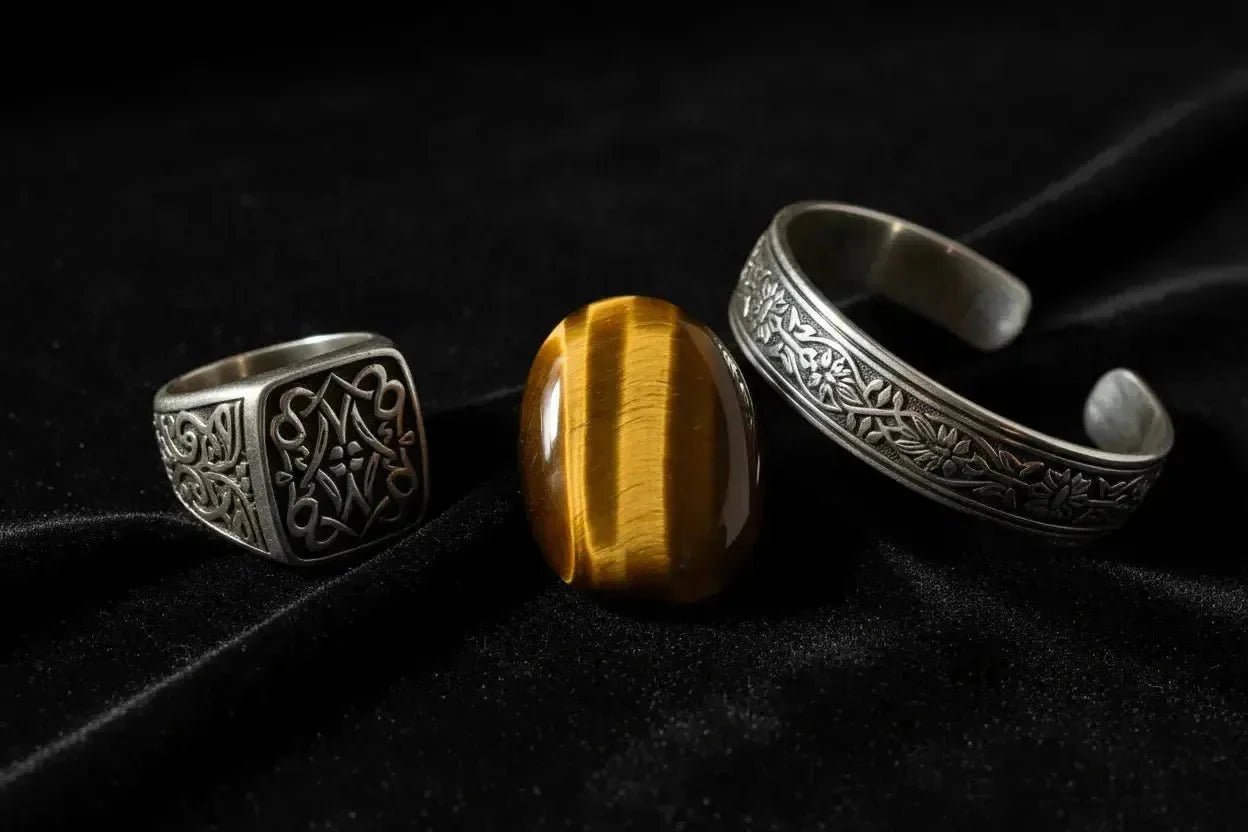
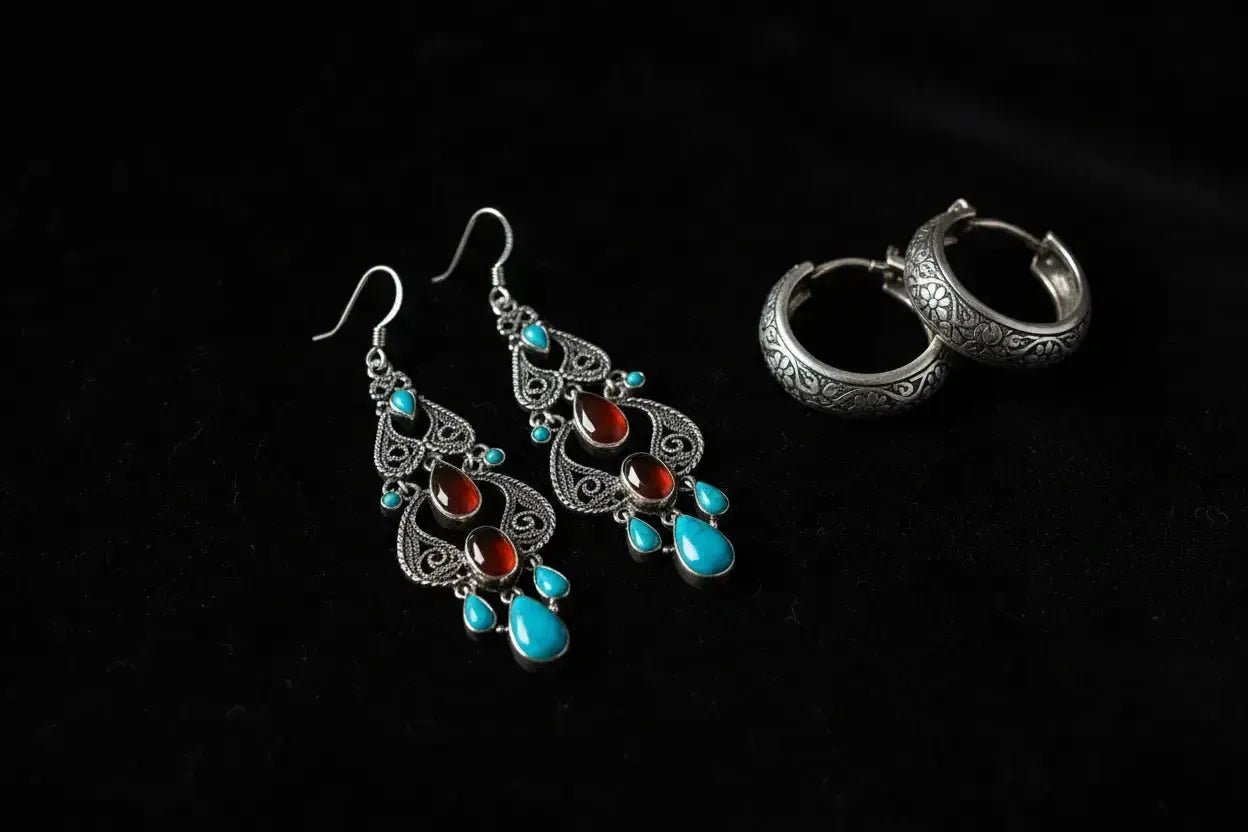
925 Sterling Silver Oriental Bridal Jewelry: Traditions and Symbols
Oriental Bridal Jewelry: More Than Just an Ornament
In Eastern cultures, bridal jewelry is not an accessory. It is a language. Each piece worn on the wedding day tells a story — that of a family, a region, a tradition passed down from mother to daughter for centuries. Sterling silver 925 is the common thread: a metal of purity, protection, and femininity in all Eastern traditions.
The Ottoman Parure: Opulence and Imperial Symbolism
In Ottoman tradition, the bride was covered in jewelry from head to toe. The complete parure included:
- The frontal (alınlık): a headpiece adorned with silver pieces and colorful stones, a symbol of social status
- Dangling earrings: long, laden with garnets, turquoises, or carnelian, they framed the face like a halo of light
- The multi-strand necklace: worn on the chest, it protected the heart and heralded the prosperity of the home
- Stacked bracelets: worn on both wrists, they jingled with every movement like auspicious music
Discover the spirit of this tradition in our article on Ottoman jewelry and our 925 sterling silver natural stone jewelry collection.
The Persian Parure: Refinement and Precious Stones
Persian jewelry is distinguished by the finesse of its craftsmanship and the richness of its stones. The Persian bride traditionally wore:
- Sterling silver jewelry inlaid with Persian Turquoise, a sacred stone of protection
- Rings on every finger, symbols of fertility and prosperity
- Pendants engraved with poetic verses or floral motifs
The Arab Parure: Protection and Radiance
In Arab tradition, bridal jewelry is above all a talisman. The Khamsa (Hand of Fatima) in 925 sterling silver, engraved amulets, and protective stones like Carnelian or Black Onyx were worn to ward off the evil eye and attract blessings upon the new home.
Drawing Inspiration from Tradition for a Contemporary Wedding
Today, the modern bride can draw inspiration from these traditions without replicating them exactly. A few key pieces in 925 sterling silver are enough to create a parure that is both authentic and elegant:
- Dangling earrings with colorful stones to frame the face
- A 925 sterling silver necklace with oriental motifs or set with natural stones
- Stacked bracelets to capture the spirit of the traditional parure
- A 925 sterling silver women's ring with strong symbolism
All our jewelry is certified 925 sterling silver. Discover our commitments on our authenticity page and explore the world of Vindicta oriental jewelry.
Henna, a Prelude to Jewelry
Even before the jewelry was donned, the Oriental bride often went through the henna night—a ceremony in its own right where hands and feet were adorned with botanical patterns in natural ink. This ritual symbolically prepared the body to receive the next day's jewelry: the henna patterns, often geometric or floral, echoed the same arabesques that were later engraved in silver. This continuity between the ephemeral art of henna and the lasting art of jewelry illustrates how the oriental wedding parure formed a coherent whole, meticulously planned several days before the ceremony itself.
The Symbolic Weight of the Parure
In many families, the total weight of silver worn by the bride on her wedding day was significant—it tangibly represented the groom's family's ability to honor his wife, and sometimes even a portion of savings passed on to the young woman for future needs. This economic dimension, rarely mentioned today, coexisted without contradiction with the symbolic and aesthetic dimension of the jewelry: a parure could be both magnificent, protective, and a true transportable asset, sewn or worn rather than deposited in an institution. It is this dual nature—beauty and material security combined in a single object—that explains the deep attachment of traditional oriental societies to sterling silver.
The Wedding Belt, a Forgotten Piece
Less known today than the necklace or earrings, the silver belt was nevertheless an integral part of many oriental wedding parures, especially in the traditions of the Maghreb and the Levant. Composed of articulated plates linked together, it visually marked the waist and accompanied every movement of the bride with a soft metallic jingle. Some belts weighed several kilograms and required being worn over clothing structured enough to support their weight—a reminder that these wedding parures, beautiful as they were, were also true feats of textile and goldsmith engineering, designed to be worn, not merely displayed.
A Piece of Jewelry for Each Day of the Festivities
The traditional oriental wedding often spanned several days, each calling for its own outfit and thus its own parure. The bride did not wear the same jewelry on the day of the religious ceremony, the family celebration, and the wedding night—a complete jewelry wardrobe was thus mobilized to accompany each symbolic stage of the union, reinforcing the idea that marriage was not a single moment but a true ritual journey.
✦ Vindicta — Solid 925 silver
The piece that makes the difference
Certified 925 silver · Free shipping from €69 · 10 years of excellence
Oriental 925 Silver Jewellery →