The History of 925 Silver: From Antiquity to Today
From ancient Greece to contemporary workshops, 925 silver has spanned 5000 years of human history. Here is the complete timeline of a metal that shaped civilizations.
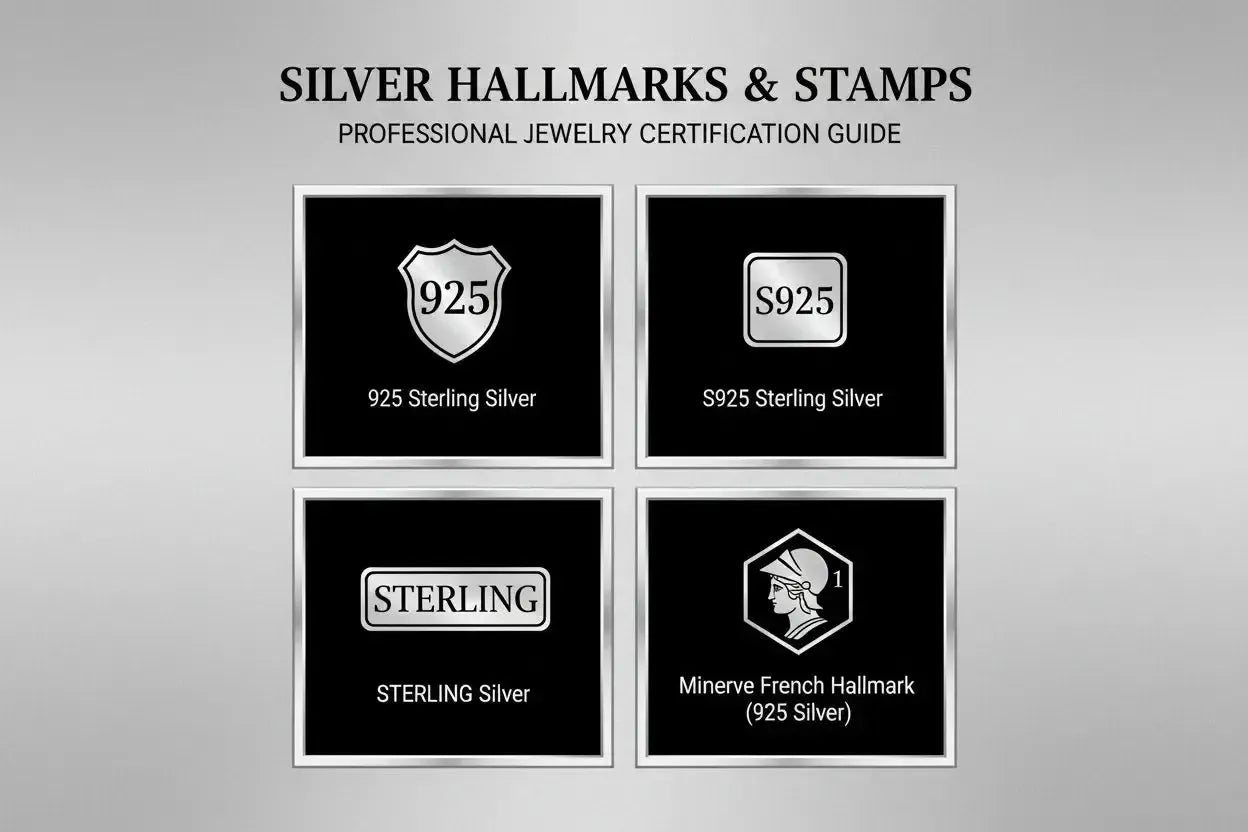
To discover the full article: 925 Silver — From Ancient Egypt to Minimalist Design. And to understand certification hallmarks: Silver Hallmarks — A Complete Guide.
-3000 BCE: The First Traces
The oldest known silver objects date back to 3000 BC, found in Anatolia (modern-day Turkey) and Mesopotamia. Silver was then extracted from galena mines (lead sulfide) using a process called cupellation. It was reserved for elites and religious rituals.
-2500 BCE: Egypt — White Gold
In Egypt, silver was rarer than gold. Imported from Asia Minor, it was called "nub hedj" (white gold) and associated with the moon and the goddess Isis. Egyptian silver jewelry was reserved for pharaohs and high priests.
-600 BCE: Greece — The Drachma and Filigree
The mines of Laurion (Attica) made Greece the leading silver power in the Mediterranean world. Silver became currency (the drachma) and a jewelry material. Greek goldsmiths developed filigree — a technique of interwoven silver threads — which remains a global benchmark. For Asian craftsmanship inheriting these techniques: Asian Craftsmanship — Ancient Jewelry Techniques.
-200 BCE — 400 CE: Rome — Democratization
The Roman Empire extensively exploited the mines of Hispania (Spain). Silver became democratized — the silver denarius circulated throughout the empire. Roman goldsmithing achieved remarkable sophistication: tableware, jewelry, statuettes.
700 — 1400: The Islamic World — Technical Zenith
Ottoman, Persian, and Andalusian goldsmiths brought the art of silver to its peak. Niello, granulation, stone inlay — techniques that directly inspired Vindicta's identity. The colonial era that followed transformed trade: The Colonial Era — New World Silver.
1400 — 1600: The Renaissance — The Golden Age
The European Renaissance elevated silver goldsmithing to the rank of fine art. Benvenuto Cellini in Florence, the great goldsmiths of Nuremberg, the royal courts of Europe vied for spectacular pieces. Discover the full article: The Renaissance — The Golden Age of Goldsmithing.
1545: Potosí — The Global Upheaval
The discovery of the Potosí mines (Bolivia) in 1545 flooded Europe with silver. In a century, global silver production multiplied by 10. Prices plummeted, silver became democratized, and global trade was transformed. Discover the full article: Potosí — The Silver Mountain that Changed the World.
1700 — 1800: Christofle and French Goldsmithing
France established itself as the global benchmark for goldsmithing. Christofle, founded in 1830, revolutionized production with electroplating. Discover the full article: Christofle — The Excellence of French Goldsmithing since 1830.
1851: The Normalization of 925
The United Kingdom officially made the 925 standard for sterling silver. This standard gradually spread throughout Europe and became the international standard. Discover the full article: 19th Century — Normalization of 925 Silver.
1890 — 1940: Art Nouveau and Art Deco
Two successive aesthetic revolutions reinvented silver. Art Nouveau associated it with organic forms. Art Deco geometrized it and associated it with marcasite. Discover the full article: Art Nouveau and Art Deco — Two Aesthetic Revolutions. And our inspired collection: Marcasite and 925 Silver Jewelry.
1904: Georg Jensen — Scandinavian Minimalism
The Danish silversmith Georg Jensen founded his house in Copenhagen and revolutionized silver design. Clean lines, simplified organic forms, rejection of excessive ornamentation — Scandinavian minimalism was born. Discover the full article: Scandinavian Minimalism — Georg Jensen.
Today: Certified 925 Silver
925 silver is now the global standard for jewelry. Certified by official hallmarks in over 50 countries, it is the most accessible and versatile precious metal. To understand hallmarks: Silver Hallmarks — A Complete Guide.
And to discover how a 925 silver jewel is made today: How is a 925 Silver Jewel Made?
The Complete Chronological Chain
- 925 Silver — From Ancient Egypt to Minimalist Design
- The Renaissance — The Golden Age of Goldsmithing
- The Colonial Era — New World Silver
- Potosí — The Silver Mountain
- 19th Century — Normalization of 925
- Art Nouveau and Art Deco
- Scandinavian Minimalism — Georg Jensen
- Christofle — The Excellence of French Goldsmithing
- Asian Craftsmanship — Ancient Techniques
- How is a 925 Silver Jewel Made?
- Silver Hallmarks — A Complete Guide
- Marcasite in Royal Jewelry
Every Vindicta jewel is certified 925 sterling silver, verifiable on our authenticity page.
✦ Vindicta — Solid 925 silver
The piece that makes the difference
Certified 925 silver · Free shipping from €69 · 10 years of excellence
Men's 925 Silver Signet Rings →