
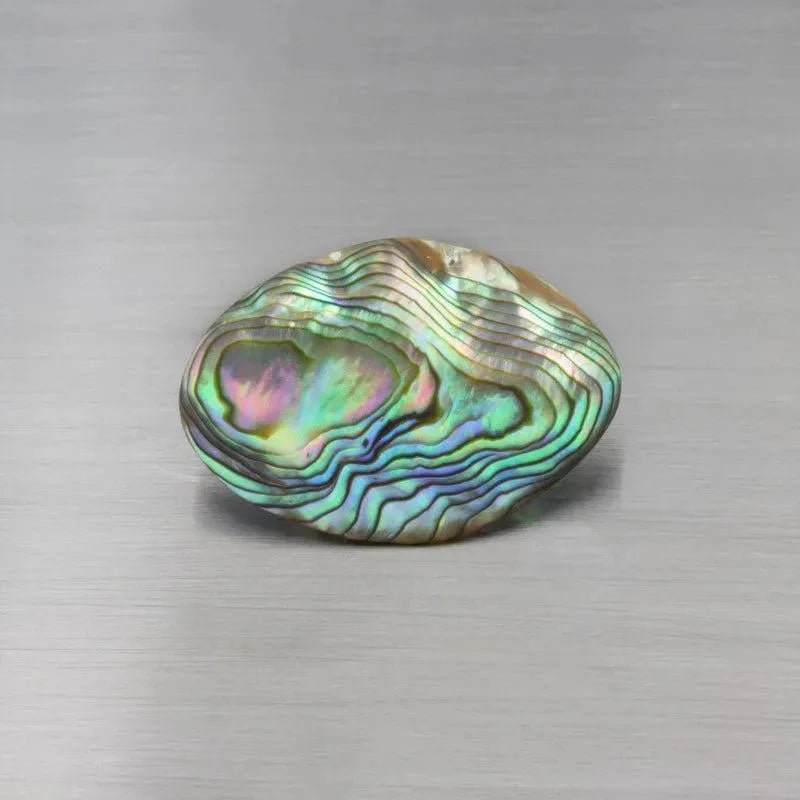
Mother-of-pearl: Virtues, Properties and Meaning
Focus on Mother of Pearl
Table of Contents
- Introduction
- Characteristics of Mother of Pearl
- History and Symbolism
- Varieties of Mother of Pearl
- Meaning and Virtues
- Origins Around the World
- Mother of Pearl Jewelry at Vindicta
- The Vindicta Perspective
- Care and Advice
- Materials to Discover
- Frequently Asked Questions
- Conclusion
Introduction
Mother of pearl is one of the oldest, most beautiful, and most universally revered materials in human jewelry. This inner lining of mollusk shells — pearl oysters, abalones, mussels, sea snails — is the origin of one of nature's most fascinating optical phenomena: iridescence. Depending on the viewing angle and light source, mother of pearl reveals shifting reflections ranging from milky white to pink, green, blue, and gold — an infinite palette trapped within an organic material of extraordinary fineness.
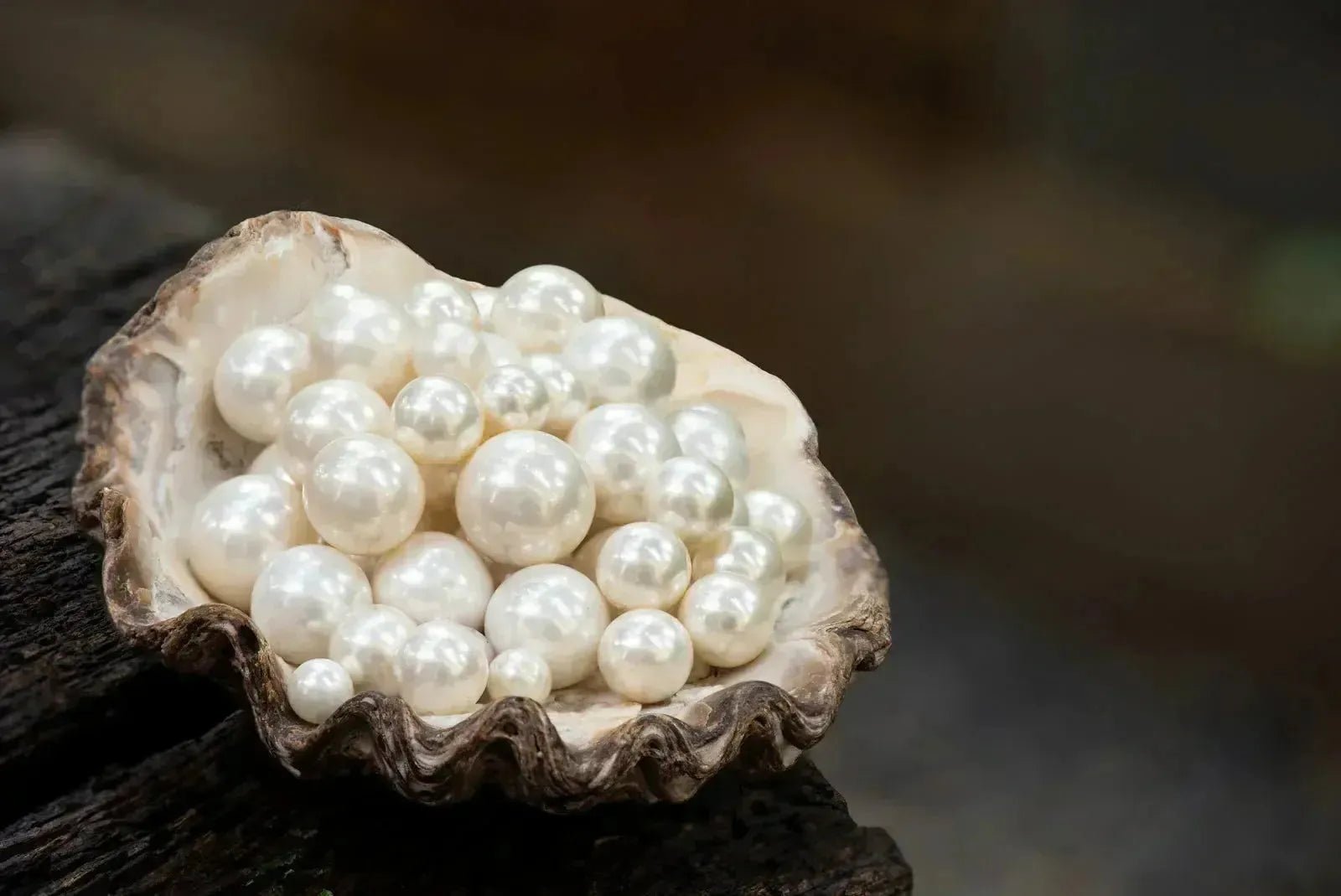
Mother of pearl is not a stone — it is a living material, secreted layer by layer by the mollusk to protect its shell and encapsulate foreign bodies that penetrate it. This same process gives birth to pearls — mother of pearl is literally the material from which pearls are made. Combined with solid 925 silver, it creates jewelry with an absolutely unique lunar softness and luminosity.
Characteristics of Mother of Pearl
Composition and Structure
- Type: Organic material (aragonite CaCO₃ + conchiolin, an organic protein)
- Structure: Microscopic layers of aragonite separated by layers of organic proteins
- Optical phenomenon: Iridescence (light interference between aragonite layers)
- Color: Milky white to cream, with pink, green, blue, gold reflections depending on species and origin
- Appearance: Opaque to translucent, characteristic nacreous luster
Hardness and Resistance
- 2.5 to 4.5 on the Mohs scale — relatively soft material
- Very sensitive to acids (even weak ones)
- Sensitive to heat, desiccation, and chemicals
- Amazing mechanical resistance thanks to its brick-and-mortar structure (3,000 times more resistant to fracture than pure aragonite)
Physical Properties
- Density: 2.60 to 2.85
- Transparency: Opaque to translucent
- Iridescence: Due to light interference between aragonite layers 200-500 nm thick
History and Symbolism of Mother of Pearl
Mother of pearl is one of the first materials used by humanity in jewelry and decoration. Mother of pearl ornaments have been found in archaeological sites dating back over 100,000 years — among the oldest ornamental objects ever discovered. Mother of pearl was already a prestigious material in the Stone Age.
In ancient Egypt, mother of pearl was used to decorate royal jewelry, furniture, and ritual objects. Its white color and iridescent reflections were associated with the moon, purity, and divine protection. The goddess Isis was sometimes depicted with mother of pearl ornaments.
In ancient China, mother of pearl was considered one of the most precious materials. Ming dynasty emperors used mother of pearl for inlay in lacquers, furniture, and artworks. Mother of pearl was associated with the moon, femininity, and prosperity.
In Islamic and Ottoman tradition, mother of pearl (صدف, sadaf) was highly prized for inlay in wood — the khatam technique — and for decorating liturgical objects. The minbars of the great Ottoman mosques were often inlaid with mother of pearl, testifying to the sacred value of this material in Islamic culture.
In Europe, mother of pearl reached its peak in the Victorian era and Art Nouveau. Jewelers like René Lalique used it extensively for its iridescent reflections, which perfectly matched the organic and feminine aesthetic of the movement.
Varieties of Mother of Pearl
- White Mother of Pearl (Pinctada maxima): Creamy white to silvery, golden or pink reflections, most commonly used in fine jewelry
- Black Mother of Pearl (Pinctada margaritifera): Dark gray to black with spectacular green, blue, and violet reflections — the mother of pearl of Tahitian pearls
- Abalone Mother of Pearl (Haliotis): Intense rainbow reflections, green, blue, violet, and gold — the most iridescent of all
- Pink Mother of Pearl (Strombus gigas conch): Pale pink to salmon, non-iridescent, used for conch pearls
- Golden Mother of Pearl (Pinctada maxima gold lipped): Intense golden reflections, originating from the Philippines and Indonesia
Meaning and Virtues of Mother of Pearl
Emotional & Spiritual Level
- Purity & femininity: Associated with the moon, femininity, and gentleness in many cultures
- Protection: A protective talisman for sea travelers and pregnant women in maritime traditions
- Intuition: Promotes emotional sensitivity and intuition
- Calm: Soothes emotions and promotes serenity
- Abundance: Associated with prosperity and fertility in Asian traditions
Physical Level (lithotherapy beliefs)
- Associated with strengthening the skeletal system (calcium content)
- Used to relieve tension and promote sleep
- Considered a general healing material in traditional Asian medicine
Note: The virtues of lithotherapy are not scientifically proven and do not replace medical advice.
Origins of Mother of Pearl Around the World
- French Polynesia (Tahiti, Tuamotu): Black mother of pearl from Pinctada margaritifera, most sought after for Tahitian pearls
- Australia, Philippines, Indonesia: White and golden mother of pearl from Pinctada maxima, exceptional jewelry quality
- Japan: Akoya oyster mother of pearl (Pinctada fucata), fine and brilliant, ancient pearl tradition
- New Zealand, United States (California): Abalone mother of pearl (Haliotis), spectacular rainbow reflections
- Caribbean: Conch mother of pearl (Strombus gigas), pale pink, used for conch pearls
Mother of Pearl Jewelry at Vindicta
Mother of pearl, with its iridescent reflections and luminous softness, naturally pairs with solid 925 silver to create jewelry of lunar and feminine elegance. The contrast between the milky whiteness of mother of pearl and the silvery shine of the metal is immediately elegant — a combination that transcends cultures and eras.
Our mother of pearl creations:
- Men's 925 Silver Ring – Natural Mother of Pearl
- Men's 925 Silver Grey Mother of Pearl Ring – Modern & Refined Style
- Men's 925 Silver Ring – Mother of Pearl and Rose Gold Plated Wolf Motif
- Women's 925 Silver Mother of Pearl and Marcasite Ring
Also discover our 925 silver mother of pearl jewelry collection.
The Vindicta Perspective
Mother of pearl is the material that fascinates us most due to its scientific dimension. Its "brick-and-mortar" structure — layers of aragonite separated by organic proteins — is one of nature's most sophisticated architectures. This structure gives it a fracture resistance 3,000 times greater than that of pure aragonite — a feat of biological engineering that scientists are still trying to artificially reproduce.
What also attracts us to mother of pearl is its direct kinship with the pearl. Mother of pearl is literally the material from which pearls are made — a pearl is nothing more than a sphere of nacre accumulated layer by layer around a foreign body. Understanding mother of pearl is understanding the pearl.
Mother of pearl is also the material that brings us closest to Vindicta's Ottoman heritage. Mother of pearl inlay in wood — the khatam technique — is one of the most refined artisanal traditions of the Ottoman Empire. The great Ottoman palaces, mosques, and prestige objects were adorned with mother of pearl with absolute mastery. This tradition is directly rooted in Vindicta's identity.
Finally, mother of pearl is the only material in our selection whose iridescence is a purely physical phenomenon — not a pigmentary color, but light interference. The same mother of pearl can appear white, pink, green, or blue depending on the viewing angle. This is the very definition of a living material.
Care and Advice for your Mother of Pearl Jewelry
- Acids: Absolutely avoid any contact with acidic substances — even vinegar or lemon juice slowly dissolve mother of pearl
- Chemicals: Avoid perfumes, creams, detergents, and hairspray
- Heat: Avoid intense heat sources and prolonged sun exposure
- Cleaning: Soft, slightly damp cloth only. Dry immediately. Never immerse
- Storage: Soft fabric pouch, away from light and heat, separate from other jewelry
- Scratches: Mother of pearl is soft (2.5-4.5/10) — avoid contact with hard surfaces
- Wearing: Remove your jewelry before showering, swimming, and any physical activity
To learn more: Complete care guide for your 925 silver jewelry.
Materials to Discover
- 🪪 Pearls — mother of pearl in spherical form, the material from which pearls are made
- 🔵 Tahitian Pearl — iridescent black mother of pearl, the most spectacular
- 🪪 Baroque Pearl — free-form mother of pearl, the elegance of irregularity
- 🪪 Keshi Pearl — entirely made of mother of pearl, exceptional luster
- 🪪 Moonstone — milky reflection, same lunar and feminine energy
- 📖 Complete Guide to Natural Stones 2026 — everything about stones in jewelry
Frequently Asked Questions about Mother of Pearl
What is the difference between mother of pearl and pearl?
Mother of pearl is the material, the pearl is the object. A pearl is a sphere of nacre accumulated layer by layer by a mollusk around a foreign body. Mother of pearl used in jewelry is generally cut from the mollusk shell. Both are composed of the same material (aragonite + proteins), but in different forms.
Why is mother of pearl iridescent?
The iridescence of mother of pearl is a purely physical phenomenon. The layers of aragonite (200-500 nm thick) act as a diffraction grating that breaks down white light into its spectral components. Depending on the viewing angle, different wavelengths are amplified or canceled by interference — hence the changing reflections. This is the same phenomenon as soap bubbles or butterfly wings.
How to distinguish real mother of pearl from an imitation?
The simplest test is the "tooth test": gently rub the mother of pearl against your teeth. Real mother of pearl is slightly gritty — plastic imitation is perfectly smooth. Real mother of pearl is also colder to the touch and heavier than plastic.
Is mother of pearl suitable for daily wear?
With caution. Its softness (2.5-4.5/10) and sensitivity to acids require precautions. For daily wear, prefer a pendant or earrings. Avoid contact with perfumes, creams, and acidic products.
Conclusion
Mother of pearl is an exceptional material — organic, luminous, steeped in 100,000 years of human history. From ancient Egypt to Ottoman palaces, from Art Nouveau jewelers to contemporary designers, it has always been associated with the moon, femininity, and purity.
Combined with solid 925 silver, mother of pearl creates jewelry with an absolutely unique lunar softness and luminosity — pieces that carry millennia of marine and human history, and the magic of a living material that captures light.
✦ Vindicta — Argent 925 Massif
La pièce qui fait la différence
Certifié argent 925 · Livraison offerte dès 69€ · 10 ans d'excellence
Bijoux Pierres Naturelles →


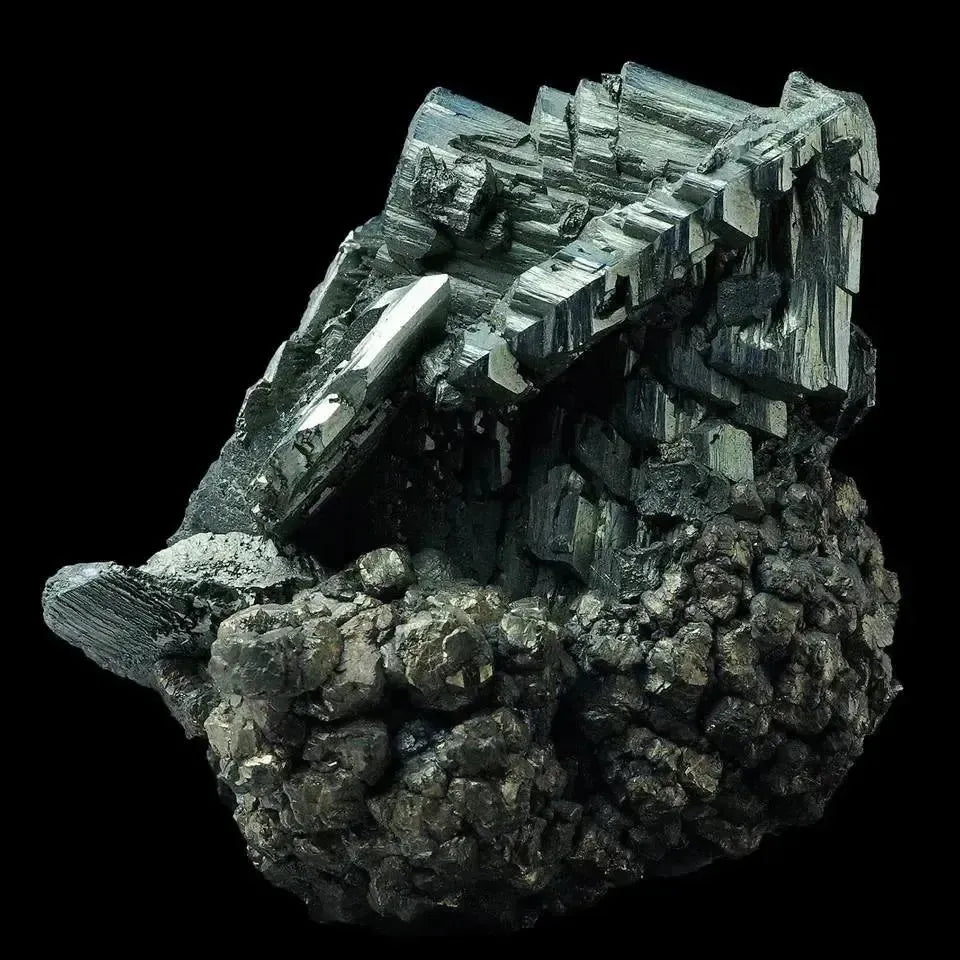

Leave a comment
This site is protected by hCaptcha and the hCaptcha Privacy Policy and Terms of Service apply.