
Conch Pearl: Origins, Properties and Jewelry
Focus on the Conch Pearl
Table of Contents
- Introduction
- Characteristics
- History and Symbolism
- Colors and Specifics
- Meaning and Virtues
- Origins
- Conch Pearl Jewelry at Vindicta
- The Vindicta Perspective
- Care and Advice
- Pearls to Discover
- Frequently Asked Questions
- Conclusion
Introduction
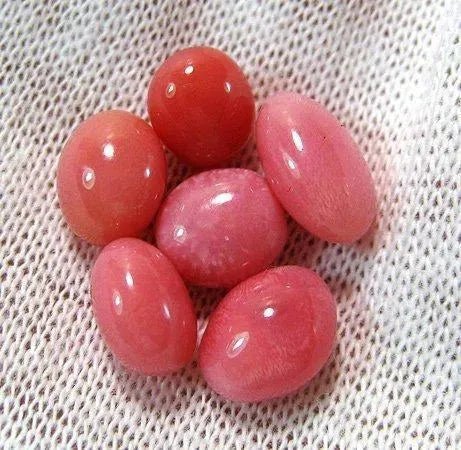
The conch pearl is one of the rarest and most precious gems in the world. Produced by the queen conch (Strombus gigas), a large gastropod mollusk from the Caribbean, it is fundamentally different from all other pearls: it is not composed of nacre, but of aragonite with a fibrous structure that gives it a unique flame pink color and an extraordinary optical phenomenon called "flame."
Conch pearls cannot be cultured — all attempts at cultivation have failed. Each conch pearl is therefore entirely natural, found accidentally in conchs fished for their meat in the Caribbean. This absolute rarity makes it one of the most precious and sought-after gems in global jewelry. When combined with solid 925 silver, it creates jewelry of absolutely unique rarity and beauty.
Characteristics of the Conch Pearl
Composition and Structure
- Type: natural non-nacreous pearl (fibrous aragonite structure)
- Color: pale pink to intense flame pink, sometimes white or brown
- Optical phenomenon: "flame" — undulating pattern of light and dark lines visible on the surface
- Shape: oval, round, drop — rarely perfectly round
- Size: 1 to 25 mm, average 3-6 mm for jewelry quality
Hardness and Resistance
- 3 to 4 on the Mohs scale — soft gem
- Sensitive to acids, heat, and chemicals
- More stable than nacreous pearls due to its fibrous structure
The "Flame" Phenomenon
The "flame" is the characteristic optical phenomenon of the conch pearl — an undulating pattern of light and dark lines that appears to move across the pearl's surface when it is rotated. This phenomenon is due to the fibrous structure of aragonite — the fibers are organized in layers that diffract light in a unique way. The more intense and well-defined the flame, the more valuable the pearl.
History and Symbolism of the Conch Pearl
The queen conch (Strombus gigas) has been a major cultural symbol of the Caribbean for millennia. Indigenous peoples of the Caribbean — Taínos, Arawaks, Caribs — used the conch as a musical instrument (the "lambi"), as a tool, as currency, and as a ritual object. Conch pearls were rare treasures, worn by chiefs and shamans as symbols of power and connection with sea spirits.
With the arrival of Europeans in the Caribbean in the 15th century, conch pearls were discovered by European jewelers. Their unique pink color and absolute rarity made them prestigious gems in European royal courts. Queen Marie-Antoinette owned several pieces of jewelry made with conch pearls.
Today, the queen conch is a protected species in many Caribbean countries — its fishing is strictly regulated. Conch pearls are therefore even rarer than before, which explains their exceptional prices in the jewelry market.
Colors and Specifics of the Conch Pearl
- Flame pink: the most sought-after color — intense pink with a well-defined flame, the most precious
- Pale pink: soft and milky pink, feminine elegance, flame often less visible
- Salmon pink: between pink and orange, highly valued in jewelry
- White: rare, without pink color, less precious
- Brown: very rare, rarely used in jewelry
The quality of a conch pearl is assessed according to three main criteria: the intensity of the pink color, the quality of the flame (intensity, definition, extent), and the regularity of the shape.
Meaning and Virtues of the Conch Pearl
Emotional & Spiritual Level
- Love & femininity 🌸: its pink color is universally associated with love, tenderness, and femininity
- Rarity & prestige: symbol of absolute rarity and jewelry prestige
- Marine connection: deep connection with the sea, elements, and natural cycles
- Protection: in Caribbean traditions, the conch protects against malevolent spirits
- Communication: the conch was used as a communication instrument — symbol of expression and voice
Physical Level (lithotherapy beliefs)
- Associated with emotional balance and gentleness
- Used to promote self-love and self-confidence
Note: The virtues of lithotherapy are not scientifically proven and do not replace medical advice.
Origins of the Conch Pearl
The conch pearl is exclusively produced by the queen conch (Strombus gigas), which lives in the shallow waters of the Caribbean:
- Bahamas: main historical producer, traditional conch fishing
- Haiti, Dominican Republic: significant production, ancient tradition
- Jamaica, Cuba, Puerto Rico: secondary production
- Florida (Keys): historical fishing, now strictly protected
The frequency of finding a conch pearl is estimated at 1 in 10,000 to 1 in 100,000 conchs — depending on sources and fishing areas. A jewelry-quality conch pearl (beautiful color, defined flame, good size) is even rarer.
Conch Pearl Jewelry at Vindicta
The conch pearl, with its unique flame pink color and absolute rarity, naturally combines with solid 925 silver to create jewelry of absolutely unique rarity and beauty. Its intense pink color contrasts beautifully with the silvery luster of the metal — a combination that is both soft and striking.
Discover our mother-of-pearl and 925 silver pearl jewelry collection and our 925 silver natural stone jewelry collection.
The Vindicta Perspective
The conch pearl is the gem that impresses us most with its absolute rarity. It cannot be cultivated — each pearl is found accidentally in a conch fished for its meat. The probability of finding a jewelry-quality pearl is infinitesimal. It is the most "natural" gem in our selection — impossible to reproduce, impossible to order, impossible to predict.
What fascinates us about the conch pearl is also its flame phenomenon. Unlike the iridescence of mother-of-pearl — which is an interference phenomenon — the flame of the conch pearl is a diffraction phenomenon linked to its unique fibrous structure. It is an optical phenomenon found nowhere else in jewelry nature.
The conch pearl is also the pearl that most closely resembles coral in our selection. Both are organic marine gems, both are pink, both are rare and protected, and both raise ethical questions about the exploitation of marine resources. Our position is the same: complete traceability, certified sources, refusal of any dubious supply.
Care and Advice for your Conch Pearl Jewelry
- Acids: absolutely avoid any contact with acidic substances
- Heat: avoid intense heat sources — the pink color can fade
- UV: avoid prolonged exposure to the sun — the color can alter
- Cleaning: soft, slightly damp cloth only. Dry immediately
- Storage: soft fabric pouch, away from light, separate from other jewelry
- Chemical products: avoid perfumes, creams, and detergents
To learn more: Complete guide to caring for your 925 silver jewelry.
Pearls to Discover
- 🪪 Mother-of-Pearl — iridescent marine material, organic cousin of the conch pearl
- 🪪 Pearls — complete guide to all varieties
- 🔵 Tahitian Pearl — another rare natural pearl, iridescent black
- 🪪 Keshi Pearl — entirely nacreous, exceptional luster
- ❤️ Coral — another pink marine gem, same rarity and ethics
- 📖 Complete Guide to Natural Stones 2026 — everything you need to know about jewelry stones
Frequently Asked Questions about the Conch Pearl
Why is the conch pearl so rare?
Because it cannot be cultivated — all attempts have failed. Each pearl is found accidentally in a conch fished for its meat. The probability of finding a pearl is estimated at 1 in 10,000 to 1 in 100,000 conchs. And among these pearls, only an infinitesimal minority is of sufficient jewelry quality (beautiful color, defined flame, good size).
What is the "flame" of the conch pearl?
The "flame" is the characteristic optical phenomenon of the conch pearl — an undulating pattern of light and dark lines that appears to move across the surface when the pearl is rotated. It is due to the fibrous structure of aragonite. The more intense and well-defined the flame, the more valuable the pearl. This is the most important quality criterion for a conch pearl.
Is the conch pearl a real pearl?
Yes — but it is fundamentally different from other pearls. It is not composed of nacre (aragonite in flat layers) but of aragonite with a fibrous structure. It does not have the "orient" of nacreous pearls, but its flame phenomenon is unique in the world. It is an organic marine gem — a real pearl, but of a radically different nature.
How much does a conch pearl cost?
Prices vary considerably depending on size, color, and flame quality. A small, medium-quality conch pearl can be worth a few hundred euros. A beautiful, large conch pearl with an intense flame can be worth several thousand euros. The finest specimens reach prices comparable to rare precious stones.
Conclusion
The conch pearl is an absolutely exceptional gem — the only non-nacreous pearl in the world, the only one that cannot be cultivated, the only one that possesses the flame phenomenon. Its unique pink color, absolute rarity, and millennia of Caribbean history make it one of the most fascinating and precious gems in global jewelry.
Combined with solid 925 silver, the conch pearl creates jewelry of absolutely unique rarity and beauty — pieces that carry within them millennia of Caribbean history and the magic of a gem that nature alone can create.
✦ Vindicta — Argent 925 Massif
La pièce qui fait la différence
Certifié argent 925 · Livraison offerte dès 69€ · 10 ans d'excellence
Bijoux Pierres Naturelles →




Leave a comment
This site is protected by hCaptcha and the hCaptcha Privacy Policy and Terms of Service apply.