Art Nouveau and Art Deco: Two Aesthetic Revolutions in Sterling Silver
Between 1890 and 1940, two successive artistic movements radically reinvented silver jewelry. Art Nouveau celebrated nature and curves. Art Deco geometrized and modernized. Together, they defined the aesthetic of 20th-century jewelry.
Art Nouveau (1890-1910) — Nature as a Model
The Context
In reaction to industrialization and the ornate Victorian style, Art Nouveau emerged in Paris, Brussels, Vienna, and Munich. Its founding principle: nature is the source of all beauty. Organic forms, sinuous curves, floral and animal motifs permeated jewelry — a complete break from the geometric rigidity that had dominated Victorian jewelry until then.
Key Figures
- René Lalique: The undisputed master of Art Nouveau jewelry. He combined silver with enamels, semi-precious stones, and unusual materials (horn, ivory). His jewels were wearable sculptures, often inspired by insects or half-human, half-vegetal female figures.
- Louis Comfort Tiffany: On the American side, Tiffany revolutionized jewelry with his natural motifs and colorful stones, while also developing his famous Favrile iridescent glass technique.
- Henry van de Velde: Belgian architect and designer, he applied Art Nouveau principles to jewelry with remarkable formal rigor, rejecting decorative excess in favor of clean lines.
Characteristics
Sinuous curves, asymmetry, organic forms. Floral and animal motifs — flowers, insects, women with flowing hair, peacocks, dragonflies. Colorful stones — opal, turquoise, amethyst, carnelian. Enameling techniques — cloisonné enamel, plique-à-jour, repoussé. 925 sterling silver became the metal of choice, more malleable than gold for executing complex shapes.
Art Deco (1920-1940) — Geometry and Modernity
The Context
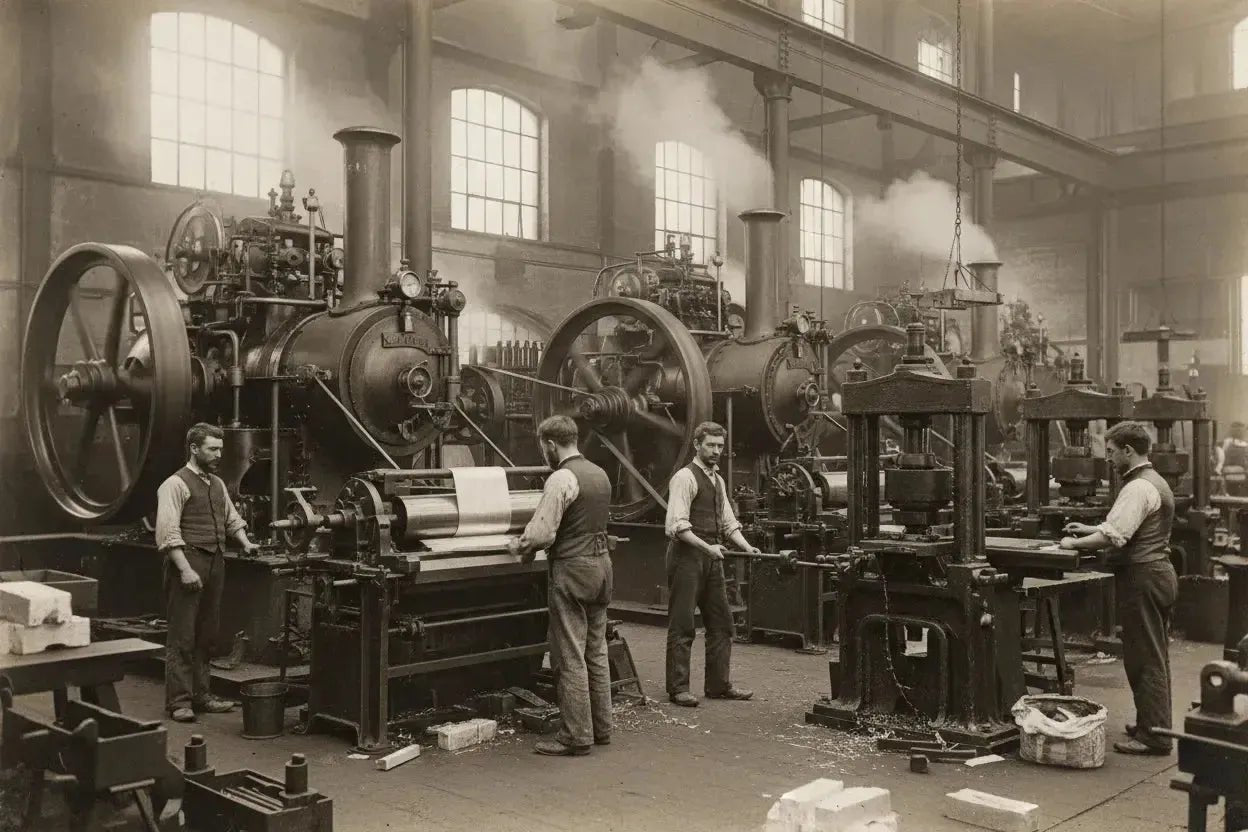
After World War I, the world wanted to turn the page. Art Deco emerged in Paris in 1925 (International Exhibition of Decorative Arts). It celebrated modernity, machinery, speed. Forms were geometric, symmetrical, streamlined — the antithesis of the botanical curves of the previous period.
Key Figures
- Cartier: The Parisian house defined the Art Deco style in jewelry — geometry, black/white contrasts, platinum and diamonds, often combined with motifs inspired by the Orient and ancient Egypt.
- Van Cleef & Arpels: Invented the invisible setting technique, a technical revolution of the time that allowed stones to be set without any metal mounting being visible.
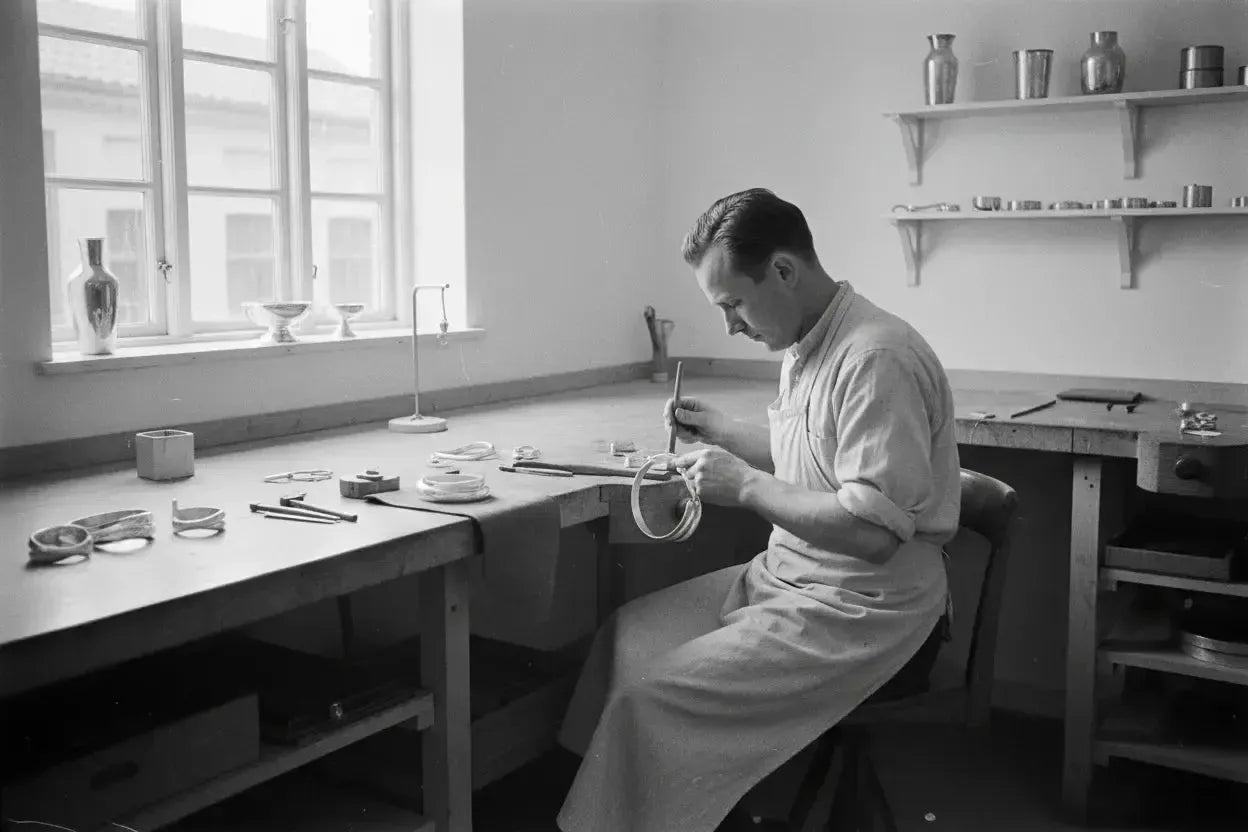
- Georg Jensen: The Danish silversmith developed a more organic Scandinavian Art Deco, less sharp than its Parisian counterpart.
Characteristics
Geometry, symmetry, straight lines and sharp angles. Geometric and exotic motifs — fans, zigzags, sunbursts, Egyptian and Asian motifs. Strong chromatic contrasts — black/white, silver/ebony, marcasite/silver. Emblematic stones — black onyx, coral, jade, lapis lazuli, marcasite. 925 sterling silver combined with marcasite became the signature duo of the era.
The 1925 Exhibition: The Aesthetic Shock
The International Exhibition of Modern Decorative and Industrial Arts, held in Paris from spring to autumn 1925, gave its name to the movement ("Art Deco" is a contraction coined retrospectively in the 1960s, from the title of the exhibition). Over sixteen million visitors discovered the pavilions of Cartier, Boucheron, and Lalique, arranged along the Champs-Élysées and on the banks of the Seine. The event marked a clear break with Art Nouveau: where visitors to the 1900 Universal Exhibition admired botanical curves, those of 1925 marveled at straight lines, sharp angles, and crisp chromatic contrasts — the taste of an era that had just experienced industrial warfare and now wanted to celebrate the machine rather than flee it.
Marcasite — The Stone of Art Deco
Marcasite is the emblematic stone of Art Deco. Its metallic golden-silver sheen creates a striking contrast with polished 925 sterling silver. Art Deco marcasite jewelry — rings, bracelets, brooches — are among the most sought-after by collectors, especially in the vintage market where original pieces from the 1920s-1930s reach high prices.
Vindicta perpetuates this tradition with its Art Deco-inspired collection: Marcasite and 925 Sterling Silver Jewelry. Discover also our men's 925 sterling silver rings and our women's 925 sterling silver rings with geometric inspirations inherited from this era.
Two Opposing Visions of Femininity
Beyond shapes, Art Nouveau and Art Deco conveyed two very different visions of the woman wearing the jewelry. Art Nouveau depicted her as an organic figure, with flowing hair, merged with the surrounding nature — a romantic and fluid femininity. Art Deco, driven by the emancipation of the Roaring Twenties, addressed a new woman: active, independent, with short hair and clean lines. This aesthetic shift directly reflected the social upheavals of the post-war period, where millions of women who had worked during the conflict refused to return to their pre-1914 roles — a societal change legible even in the shape of a ring.
The Vintage Market Today
Original Art Nouveau and Art Deco pieces are now actively sought after by collectors and auction houses. An authentic Lalique brooch or an original Art Deco marcasite ring can fetch considerable prices, driven by a constant demand for historical authenticity. This increasing rarity partly explains the success of contemporary reinterpretations: new jewelry, made of certified solid 925 sterling silver, that adopts the aesthetic codes of these two eras without the price or fragility associated with age.
The Legacy in Contemporary Jewelry
Art Nouveau and Art Deco remain the two major aesthetic references in contemporary jewelry. "Vintage" jewelry inspired by these movements experiences a constant revival. Vindicta is part of this lineage — timeless elegance, solid 925 sterling silver, carefully selected natural stones.
Each Vindicta jewel is certified solid 925 sterling silver, verifiable on our authenticity page.
Discover our marcasite and 925 sterling silver jewelry collection.
✦ Vindicta — Solid 925 silver
The piece that makes the difference
Certified 925 silver · Free shipping from €69 · 10 years of excellence
Men's 925 Silver Signet Rings →