Hungary: Hungarian Filigree and the Luster of Carpathian Silver
In the heart of the Carpathian Basin, Hungary has long been a crossroads between the Ottoman East, Slavic Europe, and the Germanic world — a thoroughfare that nurtured discreet yet refined silver craftsmanship. Less known than that of its Russian or Baltic neighbors, Hungarian silver tradition nevertheless deserves attention: it tells the story of a people who transformed every influence received into a style uniquely their own.
A Crossroads Between East and West
A Finno-Ugric people settled in the Carpathian Basin by the end of the 9th century, the Magyars very early on developed metalwork craftsmanship influenced by the Eurasian steppes from which they originated. Archaeological excavations from the period of the conquest (honfoglalás) have revealed openwork silver plates, belt buckles, and pendants with zoomorphic motifs that testify to an already well-established know-how long before the Christianization of the kingdom in 1000 AD. This dual identity — steppe by origin, European by settlement — profoundly marked the aesthetic of Hungarian silver: organic lines on one side, a rigor inherited from European courts on the other. Magyar horsemen already wore harnesses and belts adorned with repoussé silver plates, a martial custom that slowly shifted, over the centuries, towards civil jewelry worn daily.
Magyar Filigree, a Silver Lace
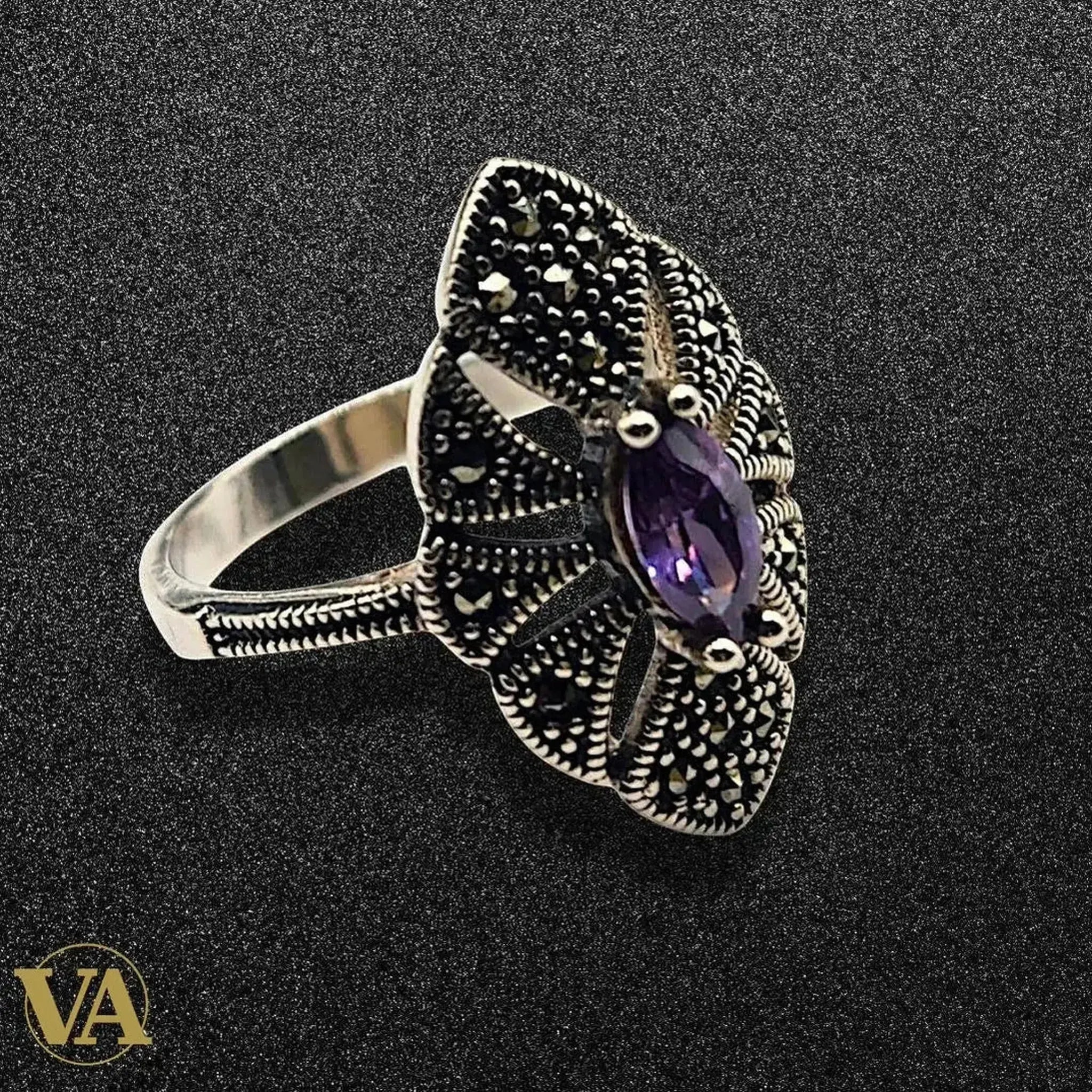
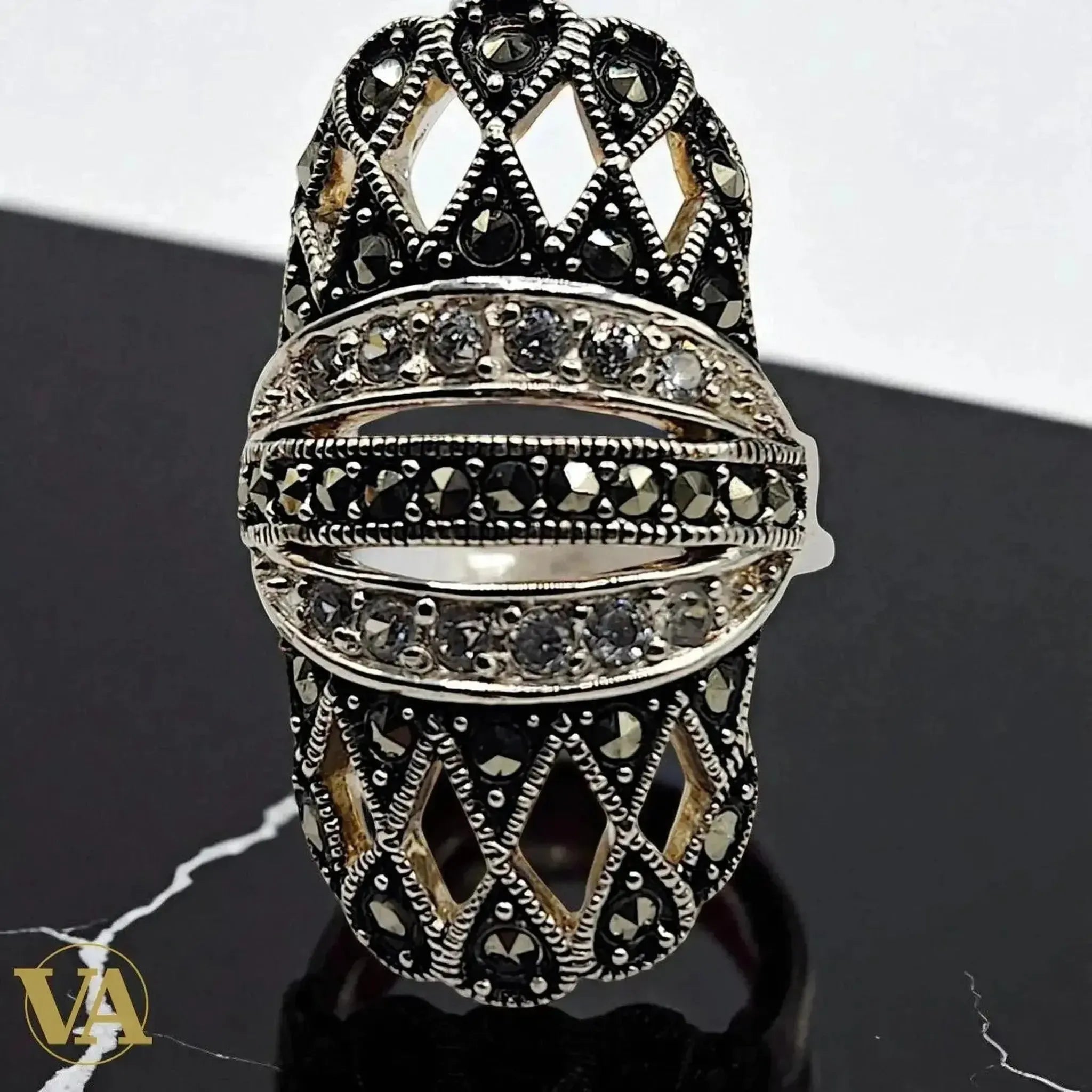
As in Portugal or the Balkans, filigree technique holds a central place in traditional Hungarian silversmithing. Artisans in cities like Kecskemét or Debrecen developed, from the 17th to the 19th century, a particularly fine filigree, often combined with small glass or coral beads, to adorn earrings, brooches, and belt clasps worn during major peasant festivals. This twisted silver wire lace was not only ornamental: it also served as a social marker, the density and fineness of the work indicating the family's wealth. Today, this spirit can be found in our 925 silver rings with openwork patterns, where the negative space worked around the material revives this idea of metallic lace inherited from Central Europe.
Floral Motifs, From Embroidery to Silver
It is impossible to discuss Hungarian craftsmanship without mentioning the popular Kalocsa or Matyó embroideries, classified as intangible cultural heritage by UNESCO. These exuberant floral motifs, originally painted on fabric, largely inspired local silversmiths, who transposed them into repoussé or chased silver on waistcoat buttons, scarf pins, and wedding jewelry. The poppy flower, stylized tulip, and winding vine recur as signatures in ancient pieces preserved at the Ethnographic Museum in Budapest. This same floral inspiration can be found in our 925 silver earrings, where the vegetal motif remains a timeless classic of European jewelry.
The Holy Crown, Symbol of a Long Thread of Silver and Gold
The Hungarian relationship with precious metalwork is also inseparable from the Holy Crown of Hungary, attributed by legend to Saint Stephen, the country's first Christian king, and now preserved in the Parliament in Budapest. Set with stones and enameled plates, it long embodied the very legitimacy of Hungarian royal power, to the point that it was hidden, buried, and repatriated multiple times during the turmoil of the 20th century. This almost sacred relationship to precious metal, where jewelry is never a mere ornament but a repository of national memory, is still evident in how ancient Hungarian silver is preserved and passed down from generation to generation.
The Influence of the Habsburgs and the Rise of Silverware in Budapest
From the 17th century, the gradual integration of the Kingdom of Hungary into the Habsburg orbit opened Hungarian workshops to the codes of Viennese silversmithing. Budapest became, at the end of the 19th century, a recognized center of silversmithing, where the Baroque style inherited from Vienna coexisted with a Hungarian neo-classicism tinged with Magyar motifs claimed as a form of cultural resistance against Austrian domination. The Hungarian hallmarks of this era, now sought after by collectors, clearly distinguish pieces produced in Budapest from those in Vienna or Prague — a reminder that silver, in the 19th century, was also a language of national identity.
Wearing the Magyar Heritage Today
What is striking about historical Hungarian silversmithing is its ability to remain legible and wearable despite the richness of its decoration: filigree structures without weighing down, floral motifs stop short of being over-ornate. This balance is what we find in our 925 silver bracelets and our 925 silver necklaces, designed for daily wear while retaining a real presence. A delicate bracelet layered with an openwork ring is enough to evoke this Magyar lace without falling into folkloric pastiche. To extend this journey to Central and Eastern Europe, our European ring size guide will help you order without error, and our exploration of Baltic craftsmanship completes this panorama of a Europe of silver too often reduced to its major Western capitals.
✦ Vindicta — Solid 925 silver
The piece that makes the difference
Certified 925 silver · Free shipping from €69 · 10 years of excellence
Discover our jewellery →