Berber Amulets and Talismans: Khamsa, Crescent, and Sterling Silver
Berber Amulets: Between Spirituality and Protection
In Berber culture, jewelry is never a mere ornament. Each 925 silver piece is a living talisman, imbued with protective intent and millennial symbolism. Berber amulets and talismans represent the deepest expression of this view of jewelry as a spiritual shield.
The Khamsa: Hand of Fatima
The khamsa—or Hand of Fatima—is the most universally known Berber amulet. This open hand with five spread fingers is a symbol of protection against the evil eye, present in all cultures of the Maghreb and the Middle East.
Made of solid 925 silver, the khamsa takes on an additional dimension: silver, a metal of purity and protection in Islamic tradition, amplifies the protective virtues of the Hand of Fatima.
The Crescent and Star
The crescent and star are omnipresent Islamic symbols in post-Islamic Berber jewelry. Engraved on rings, bracelets, and pendants, they symbolize faith, divine guidance, and celestial protection.
The Tuareg Tiraout: Verse Cases
The tiraout are small solid silver cases containing Quranic verses written on paper or parchment. Worn as pendants or sewn onto clothing, they constitute the most direct form of spiritual protection in Tuareg tradition.
The Protective Eye: Against the Evil Eye
The evil eye—ain in Arabic, tit in Tamazight—is a deeply rooted belief throughout Berber culture. 925 silver jewelry adorned with eye motifs or blue stones—turquoise, lapis lazuli—are worn to ward off this malevolent gaze.
From Pre-Islamic Origins to Ancestral Berber Beliefs
Long before the arrival of Islam in the 7th century, Berber peoples already possessed a system of beliefs related to supernatural protection. The Amazigh populations of the Maghreb practiced animistic rites where certain objects, gestures, and materials were invested with protective power. Silver, a rare and brilliant metal, already held a special place in this ancient cosmology, associated with the moon, purity, and the ability to repel invisible forces.
The arrival of Islam did not erase this background of pre-Islamic beliefs—rather, it covered them with a new religious veneer. The khamsa itself, before becoming the "Hand of Fatima" in the Islamized imagination, was already known as the "Hand of Tanit" in Punic and ancient Berber beliefs, associated with the goddess of fertility and protection. This double reading—pre-Islamic and Islamic superimposed—explains the unique symbolic richness of Berber amulets, where several layers of beliefs coexist in the same object worn daily.
The Transmission of Amulets: A Heritage Passed Down Through Generations
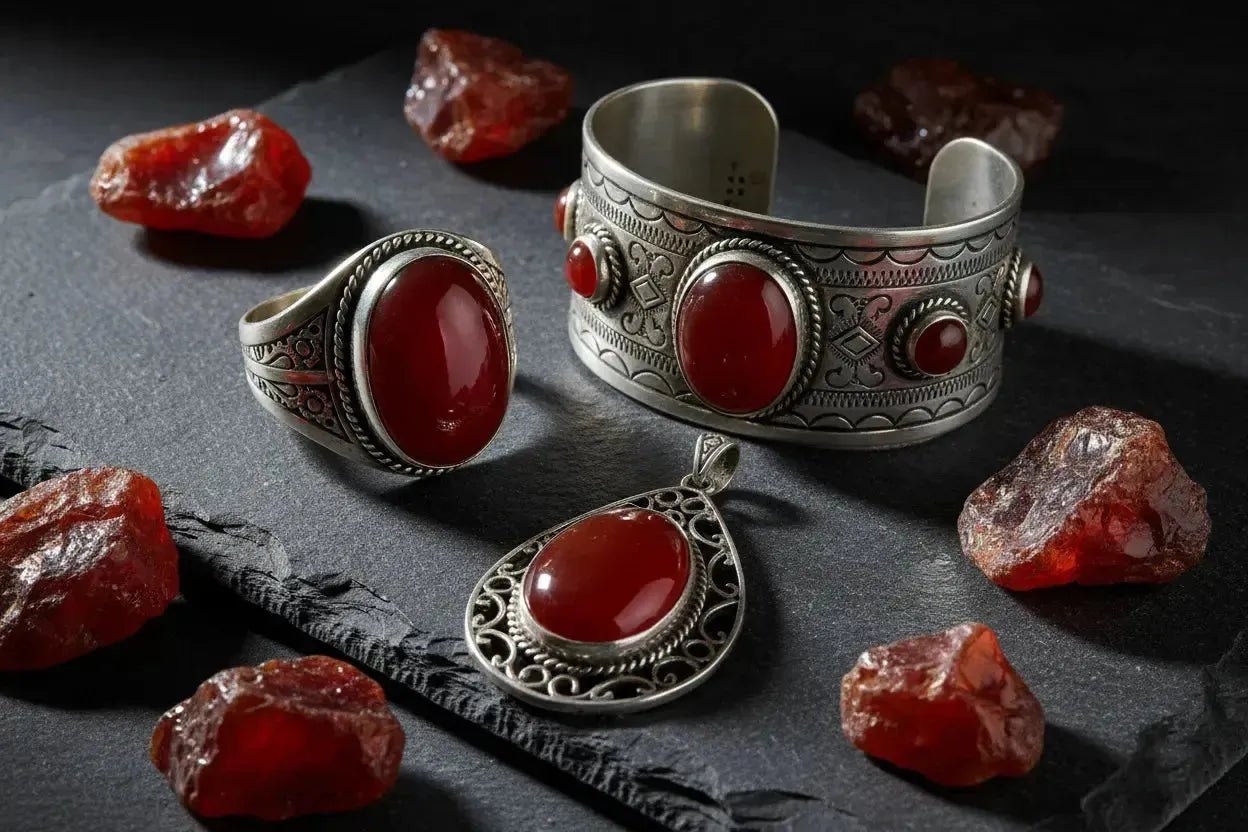
In traditional Berber culture, a silver amulet is almost never initially bought for oneself—it is passed down. The grandmother offers her khamsa to her granddaughter on her first trip away from home. The mother slips a tiraout into her child's clothes before an important exam. The father offers a ring adorned with carnelian to his son when he reaches adulthood. This intergenerational circulation gives each piece a value that far exceeds its market value: it becomes the repository of a protective intention accumulated over successive wearers.
This dimension of transmission directly relates to what we discuss in our article on Berber jewelry and its heritage: in these cultures, solid silver jewelry is never just a fashion accessory; it is an object of family memory that improves with time and the hands that have worn it.
Regional Differences: From the Sahara to Kabylia
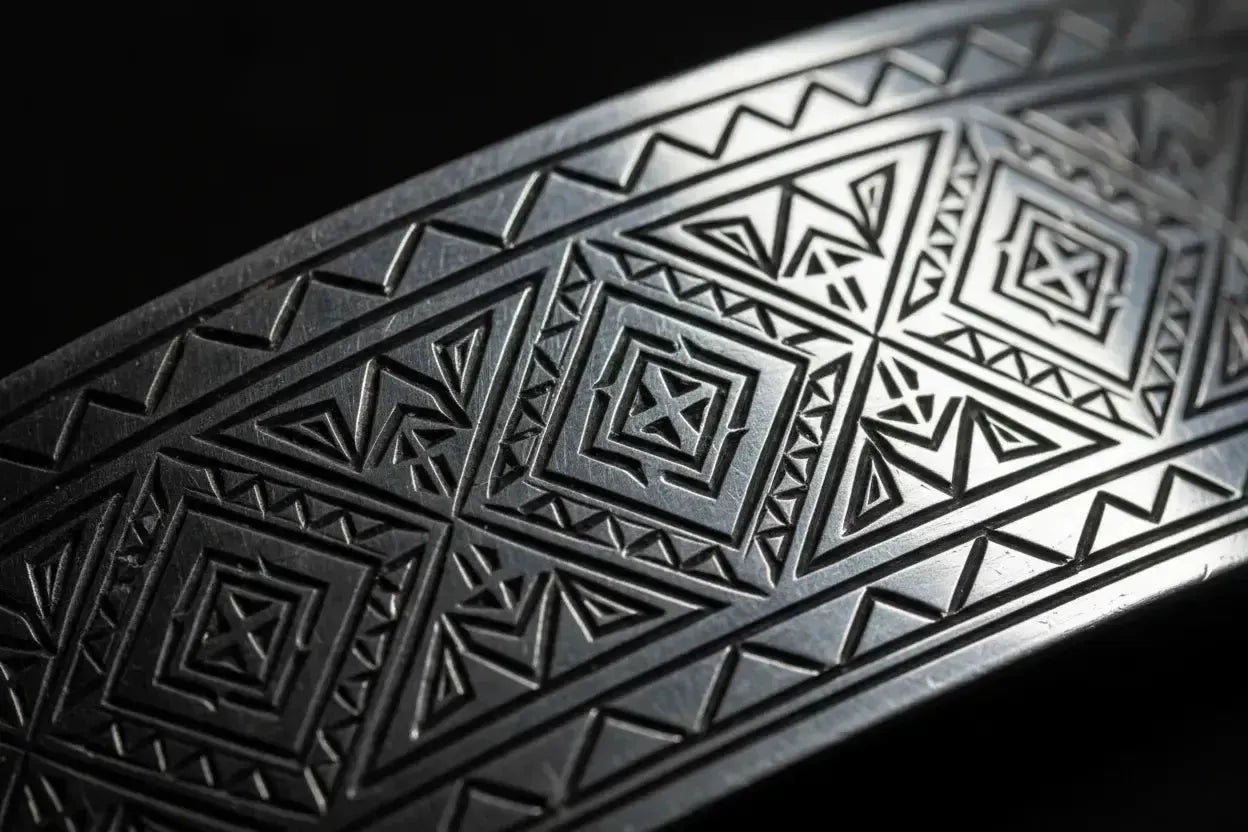
The form and function of Berber amulets vary significantly from one region to another. Among the Tuaregs of the Sahara, protection often takes the form of the tiraout—this case containing a verse—worn as a pendant or sewn directly into clothing, a solution adapted to nomadic life where one must be able to carry one's protection everywhere. In Kabylia, amulets are closer to ornamental jewelry: the khamsa is often integrated directly into the design of the fibula or necklace, associated with engraved geometric patterns that reinforce its protective power.
This regional diversity is no accident: it reflects the specific needs of each way of life. The nomad needs lightweight and portable protection; the sedentary woman of Kabylia or Morocco can afford more elaborate pieces, worn on important family occasions and then passed down as a treasure.
Our Talismanic 925 Silver Jewelry
At Vindicta, we select certified 925 silver jewelry that aligns with this Berber talismanic tradition.
- Women's 925 silver rings — protection and elegance
- Women's 925 silver necklaces — contemporary talismans
- Women's 925 silver bracelets — strength and protection
Conclusion: Berber Jewelry, Guardian of the Soul
Berber 925 silver amulets and talismans are the deepest expression of a culture that has always considered jewelry as much more than an ornament—a guardian of the soul, a link to the divine, a shield against dark forces.
Explore our complete guide to Berber jewelry to discover the full extent of this fascinating heritage.
✦ Vindicta — Solid 925 silver
The piece that makes the difference
Certified 925 silver · Free shipping from €69 · 10 years of excellence
Berber & Oriental Jewellery →