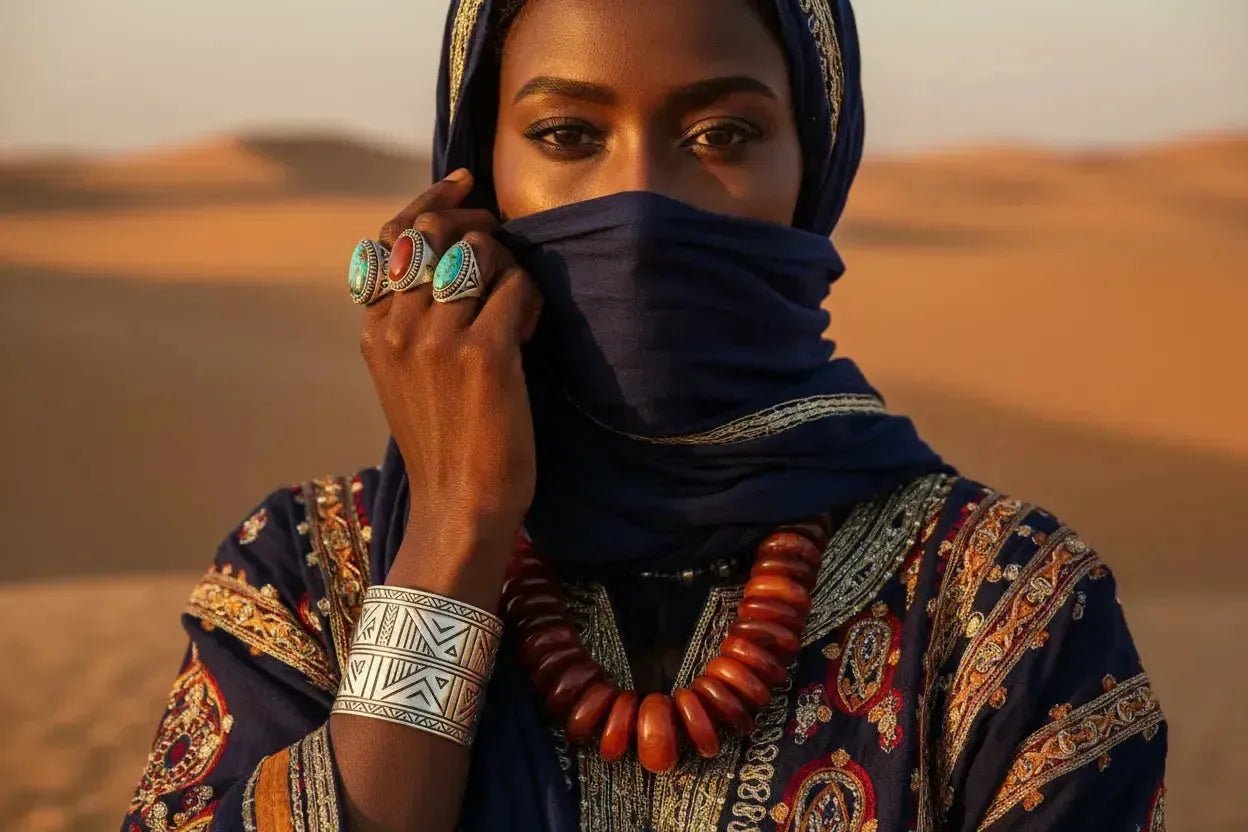
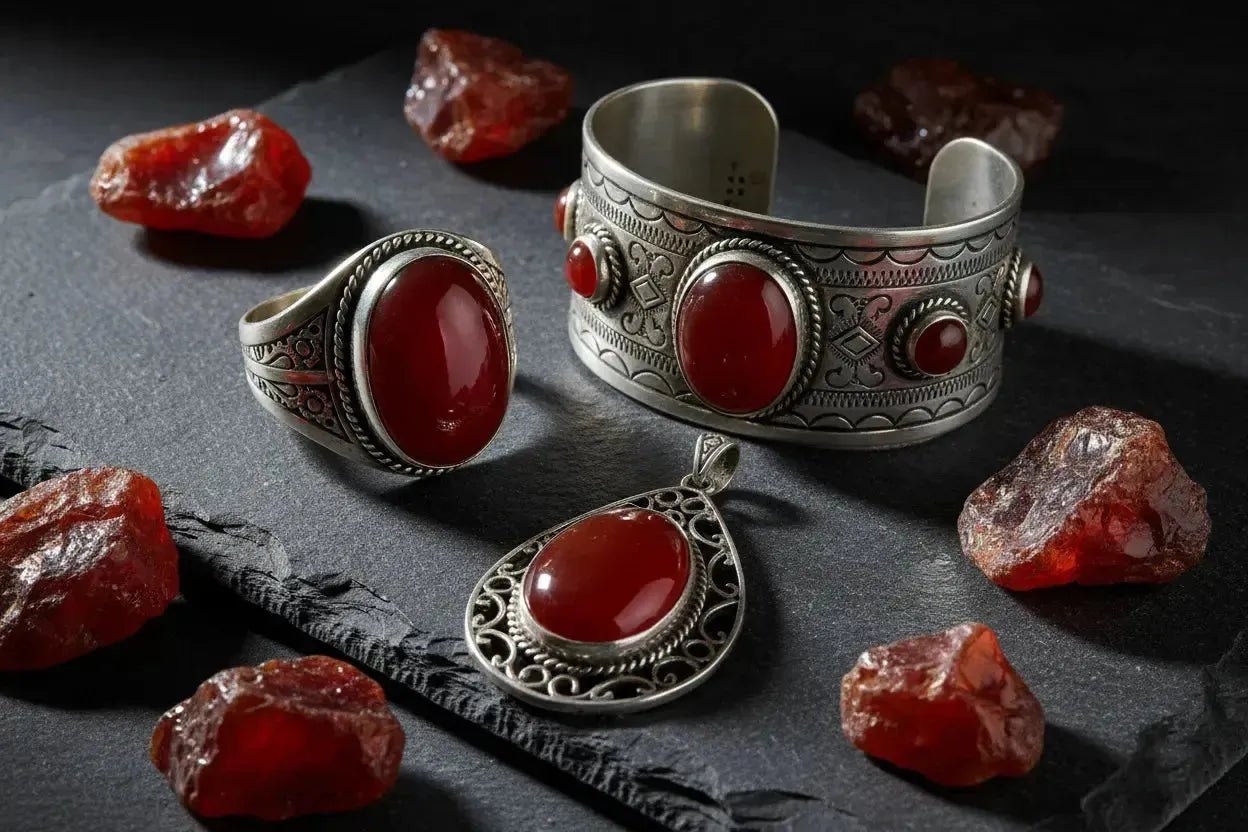
Kabyle Jewelry: Berber Tradition and Femininity in 925 Silver
Kabylia: Cradle of Exceptional Jewelry
Nestled in the mountains of northern Algeria, Kabylia is the birthplace of a jewelry tradition of remarkable finesse and sophistication. Kabyle jewelry in solid silver is recognized by specialists as among the most elaborate of all Berber jewelry — a millenary art that combines technique, symbolism, and cultural identity.
Unlike Tuareg jewelry, which is adapted to the nomadic desert life, Kabyle jewelry reflects a sedentary mountain civilization — more refined, more detailed, often enriched with colored enamel and carefully chosen natural stones. Each piece is a miniature masterpiece that tells the story of a people proud of their roots.
The Kabyle Fibula: Queen of Berber Jewelry
The fibula is the quintessential Kabyle jewel. This silver clasp, used to hold the haïk — the traditional Kabyle garment — is much more than a functional accessory. It is the ultimate identity jewel, one that immediately distinguishes a Kabyle woman and asserts her belonging to her community.
Forms of the Kabyle Fibula
- The triangular fibula — the most common, adorned with engraved geometric patterns and colored enamel
- The circular fibula — disc-shaped, often adorned with carnelian or turquoise
- The lozenge-shaped fibula — symbol of fertility and protection
- The double fibula — two fibulae connected by a chain, worn in pairs on the shoulders
Kabyle Bracelets: Elegance and Symbolism
Kabyle silver bracelets are distinguished by their fineness and sophistication. Unlike massive Tuareg bracelets, Kabyle bracelets are often more slender, more delicate, adorned with remarkably precise engraved motifs.
Kabyle Necklaces: Festival Adornment
Kabyle necklaces are spectacular pieces, worn on special occasions — weddings, religious festivals, family ceremonies. They generally combine finely crafted silver beads with natural stones — carnelian, turquoise, amber — and pendants in the shape of the Hand of Fatima or a crescent.
Symbolism of Kabyle Jewelry
The Lozenge: Fertility and Protection
The lozenge is the central motif of Kabyle jewelry. It represents women, fertility, and protection against the evil eye. It is found on all pieces, from fibulae to bracelets and rings.
The Serpent: Wisdom and Renewal
The serpentine motif symbolizes wisdom, renewal, and the connection between the world of the living and that of ancestors.
The Hand of Fatima: Universal Protection
The khamsa — Hand of Fatima — is omnipresent in Kabyle jewelry. It protects its wearer from the evil eye and brings good fortune.
Kabyle Artisans: Guardians of Millenary Craftsmanship
Kabyle jewelry is traditionally the preserve of men — the iferrahen — who pass down their expertise from father to son for generations.
Kabyle Jewelry and Marriage: The Bridal Adornment
The Kabyle wedding is the perfect occasion to display the richness of traditional jewelry. The bride is adorned from head to toe: fibulae on the shoulders, layered necklaces, bracelets on both wrists, rings on each finger, earrings, and a tiara.
The Great Centers of Kabyle Goldsmithery
Kabyle jewelry was not uniformly produced throughout the region — some villages specialized over the centuries and became recognized centers of reference throughout Algeria. Ath Yenni, a village in Grande Kabylie, is particularly renowned for its mastery of colored enamel applied to silver, a delicate technique that requires precise control of firing temperature to obtain the characteristic green, yellow, and blue hues of the Kabyle style. This reputation has crossed borders: even today, the expression "Ath Yenni jewelry" is used as a guarantee of quality and authenticity in all Berber jewelry.
These goldsmith villages historically operated under a strict family and corporate organization, where know-how — the choice of alloys, enamel proportions, engraving techniques — was exclusively passed down within artisan lineages, with each family jealously guarding certain manufacturing secrets that distinguished its production from that of neighboring workshops.
The Kabyle Fibula Compared to Other Berber Traditions
While the fibula holds a central place in all Berber jewelry, its Kabyle treatment differs significantly from that of the Tuaregs of the Sahara. Where Tuareg jewelry favors massive forms and dry-engraved geometric patterns, the Kabyle fibula is characterized by the systematic addition of colored enamel, creating a chromatic contrast between the shiny silver and the enameled cabochons. This aesthetic difference reflects very different lifestyles: Kabyle mountain sedentarism allowed for the development of more elaborate craftsmanship, with fixed workshops and kilns for enamel, while Tuareg nomadic life imposed simpler and quicker techniques to execute.
The Stages of the Kabyle Wedding and Progressive Adornment
The Kabyle wedding adornment is not composed all at once — it is built progressively over the various stages of the traditional ceremony, which can span several days. Each stage calls for different jewels: the henna ceremony sees the bride wear more discreet pieces, while the official presentation to the families justifies the full deployment of the adornment — double fibulae on the shoulders, layered necklaces, a tiara, and multiple bracelets. This gradation in the wearing of jewelry reflects the increasing symbolic intensity of the ceremony itself, with each stage marking an additional degree of commitment and social recognition of the union.
This ceremonial dimension aligns with the symbolism of the lozenge and other Berber geometric motifs found engraved on these wedding pieces, each reinforcing the vows of fertility and protection addressed to the young bride.
The Kabyle Heritage in Contemporary Jewelry
At Vindicta, we draw on this Berber heritage to create jewelry in certified 925 silver that honors these millenary traditions while meeting contemporary tastes.
- Women's 925 silver rings — elegance and character
- Women's 925 silver bracelets — finesse and sophistication
- Women's 925 silver necklaces — exceptional adornments
Conclusion: Kabyle Jewelry, a Living Art
Kabyle 925 silver jewelry is much more than adornments — it is living works of art that carry the history, spirituality, and identity of a people proud of their roots.
Explore our complete guide to Berber jewelry and discover the entirety of this fascinating heritage.
✦ Vindicta — Solid 925 silver
The piece that makes the difference
Certified 925 silver · Free shipping from €69 · 10 years of excellence
Berber & Oriental Jewellery →