Berber and Andalusian Jewelry: The Maghreban Heritage in Sterling Silver
There's an Islamic jewelry tradition that's less known than Turkish or Persian, but no less rich: that of the Maghreb and Al-Andalus. For eight centuries, the Islamic Iberian Peninsula—Cordoba, Granada, Seville—was one of the world's most brilliant intellectual and artistic centers. And the Berber artisans of Morocco, Algeria, and Tunisia simultaneously developed an exceptionally rich tradition of silver jewelry. Discover our selection of Islamic 925 sterling silver jewelry inspired by this heritage.
Al-Andalus: Eight Centuries of Islamic Jewelry in the West
From 711 to 1492, the Islamic Iberian Peninsula—Al-Andalus—was the bridge between East and West. Cordoba, the capital of the Umayyad Caliphate, was the largest city in Western Europe, with its libraries, medical schools, and artisan workshops. Andalusian jewelers developed a unique style there, blending Arab, Berber, Visigothic, and Byzantine influences.
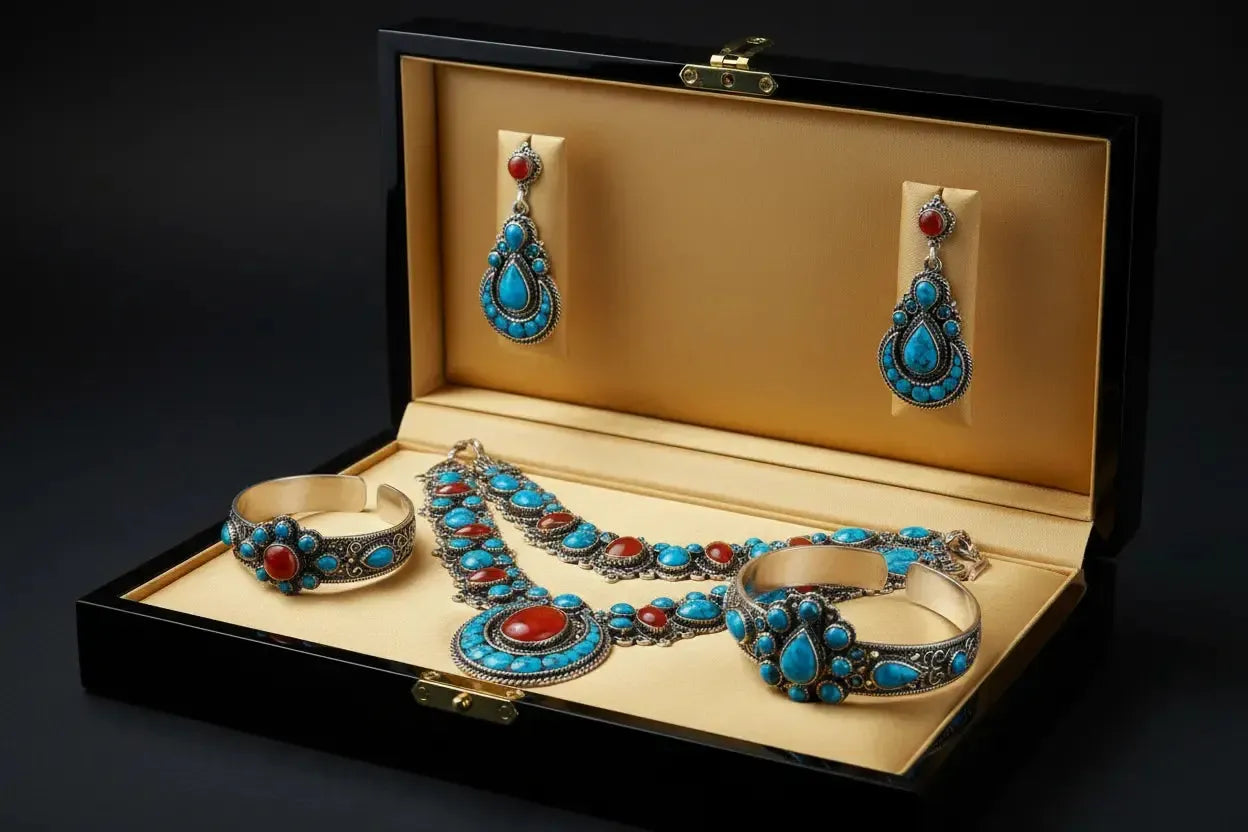
Andalusian silver jewelry was distinguished by its technical finesse: airy filigree, complex geometric engravings, and colorful stone inlays. Arabesque motifs—infinite interlacings of geometric and floral shapes—were the visual signature of this Western Islamic art.
Berber Jewelry: A Millennial Tradition
Alongside Al-Andalus, Berber artisans of the Maghreb developed their own tradition of silver jewelry. Unlike Ottoman jewelry—which was more opulent and imperial—Berber jewelry is characterized by rigorous geometry, ancient symbols, and a generous use of solid silver.
Each region of the Maghreb developed its own style:
- Morocco: jewelry from the Souss, Anti-Atlas, and Rif—fibulae, pendant necklaces, massive silver bracelets with enamel and coral. Discover our article dedicated to the Moroccan filigree of Fes.
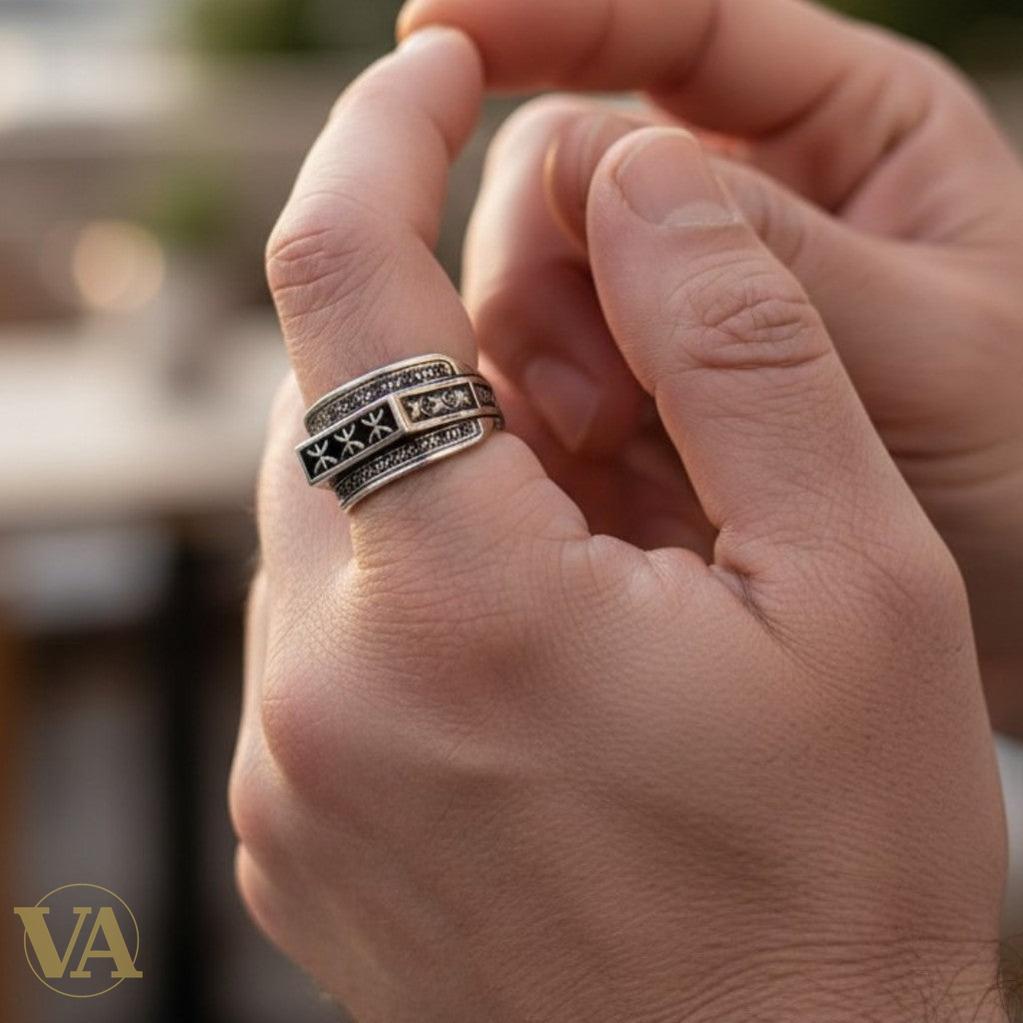
- Algeria: exceptionally refined Kabyle jewelry, with cloisonné enamel and precise geometric motifs. Explore our article on Algerian silver jewelry—Tlemcen and Kabylie.
- Tunisia: jewelry from Djerba and the Sahel, blending Andalusian, Ottoman, and Jewish influences in a unique Mediterranean style.
Symbols of Berber and Andalusian Jewelry
Berber and Andalusian jewelry are laden with symbols, many of which have been Islamized over the centuries:
- The Hand of Fatima (Khamsa): a symbol of protection against the evil eye, present throughout Maghrebi jewelry. Associated with Fatima, daughter of the Prophet ﷺ, it is both an Islamic symbol and an ancestral talisman.
- The Eye: stylized representation of the protective eye, often in blue enamel or turquoise.
- The Crescent: universal Islamic symbol, particularly present in Tunisian jewelry.
- Geometric Interlaces: infinite motifs representing divine unity and infinity—a signature of Islamic art.
- Stylized Floral Motifs: arabesques inherited from the Andalusian tradition.
The Stones of Maghrebi Jewelry
Berber and Andalusian jewelry uses natural stones with vibrant colors and deep meanings:
- Carnelian: reddish-orange, the Prophet's stone ﷺ, omnipresent in Maghrebi jewelry.
- Turquoise: blue-green, a stone of protection and wisdom, widely used in Morocco and Algeria.
- Black Onyx: sober and powerful, a stone of protection against the evil eye.
- Tiger's Eye: golden and shimmering, a stone of discernment and clarity.
- Amethyst: purple, a symbol of spirituality and wisdom in the Eastern tradition.
The Andalusian Legacy in Contemporary Jewelry
When the Muslims of Al-Andalus were expelled from Spain in 1492—the Moriscos—they took their artisanal expertise with them. Andalusian artisans found refuge in Morocco, Algeria, Tunisia, and Turkey, enriching local traditions with their techniques and motifs. This is why today there are striking similarities between the jewelry of Fes, Tlemcen, and certain regions of Turkey.
This cross-cultural heritage—Andalusian, Berber, Ottoman—is at the heart of Vindicta's identity. Our Islamic 925 sterling silver jewelry is part of this multiple and rich lineage.
Berber Jewelry and Maghrebi Identity in France
In France, millions of people of Maghrebi origin carry this Berber and Andalusian heritage. Wearing a 925 silver jewel inspired by this tradition means asserting a complex and rich identity—at once French, Maghrebi, Islamic, and Mediterranean. It means refusing to choose between affiliations and celebrating them all at once.
Our Selection Inspired by Berber and Andalusian Heritage
For over 10 years, Vindicta has been selecting 925 solid silver jewelry inspired by Ottoman, Andalusian, and Berber traditions. Certified, authentic pieces, chosen for their quality and consistency with this multiple heritage.
Explore our collection of Islamic 925 silver jewelry, our vintage jewelry, and our Art Deco jewelry to discover pieces that carry this heritage.
Also consult our article on the Islamic 925 silver ring and our article on the Islamic signet ring to delve deeper into the subject.
Vindicta is a house of 925 solid silver jewelry inspired by Ottoman, Andalusian, and Art Deco traditions. By choosing Vindicta, you wear a heritage—not an accessory. Consult our authenticity page to learn more about our certifications.
✦ Vindicta — Argent 925 Massif
La pièce qui fait la différence
Certifié argent 925 · Livraison offerte dès 69€ · 10 ans d'excellence
Bijoux Orientaux Argent 925 →