The Islamic Ring: Sunnah, History, and Traditions of the Prophet
Before becoming a symbol of European nobility, the signet ring was a seal—a tool of power, identity, and faith in Islamic civilizations. Prophet Muhammad ﷺ himself wore one. Caliphs, sultans, and scholars wore them. Today, the 925 sterling silver Islamic signet ring is experiencing a remarkable revival, worn by millions of Muslim men who seek to reconcile faith, identity, and elegance. Discover our selection of 925 sterling silver Islamic signet rings.
The Seal of the Prophet: The Origin of the Islamic Signet Ring
The history of the Islamic signet ring begins with Prophet Muhammad ﷺ himself. According to authentic hadiths reported in Sahih Bukhari and Sahih Muslim, the Prophet ﷺ wore a silver ring engraved with the words Muhammad Rasul Allah—"Muhammad, Messenger of God." He used it as an official seal to authenticate his letters to kings and governors.
This seal was worn on the little finger of the right hand according to some narrations, and on the left hand according to others. After the death of the Prophet ﷺ, the ring passed to Abu Bakr, then to Omar, then to Othman—the first three caliphs—before falling into a well and being lost. This story gives the Islamic signet ring a unique historical and spiritual dimension.
The Signet Ring in Islamic Tradition: What the Sunnah Says
The Sunnah—the collection of words, actions, and approvals of the Prophet ﷺ—is precise on several points concerning the ring:
- Material: silver is permissible and recommended, gold is forbidden for men.
- Finger: the little finger is most recommended, the ring finger is permissible, the index and middle fingers are discouraged.
- Hand: the right hand is preferred according to many scholars.
- Engraving: religious inscriptions are permitted and valued, but impose rules of respect (removal in places of impurity).
- Weight: sobriety is valued, ostentation is discouraged.
Consult our comprehensive guide on what ring a Muslim man can wear to delve deeper into these rules.
The Era of the Caliphs: The Signet Ring as a Symbol of Power
After the Prophet ﷺ, the signet ring became the attribute of Islamic power. Umayyad and Abbasid caliphs wore silver seals engraved with their names and religious formulas. These rings were not mere ornaments—they were instruments of governance, official signatures, symbols of delegated divine authority.
Islamic artisans of that era developed engraving techniques of exceptional finesse. The Kufic style—angular and geometric—was most commonly used for official inscriptions. Each letter was precisely carved into the silver, creating pieces that were both functional and artistic.
The Ottoman Empire: The Golden Age of the Islamic Signet Ring
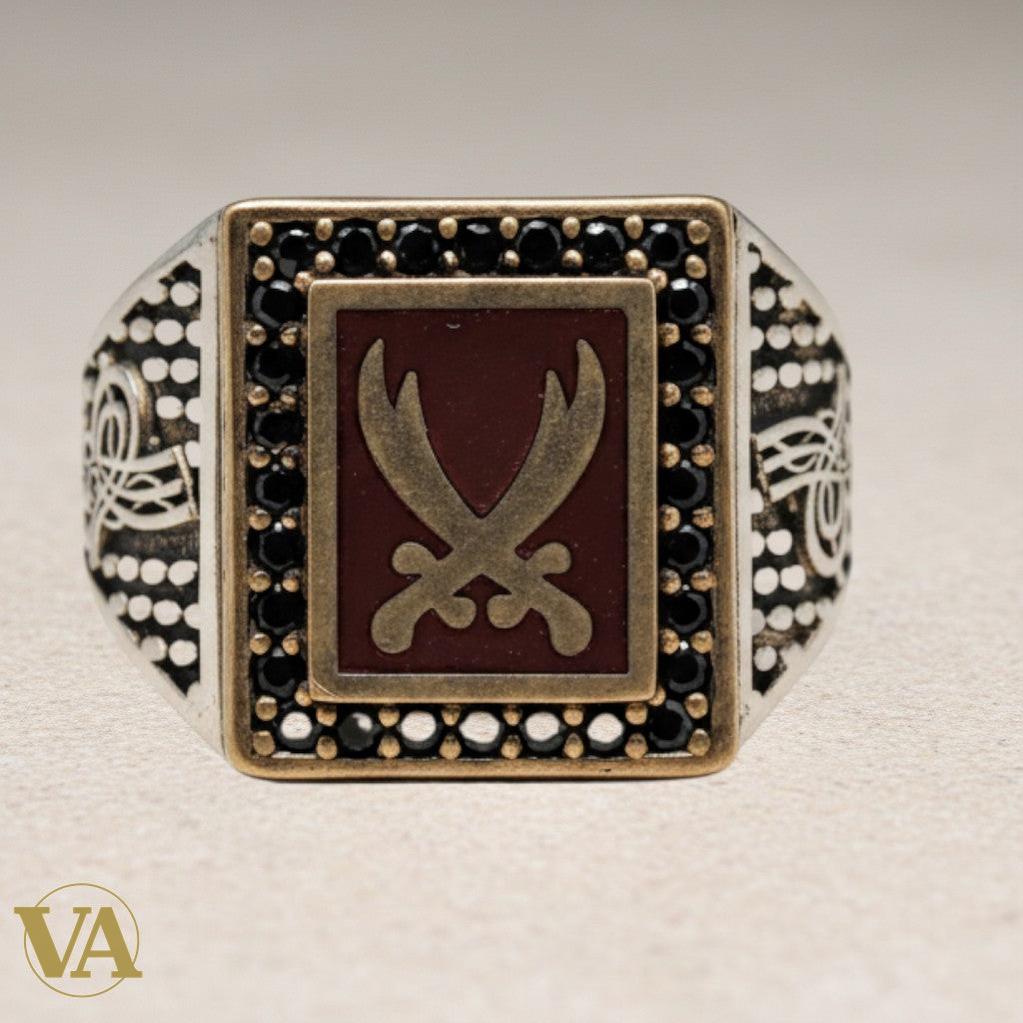
It was under the Ottoman Empire that the Islamic signet ring reached its artistic peak. Ottoman sultans wore signet rings adorned with their tughra—the royal calligraphic monogram—and precious stones. These pieces, now preserved in Istanbul museums, bear witness to unparalleled craftsmanship.
Ottoman artisans mastered the art of silver filigree, deep engraving, and natural stone inlay—carnelian, turquoise, onyx, tiger's eye. Each signet ring was a unique work of art, worn as a declaration of identity and faith.
It is this Ottoman heritage that directly inspires the Vindicta selection. Our men's 925 sterling silver signet rings are part of this tradition—pieces that carry history without betraying it.
Islamic Andalusia: The Signet Ring of Knowledge
In Islamic Andalusia—Al-Andalus—the signet ring was the jewel of scholars and poets as much as warriors. Artisans in Cordoba and Granada developed a unique style, blending Arab, Berber, and Visigothic influences. Andalusian silver rings were often adorned with complex geometric motifs—arabesques—and brightly colored stones.
This Andalusian heritage is also at the heart of Vindicta's identity, a jewelry house inspired by Ottoman and Andalusian traditions.
Symbols Engraved on the Islamic Signet Ring
The Islamic signet ring can bear many meaningful symbols:
- The Tughra: Ottoman calligraphic monogram, symbol of royalty and identity.
- The Shahada: Islamic declaration of faith in Arabic calligraphy.
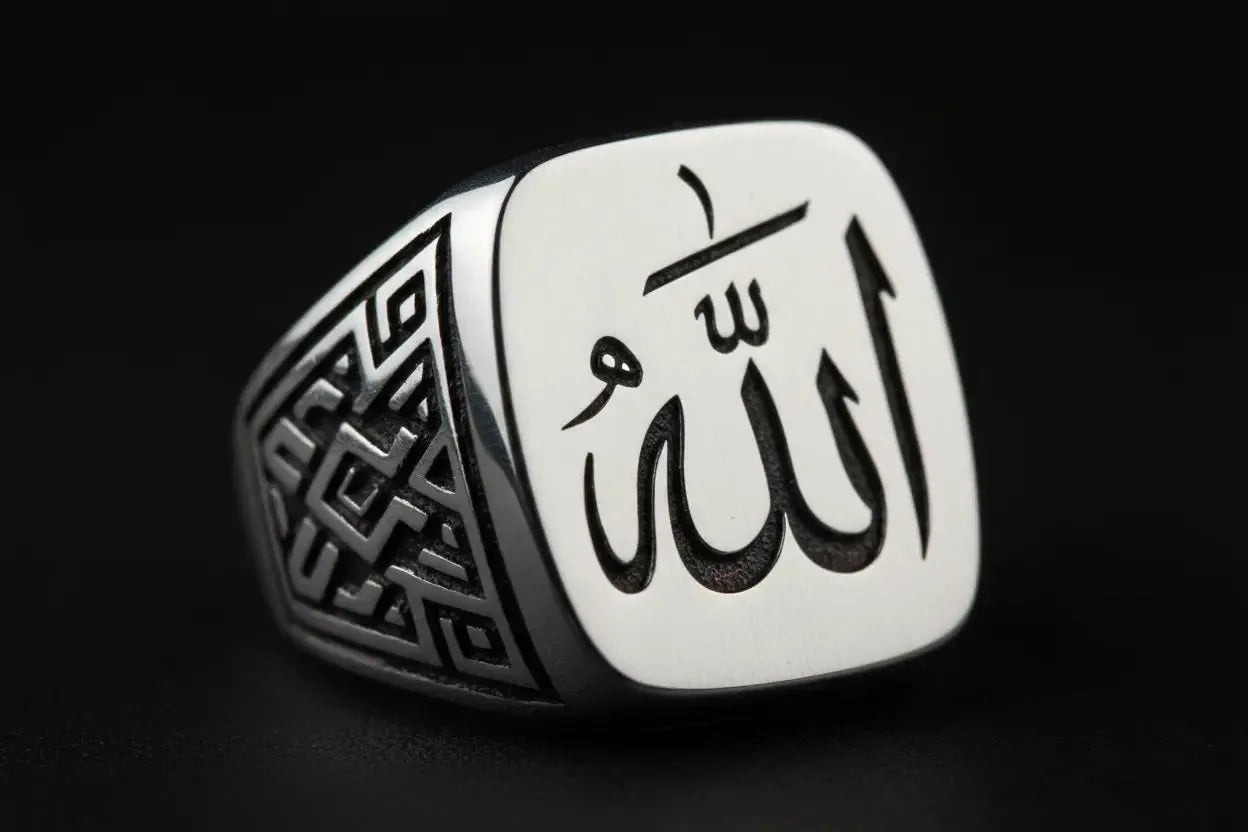
- Allah: the divine name in Thuluth, Naskh, or Kufic style.
- The Crescent and Star: symbol of Islamic civilization since the Ottoman era.
- The Throne Verse: a Quranic verse of protection, engraved in fine calligraphy.
The Stones of the Islamic Signet Ring
Islamic tradition values several natural stones for adorning the signet ring:
- Carnelian (Aqiq): the Prophet ﷺ's stone, symbol of protection and blessing. See our carnelian rings.
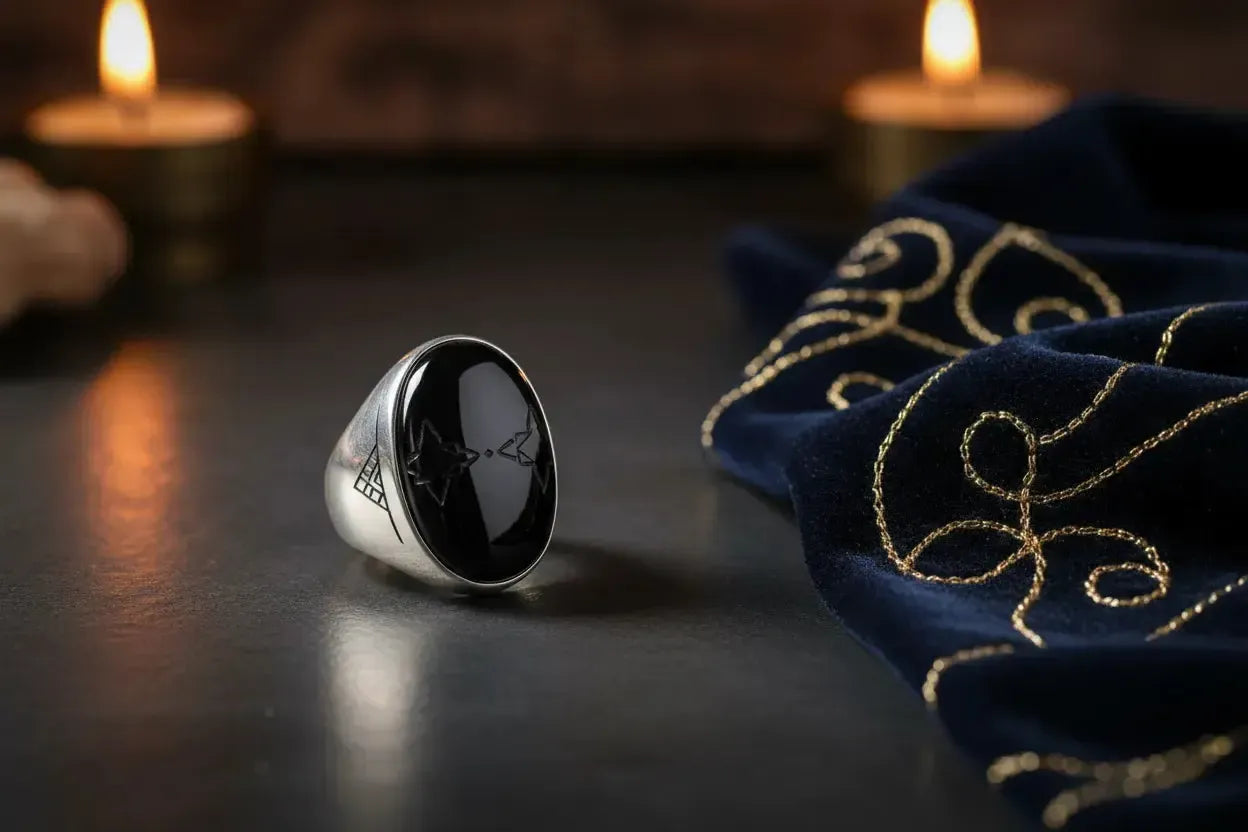
- Black Onyx: stone of strength and protection against the evil eye. Explore our black onyx rings.
- Turquoise: stone of Ottoman sultans, symbol of wisdom. Find our turquoise rings.
- Tiger's Eye: stone of discernment and clarity of mind. See our tiger's eye rings.
The Islamic Signet Ring Today: An Identity Revival
In the 21st century, the Islamic signet ring is experiencing a remarkable revival. New generations of Muslims—in France, Europe, and around the world—seek to express their identity with elegance and authenticity. The 925 sterling silver signet ring, adorned with natural stones and Islamic symbols, meets this profound need.
Wearing an Islamic signet ring means affirming who you are—without compromise, without ostentation, with the dignity that Islamic tradition has always valued.
For over 10 years, Vindicta has been selecting solid 925 sterling silver Islamic jewelry, inspired by Ottoman and Andalusian traditions. Consult our article on the 925 sterling silver Islamic ring to delve deeper into the subject. Visit our authenticity page to learn more about our certifications.
Vindicta is a jewelry house specializing in solid 925 sterling silver, inspired by Ottoman, Andalusian, and Art Deco traditions. By choosing Vindicta, you wear a heritage—not just an accessory.
✦ Vindicta — Argent 925 Massif
La pièce qui fait la différence
Certifié argent 925 · Livraison offerte dès 69€ · 10 ans d'excellence
Bijoux Orientaux Argent 925 →