
Blister Pearl: Properties, Origins and Jewelry
Focus on the Blister Pearl
Summary
- Introduction
- Characteristics
- History and Origin
- Varieties of Blister Pearls
- Meaning and Virtues
- Origins Around the World
- Blister Pearl Jewelry at Vindicta
- The Vindicta Perspective
- Care and Advice
- Pearls to Discover
- Frequently Asked Questions
- Conclusion
Introduction
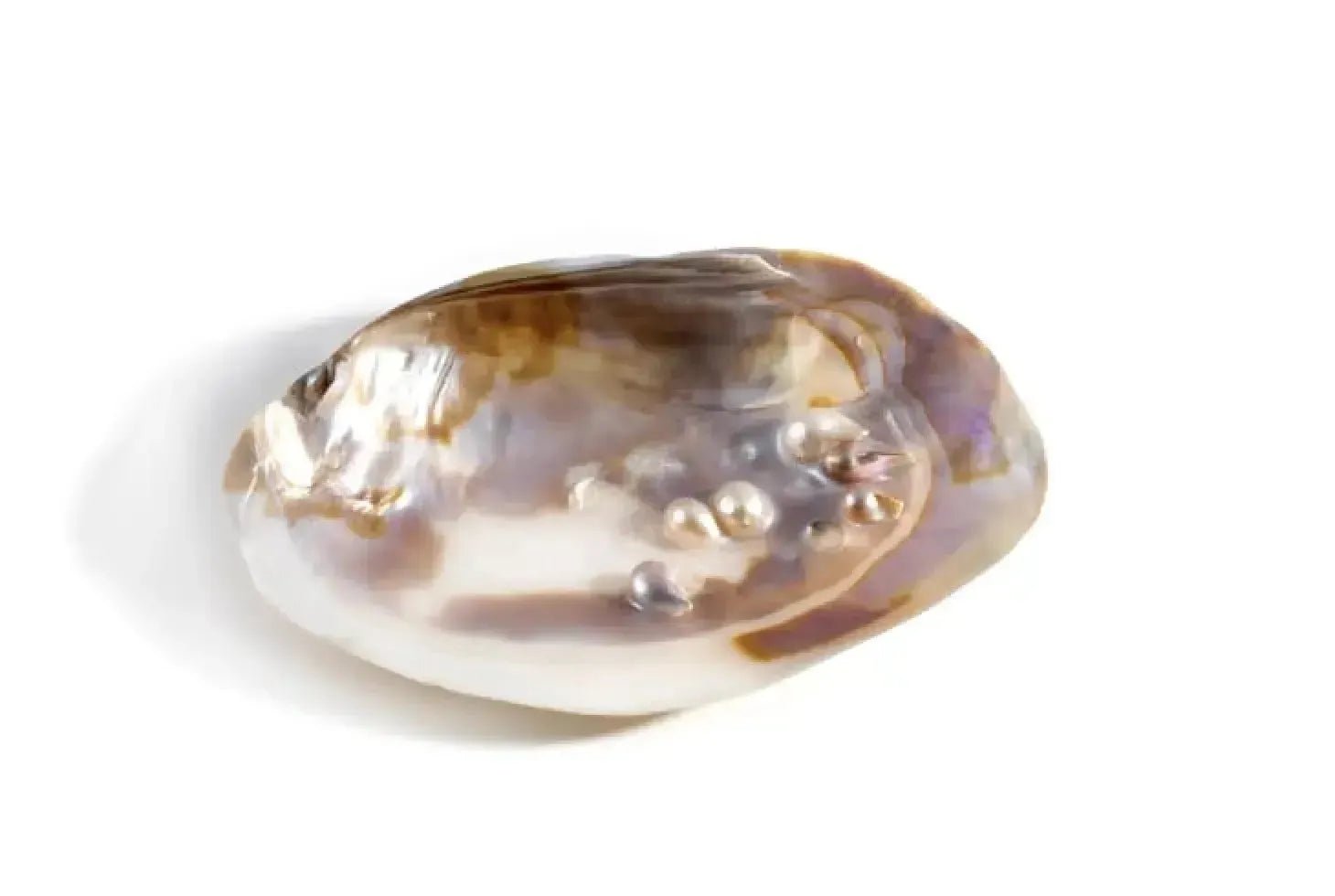
The blister pearl is one of the rarest and most unique forms of pearl jewelry. Its name comes from the English word "blister" — a reference to its formation: the blister pearl develops adhered to the mollusk's shell, like a blister on the inner wall. Unlike round pearls cultivated in the mantle tissue, the blister pearl is literally fused to the shell — it must be cut out with a part of the shell to be retrieved.
This unique origin gives it a characteristic shape: domed and pearlescent on one side, flat and shelled on the other. The pearlescent face is covered with the same iridescent nacre as round pearls — but on an organic and irregular surface that uniquely amplifies reflections. Associated with solid 925 silver, it creates jewelry of absolutely unique organic singularity and beauty.
Characteristics of the Blister Pearl
Composition and Structure
- Type: pearl adhered to the shell, cut with its base
- Structure: nucleus covered with nacre on the visible side, shell base
- Shape: domed on one side, flat on the other — similar to the Mabé pearl but more irregular
- Size: very variable, from 10 to 30 mm depending on the species
- Color: depends on the species (white, cream, pink, grey, black, golden)
Difference with the Mabé Pearl
The blister pearl and the Mabé pearl are often confused, but they differ on one essential point:
- Mabé Pearl: intentionally cultivated against the shell with an implanted hemispherical nucleus — regular and predictable shape
- Blister Pearl: forms naturally or accidentally against the shell — irregular and unpredictable shape, more organic
Hardness and Resistance
- 2.5 to 4.5 on the Mohs scale — soft gem
- Sensitive to acids, heat, and chemicals
History and Origin of the Blister Pearl
Blister pearls have been known since antiquity — they were found naturally in oysters fished for their nacre or flesh. In ancient civilizations, their irregular shape and large size made them objects of curiosity and prestige.
In Japan, blister pearls were used in traditional jewelry long before the development of modern pearl cultivation. Japanese artisans had developed techniques to cut and mount these irregular pearls into distinctive jewelry.
Today, blister pearls are mainly by-products of pearl farms — pearls that accidentally formed against the shell during the cultivation process. Their relative rarity and uniqueness make them sought-after gems by creative jewelers.
Varieties of Blister Pearls
- Akoya Blister (Japan): pearlescent white to cream, small size, intense luster
- South Sea Blister (Australia, Philippines): silvery white to golden, large size, very precious
- Tahitian Blister (French Polynesia): dark grey to black with iridescent reflections, same palette as the Tahitian pearl
- Freshwater Blister (China): very varied shapes and colors, abundant production
- Abalone Blister (Haliotis): spectacular rainbow reflections, highly sought after by collectors
Meaning and Virtues of the Blister Pearl
Emotional & Spiritual Level
- Singularity & uniqueness: each blister pearl is absolutely unique — a symbol of the uniqueness of each being
- Anchoring: born adhered to its shell, a symbol of anchoring and belonging
- Purity: shares the universal symbolism of purity and wisdom of pearls
- Femininity: associated with the moon, the sea, and feminine energy
Physical Level (beliefs in lithotherapy)
- Shares the general virtues of pearls: soothing, emotional balance
Note: the virtues of lithotherapy are not scientifically proven and do not replace medical advice.
Origins of Blister Pearls Around the World
- Japan: ancient tradition, reference quality
- Australia, Philippines, Indonesia: South Sea blister, large and precious
- French Polynesia: Tahitian blister, spectacular iridescent black
- China: freshwater blister, abundant production
- New Zealand, United States: abalone blister, unique rainbow reflections
Blister Pearl Jewelry at Vindicta
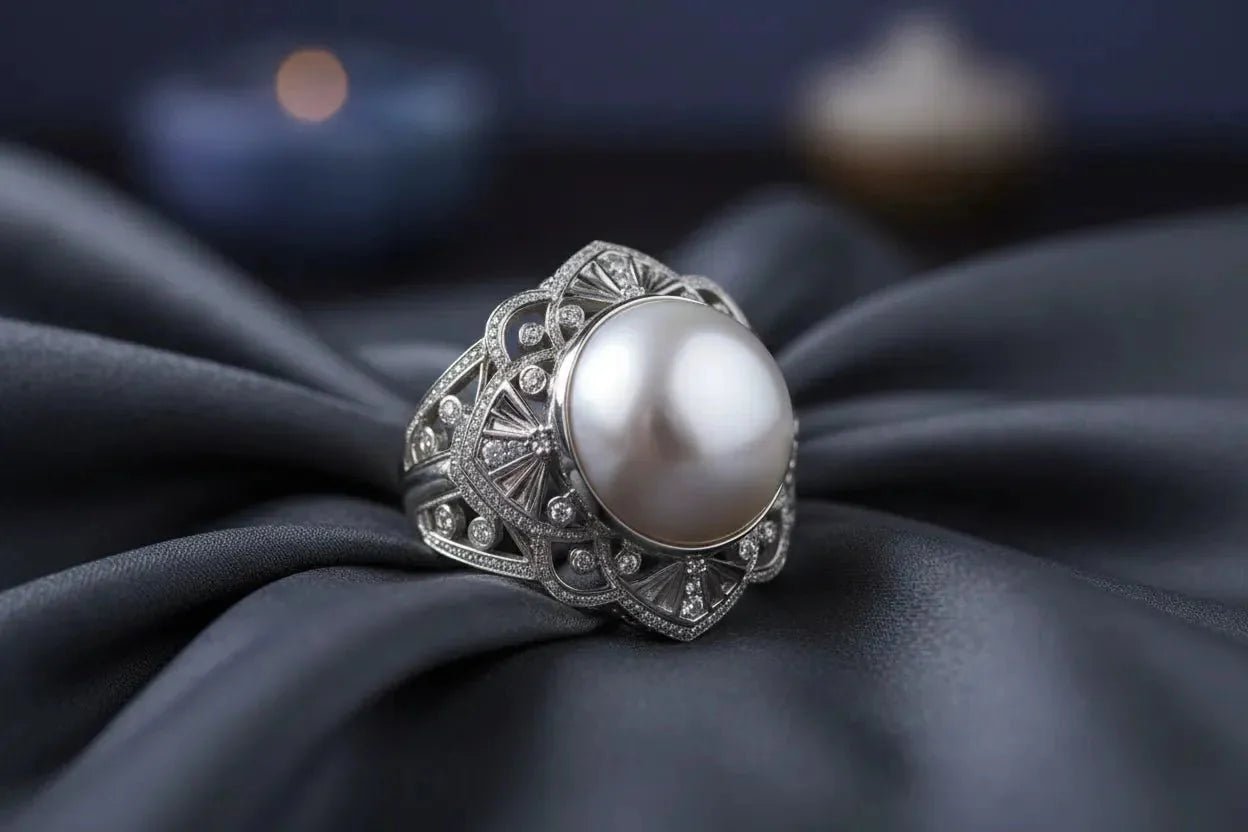
The blister pearl, with its organic shape and pearlescent luster, naturally pairs with solid 925 silver to create jewelry of absolutely unique organic singularity and beauty. Its large size and irregular shape make it a gem of immediate presence.
Discover our mother-of-pearl and 925 silver pearl jewelry collection and our 925 silver natural stone jewelry collection.
The Vindicta Perspective
The blister pearl is the most "raw" pearl in our selection. It was not cultivated for a precise shape — it formed freely, adhered to its shell, according to the laws of marine biology. This organic and unpredictable dimension perfectly matches Vindicta's aesthetic — character over perfection, singularity over standardization.
What fascinates us about the blister pearl is also its kinship with mother-of-pearl. The blister pearl is literally an outgrowth of mother-of-pearl on the shell — the same material, the same iridescence, but in a three-dimensional and organic form. It is mother-of-pearl sculpted by marine life.
The blister pearl is also the pearl that brings us closest to the Mabé pearl and the Keshi pearl in our selection. All three value non-spherical shapes and unique origins. Together, they form a trio of characterful pearls — for those who prefer exception to the norm.
Care and Advice for your Blister Pearl Jewelry
- Fragility: the blister pearl is more fragile than round pearls — avoid shocks
- Acids: absolutely avoid any contact with acidic substances
- Cleaning: soft, slightly damp cloth only. Dry immediately
- Storage: soft fabric pouch, separate from other jewelry
- Chemicals: avoid perfumes, creams, and detergents
To go further: Complete care guide for your 925 silver jewelry.
Pearls to Discover
- 🪪 Mother-of-Pearl — the material the blister pearl is made of
- 🪪 Pearls — complete guide to all varieties
- 🪪 The Mabé Pearl — cultivated half-sphere, large size, same elegance
- 🪪 The Keshi Pearl — entirely made of mother-of-pearl, exceptional luster
- 🪪 The Baroque Pearl — free form, each piece unique
- 🔵 The Tahitian Pearl — the most spectacular of black pearls
- 📖 Complete Guide to Natural Stones 2026 — all about stones in jewelry
Frequently Asked Questions about the Blister Pearl
What is the difference between a blister pearl and a Mabé pearl?
Both form against the shell, but the Mabé pearl is intentionally cultivated with an implanted hemispherical nucleus — its shape is regular and predictable. The blister pearl forms naturally or accidentally — its shape is irregular and unpredictable. The Mabé is more uniform, the blister is more organic and unique.
Is the blister pearl rare?
Yes — jewel-quality blister pearls are relatively rare. They form accidentally in pearl farms and cannot be produced on demand. The most beautiful — especially Tahitian or South Sea blister pearls — are highly sought after by creative jewelers.
How is the blister pearl used in jewelry?
The blister pearl is generally mounted with its shell base integrated into the setting — which gives it a unique organic and raw dimension. It is particularly suitable for pendants, earrings, and distinctive rings where its irregular shape becomes an aesthetic element in its own right.
Conclusion
The blister pearl is an exceptional gem — organic, unique, born from the encounter between marine life and the shell. Its irregular shape and large size make it a gemstone with character — for those who prefer exception to the norm and organic beauty to industrial perfection.
Associated with solid 925 silver, the blister pearl creates jewelry of absolutely unique organic singularity and beauty — pieces that carry within them the magic of mother-of-pearl and the imprint of marine life.
✦ Vindicta — Solid 925 silver
The piece that makes the difference
Certified 925 silver · Free shipping from €69 · 10 years of excellence
Natural Stone Jewellery →



Leave a comment
This site is protected by hCaptcha and the hCaptcha Privacy Policy and Terms of Service apply.