Ukraine: The Money of Kyivan Rus' between Byzantine Heritage and Cossack Tradition
Kyiv, before Moscow, was the first great center of Orthodox Slavic civilization—and its silverwork, born from direct contact with Byzantium, is among the oldest metallurgical traditions in Eastern Europe. Between the medieval heritage of Kyivan Rus', Cossack art, and the popular filigree of the Ukrainian Carpathians, Ukrainian silver tells a thousand years of metalwork at the crossroads of the Slavic, Byzantine, and European worlds.
Kyivan Rus', the first Christian Slavic metalwork
In the 10th century, the conversion of Kyivan Rus' to Orthodox Christianity opened the doors of Byzantine workshops to local artisans. Archaeological excavations in Kyiv have revealed treasures of metalwork dating back to this era—necklaces, temporal earrings, and silver bracelets adorned with geometric motifs and fine filigree, often enhanced with black niello that made the design stand out against the light metal. This niello technique, inherited directly from Byzantine workshops, remained a signature of Eastern Slavic metalwork for centuries. Temporal earrings, worn on either side of the face and suspended from a fabric band or headwear, are among the most distinctive pieces from this period, found in large numbers in the necropolises of the Kyiv region.
The Pereshchepyna Treasure and the metalwork of the steppes
Discovered in 1912 near Poltava, the Pereshchepyna Treasure, dated to the 7th century, bears witness to ancient metalwork long before Kyivan Rus', linked to the nomadic peoples of the Pontic steppes. Cups, liturgical vessels, and silver and gold jewelry there are alongside Byzantine, Persian, and Central Asian influences, testifying to the role of a commercial crossroads that the Ukrainian territory already played on the route connecting Europe to Asia. This type of treasure reminds us how much the history of Ukrainian metalwork largely predates the Christian era, rooted in a precious metalworking tradition over a millennium old.
The filigree of the Ukrainian Carpathians
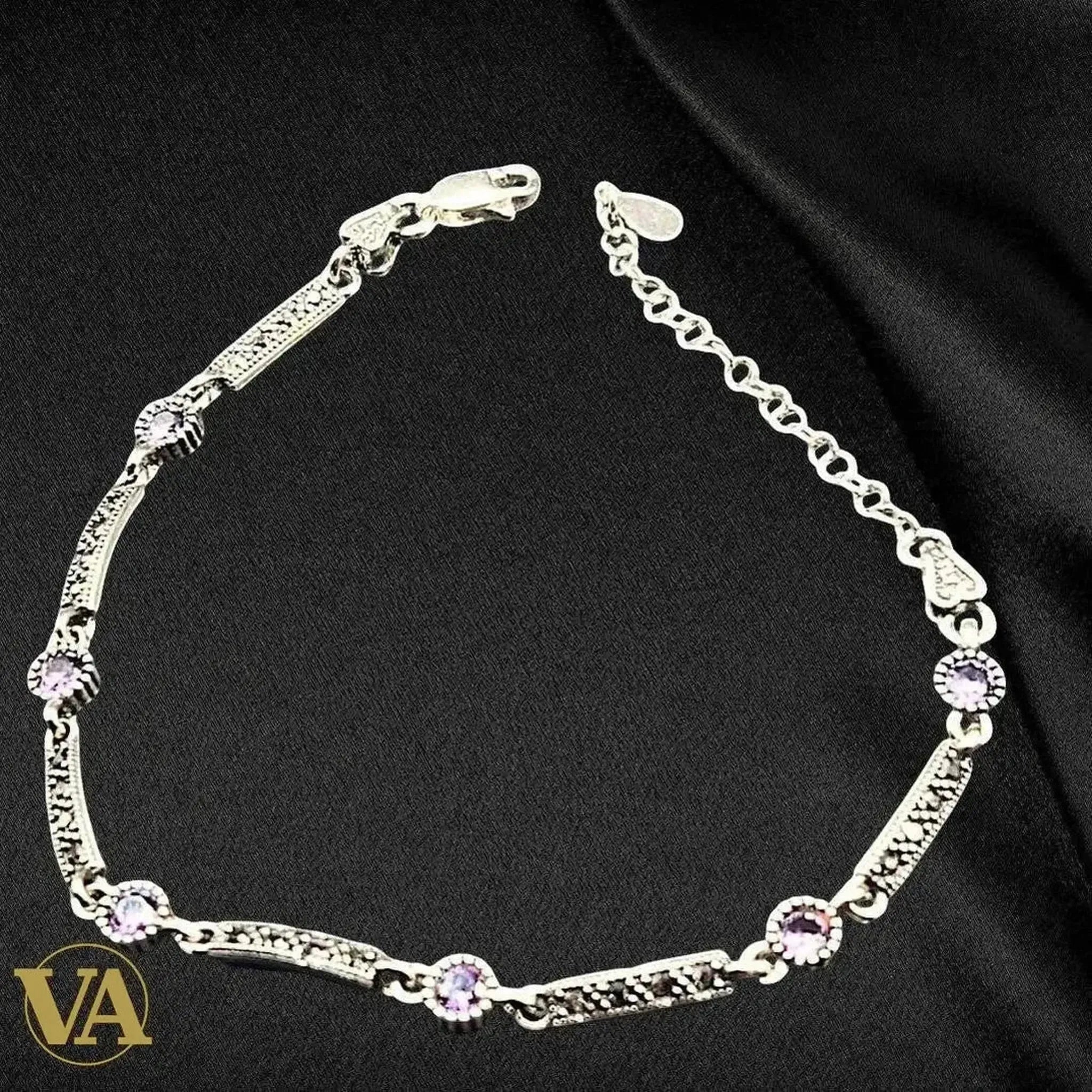
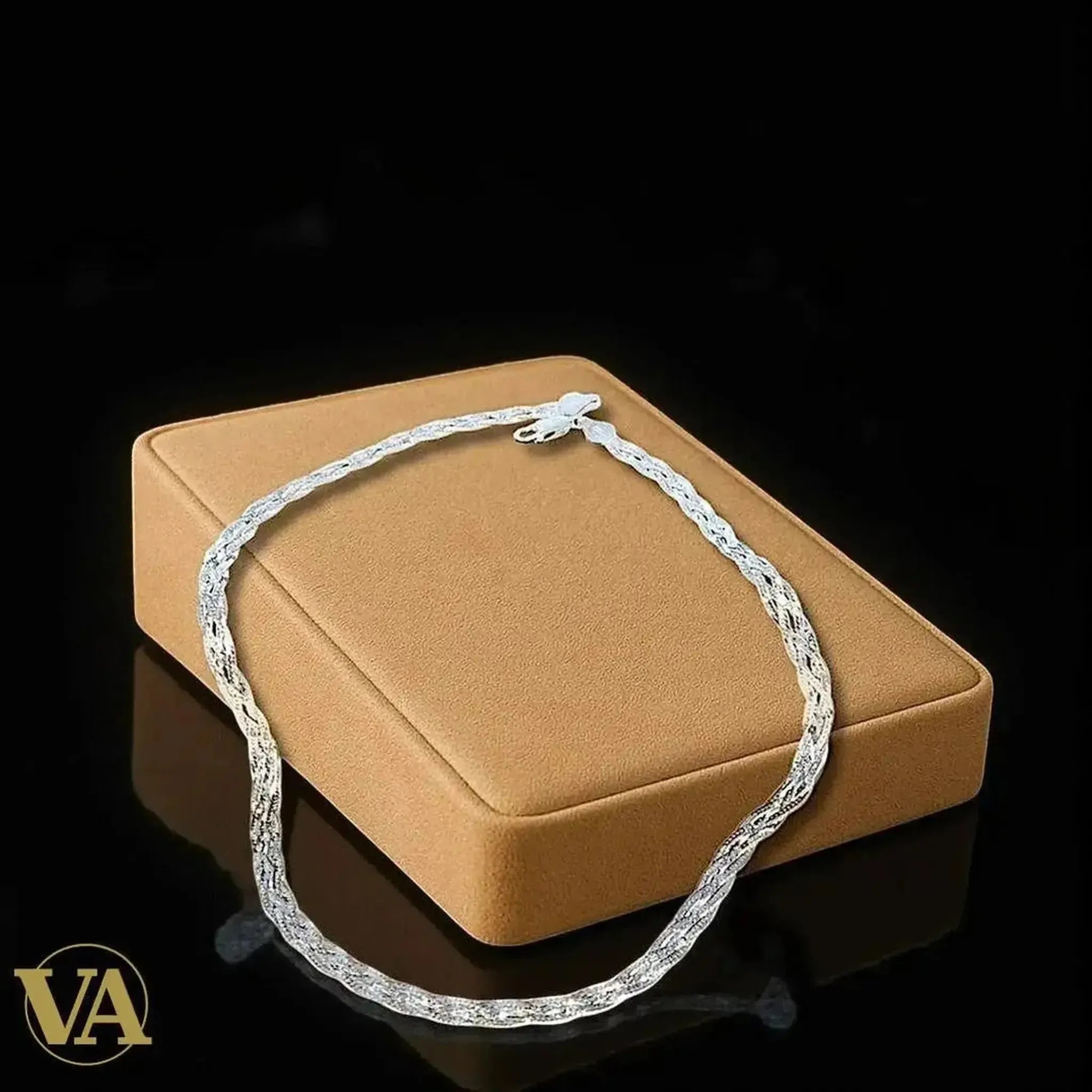
In the mountainous regions of western Ukraine—particularly among the Hutsuls of the Carpathians—a tradition of very fine silver filigree developed, used for pectoral crosses, earrings, and belt elements. This Hutsul filigree is distinguished by its very tight spiral motifs, similar to lace, often combined with small coral or colored glass beads. This quest for decorative fineness is found in our 925 silver necklaces with filigree pendants, where visual lightness takes precedence over metal density.
The pectoral cross, an identity jewel
In the Ukrainian Orthodox tradition, the pectoral cross worn directly on the skin from baptism holds a central place, distinct from simple decorative pendants. In solid silver, often engraved with floral motifs or verses, it accompanies its wearer throughout their life and is traditionally never removed. This continuity between the jewel and spiritual life is reminiscent of similar traditions observed in other Orthodox Eastern European countries, where silver serves as much to mark a religious identity as to adorn.
The Cossack era and rank signet rings
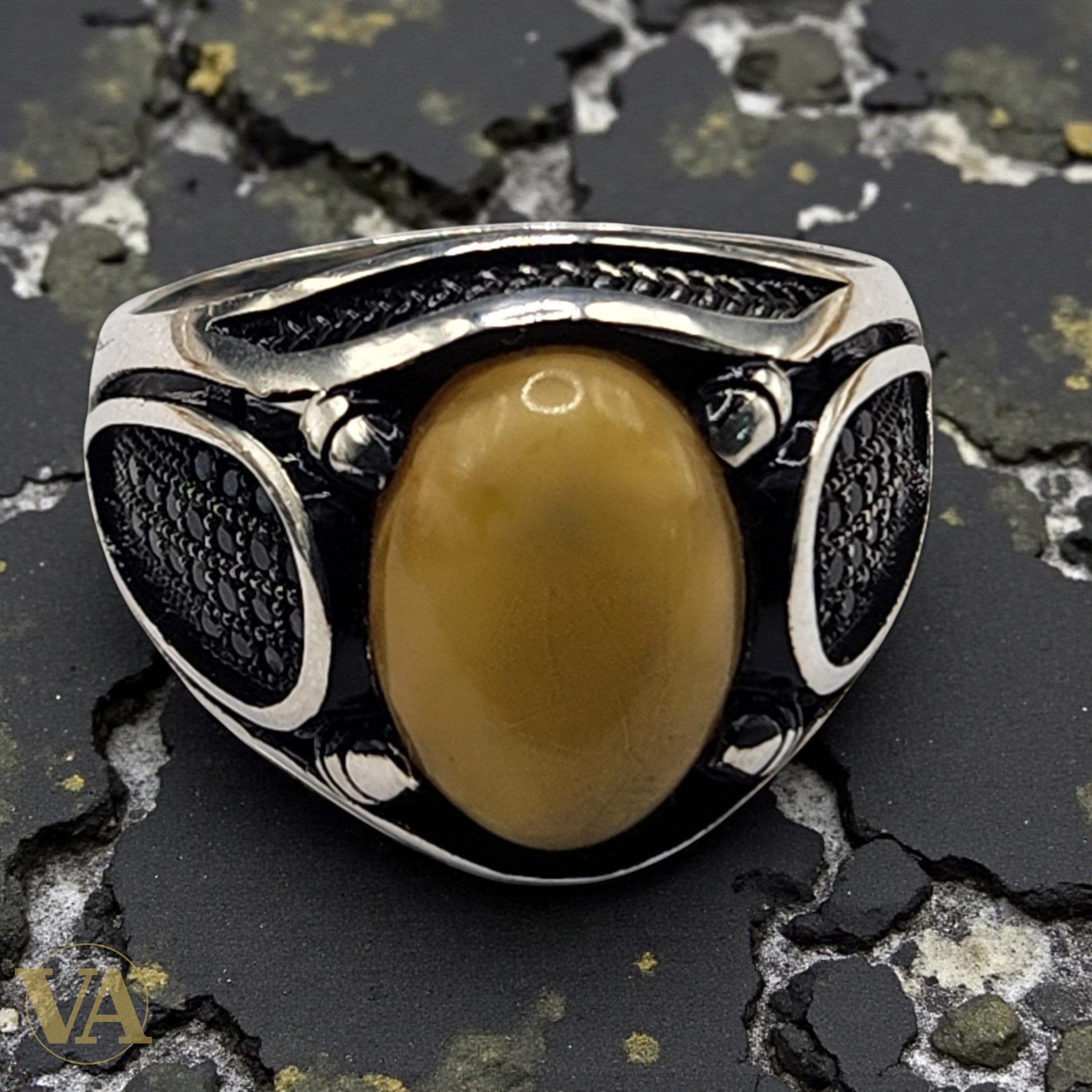
From the 16th to the 18th century, the era of the Cossack Hetmanate produced distinct masculine metalwork, marked by large signet rings and engraved silver belt buckles testifying to rank within the Cossack hierarchy. These signet rings were used to authenticate official documents of Cossack officers, a usage similar to that observed in other traditions of power metalwork in Eastern Europe. The trident motif, an ancient emblem dating back to the Rurikid dynasty and now a national symbol, still adorns some contemporary jewelry pieces today—a heritage found, in a refined form, on our 925 silver signet rings.
The vyshyvanka and silver brooches
The embroidered Ukrainian shirt, the vyshyvanka, is traditionally accompanied by silver brooches used to close the collar or adorn the neckline. These brooches, often circular and engraved with stylized floral motifs specific to each region, constituted an immediately recognizable marker of regional identity—an astute visitor could guess a person's province of origin just from the shape of their brooch. This tradition of highly codified regional jewelry is found in several neighboring Slavic countries, each having developed its own decorative vocabulary from a common technical base.
Lviv, crossroads of Central European influences
In the west, the city of Lviv—long integrated into Poland and then the Austro-Hungarian Empire—developed urban metalwork closer to Central European standards, with workshops trained in Viennese techniques and a taste for more sober and geometric pieces. This Central European influence, distinct from the popular filigree of the Carpathians or the Byzantine heritage of Kyiv, makes Ukraine a territory where several major European schools of metalwork meet.
Wearing Ukrainian heritage today
From the Byzantine niello of Kyiv to the Hutsul filigree of the Carpathians, Ukrainian silver carries the memory of a territory at the crossroads of several worlds. A pectoral cross associated with an engraved signet ring is enough to evoke this richness without ostentation. To continue exploring Slavic metalwork, our article on silver in Slavic civilizations and our ring size guide in Europe complete this journey through Eastern Europe.
✦ Vindicta — Solid 925 silver
The piece that makes the difference
Certified 925 silver · Free shipping from €69 · 10 years of excellence
Discover our jewellery →