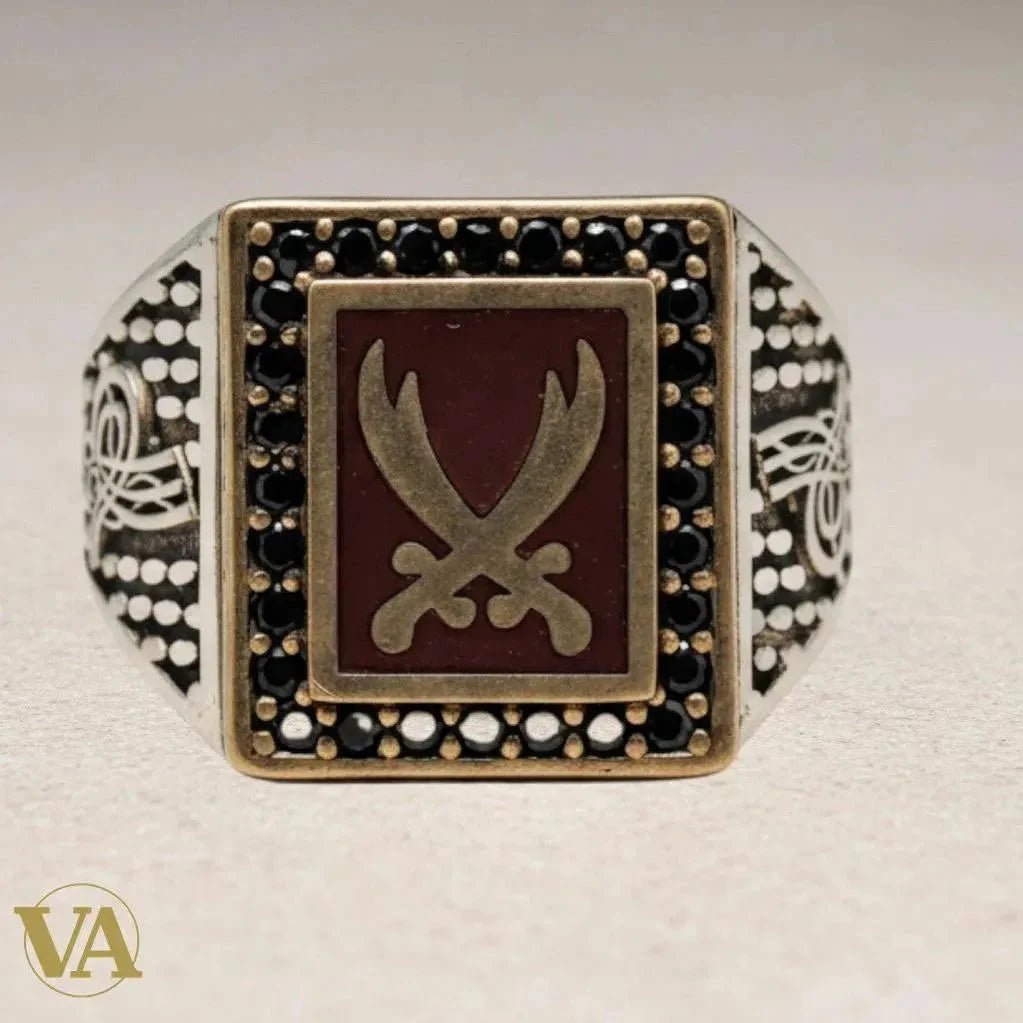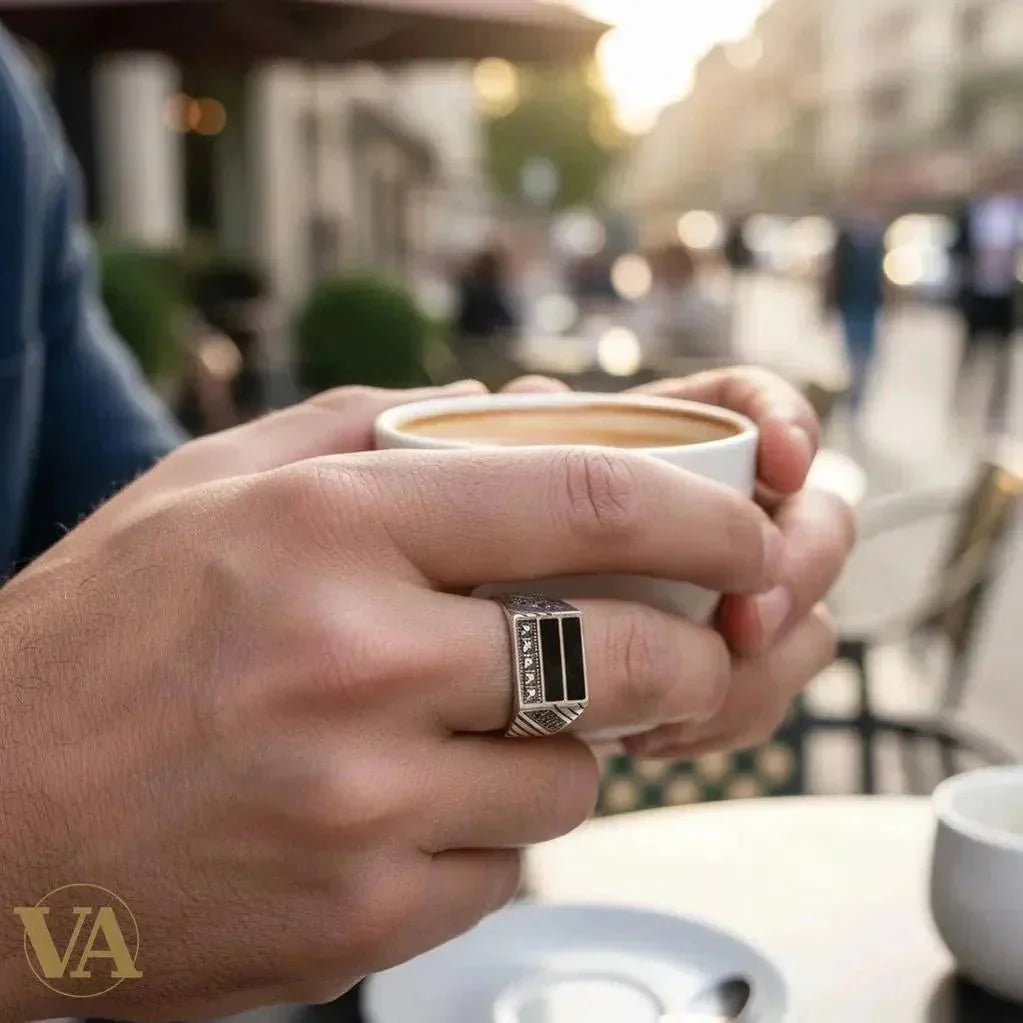
What Ring Can a Muslim Man Wear? A Complete Guide
This is one of the most frequently asked questions by Muslim men seeking to reconcile faith and elegance: which ring can I wear? The answer is rooted in fourteen centuries of Islamic tradition, in the hadiths of the Prophet ﷺ, and in the consensus of scholars. It is both simple and rich in meaning.
The Fundamental Rule: Silver Yes, Gold No
Islam is clear and unambiguous on this point. The Prophet Muhammad ﷺ forbade men from wearing gold. This prohibition is reported in numerous authentic hadiths, notably in Sahih Muslim and Sahih Bukhari. Gold is considered an ornament reserved for women in Islamic tradition.
Silver, on the other hand, is not only permitted but was practiced by the Prophet ﷺ himself. He wore a silver ring engraved with the words Muhammad Rasul Allah, which he used as an official seal. This prophetic gesture established the silver ring as the quintessential Islamic men's piece of jewelry.
What About Gold-Plated Jewelry?
Gold-plated jewelry—also known as vermeil or gold-filled—is a subject of debate among scholars. The majority of Islamic legal schools consider it forbidden for men, as it mimics gold even if the amount of gold is minute. As a precaution and out of respect for tradition, pure solid 925 silver remains the safest choice—without any possible doubt.
Which Finger Should You Wear Your Ring On?
Islamic tradition is also precise on this point. According to the most authentic hadiths, the little finger is the most recommended, on both the right and left hand. The ring finger is also permitted according to the majority of scholars. The index and middle fingers, however, are discouraged according to certain hadiths of the Prophet ﷺ. As for the choice of hand, the right hand is preferred according to many scholars, although the left hand is also permitted.
Beyond the rules, the essential thing is to wear your ring with intention and awareness of what it represents.
The Weight of the Ring: Is There a Limit?
Some legal schools mention a weight limit of approximately one mithqal—which is about 4.25 grams. This limit aims to avoid ostentation and excess, which are contrary to the Islamic spirit of simplicity. In practice, contemporary scholars are generally more flexible on this point, considering that intention takes precedence over weight.
Which Stones Are Recommended?
Islamic tradition values several natural stones for men's rings. Each carries a history and a particular significance.
Carnelian (Aqiq) — The Prophet's Stone
This is the quintessential Islamic stone. According to several hadiths, the Prophet ﷺ wore a ring adorned with carnelian. Whether blood-red or burnt orange, it symbolizes divine protection, vitality, and blessing. Wearing it is considered a sunnah by many scholars.
Black Onyx — The Stone of Strength
Black onyx is very present in Islamic jewelry. It is associated with protection against the evil eye—the 'ain—and with inner strength. Sober and powerful, it fits perfectly with masculine aesthetics.
Turquoise — The Stone of Artisanal Traditions
Worn by the great figures of Islam throughout the centuries, turquoise symbolizes wisdom and inner royalty. Its unique color—between sky and sea—makes it one of the most iconic stones in Islamic jewelry.
Tiger's Eye — The Stone of Discernment
Appreciated in Eastern traditions for its golden chatoyancy, tiger's eye is the stone of mental clarity and self-mastery—two central virtues in Islamic spirituality.
Islamic Engravings and Symbols
An Islamic ring can be adorned with symbols and calligraphy loaded with meaning: the Shahada in Arabic calligraphy, the divine name Allah in Thuluth or Kufic style, the expression Mashallah, the Throne Verse (Ayat al-Kursi), or even the Tughra, a calligraphic monogram inherited from artisanal tradition. These engravings transform the ring into a permanent act of faith—a constant reminder of the spiritual belonging of the wearer.
Caution Regarding Rings with Quranic Verses
If your ring is adorned with the name of Allah, the Shahada, or Quranic verses, scholars recommend removing it in places of impurity (toilets, bathrooms). This is a sign of respect for the divine word engraved in the metal.
Conclusion
The Islamic ring is not a simple accessory—it is an act of faith, a prophetic heritage, and an expression of identity. Solid 925 silver, carnelian, onyx, or turquoise: every choice carries meaning. The essential thing is to wear your ring with sincerity and knowledge of what it represents.
To delve deeper into the subject, consult our article on the 925 silver Islamic ring: symbols, history, and heritage, or explore our selection of 925 silver Islamic jewelry. To compare the shapes, stones, and sizes available, also browse all our 925 silver men's rings and our dedicated selection of men's signet rings. And to complete your style on your wrist, discover our men's 925 silver bracelets—links, natural stones, and cuffs in certified solid 925 silver.
✦ Vindicta — Solid 925 silver
The piece that makes the difference
Certified 925 silver · Free shipping from €69 · 10 years of excellence
Oriental 925 Silver Jewellery →