
Keshi Pearl: Origins, Properties and Jewelry
Focus on the Keshi Pearl
Summary
- Introduction
- Characteristics
- History and Origin of the Name
- Varieties of Keshi Pearls
- Meaning and Virtues
- Origins Around the World
- Keshi Pearl Jewelry at Vindicta
- The Vindicta Perspective
- Care and Advice
- Pearls to Discover
- Frequently Asked Questions
- Conclusion
Introduction
The Keshi pearl is one of the rarest and most sought-after pearls by connoisseurs. Its name comes from the Japanese keshi (花彁), meaning "poppy seed" — a reference to its original small size, although modern Keshi pearls can reach impressive dimensions. What fundamentally distinguishes it from all other pearls is that it has no nucleus. It is entirely composed of pure nacre.
The Keshi pearl forms accidentally during the culturing process — when the mollusk rejects the implanted nucleus but continues to secrete nacre around the pearl sac. The result is a pearl without a nucleus, entirely nacreous, with a luster and depth that nucleated pearls cannot match. It's a biological accident transformed into a masterpiece. Paired with solid 925 silver, it creates jewelry of absolute brilliance and uniqueness.
Characteristics of the Keshi Pearl
Composition and Structure
- Type: non-nucleated pearl, entirely composed of pure nacre
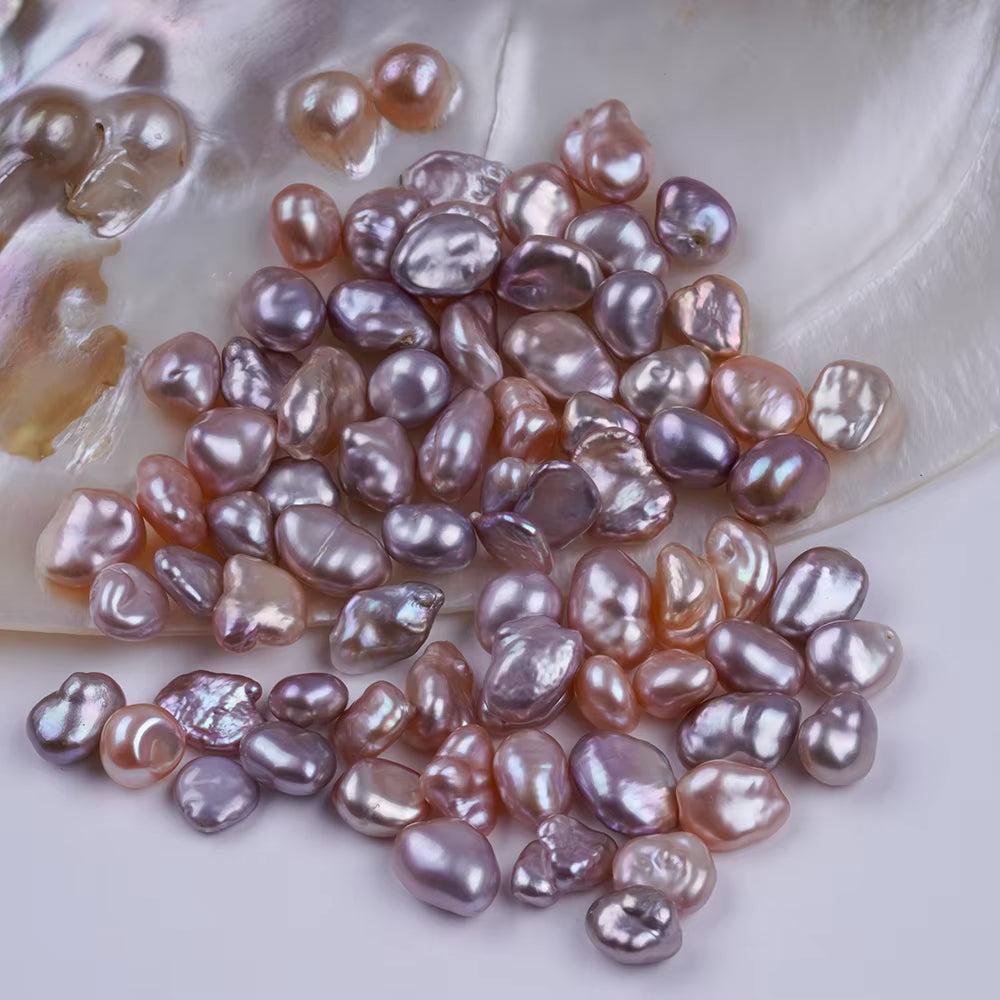
- Shape: always irregular (baroque, flat, elongated, petal-shaped) — never perfectly round
- Color: depends on the mollusk species (white, cream, pink, gray, black, golden)
- Size: 1 to 20 mm depending on the species and culture duration
Hardness and Resistance
- 2.5 to 4.5 on the Mohs scale — soft gemstone
- Sensitive to acids, heat, and chemicals
Exceptional Optical Properties
- Luster: superior to all other pearls due to the absence of a nucleus
- Orient: maximum luminous depth — light passes through the entire thickness of the nacre
- Sheen: perfect mirror, intense and deep reflections
History and Origin of the Name
Keshi pearls have existed since the beginnings of pearl cultivation in Japan in the late 19th century. Mikimoto Kokichi, the pioneer of cultured pearls, observed them as accidental by-products of his pearl farms. At the time, small Keshi pearls were considered waste — too small and too irregular to be commercialized.
It was the fashion for baroque and irregular shapes in contemporary jewelry that revealed the extraordinary value of Keshi pearls. Their superior luster, unique shape, and entirely nacreous composition now make them one of the most sought-after pearls by creative jewelers and collectors.
Today, large Keshi pearls — particularly those from Pinctada maxima (South Sea) or Pinctada margaritifera (Tahitian) oysters — are among the most valuable pearls on the market.
Varieties of Keshi Pearls
- Akoya Keshi (Japan, China): small (1-3 mm), pearly white to cream, intense luster, used in sets
- South Sea Keshi (Australia, Philippines): large (5-20 mm), silvery white to golden, among the most precious
- Tahitian Keshi (French Polynesia): dark gray to black with iridescent reflections, same palette as the Tahitian pearl
- Freshwater Keshi (China): very varied shapes, pastel colors, abundant production
Meaning and Virtues of the Keshi Pearl
Emotional & Spiritual Level
- Singularity & Uniqueness: each Keshi pearl is absolutely unique — a symbol of the uniqueness of every being
- Resilience: born from an accident transformed into beauty, a symbol of resilience and adaptation
- Purity: entirely nacreous, without an artificial nucleus — a symbol of absolute purity
- Creativity: its irregular shape inspires creativity and free expression
Physical Level (beliefs in lithotherapy)
- Shares the general virtues of pearls: appeasement, emotional balance, femininity
Note: the virtues of lithotherapy are not scientifically proven and do not replace medical advice.
Origins of Keshi Pearls Around the World
- Japan, China: Akoya Keshi, small and brilliant, ancient pearl tradition
- Australia, Philippines, Indonesia: South Sea Keshi, large and precious
- French Polynesia: Tahitian Keshi, iridescent black, among the most sought-after
- China (freshwater): Freshwater Keshi, abundant production, very varied shapes
Keshi Pearl Jewelry at Vindicta
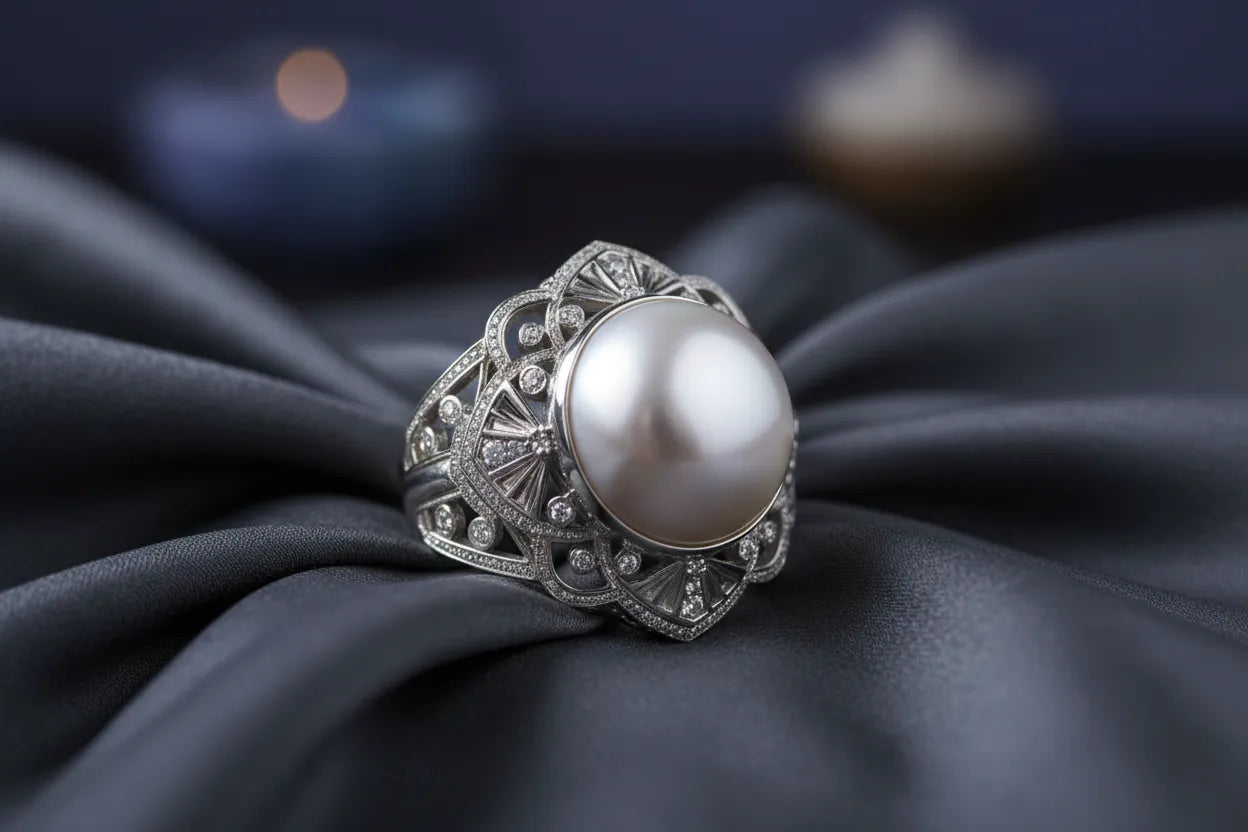
The Keshi pearl, with its exceptional luster and unique irregular shape, naturally pairs with solid 925 silver to create jewelry of absolute uniqueness and beauty. Each Keshi pearl piece is literally one-of-a-kind — impossible to replicate identically.
Discover our 925 silver mother-of-pearl and pearl jewelry collection and our 925 silver natural stone jewelry collection.
The Vindicta Perspective
The Keshi pearl is the pearl that fascinates us most with its philosophical dimension. It was born from a failure — the mollusk rejected the implanted nucleus, which should have meant the end of the process. But the mollusk continued to secrete nacre, transforming this failure into something more beautiful and purer than what was intended. It's the perfect metaphor for creative resilience.
What attracts us to the Keshi pearl is also its superior luster. Without a nucleus, light passes through the entire thickness of the nacre — which creates an orient and a sheen that nucleated pearls cannot match. It is the "purest" pearl in the optical sense of the term — entirely nacreous, entirely luminous.
The Keshi pearl is also the pearl that best fits the aesthetic of Vindicta. Its irregular shape, its rejection of spherical perfection, its absolute uniqueness — this is exactly what we look for in every piece of our collection. Not industrial perfection, but artisanal singularity.
Care and Advice for your Keshi Pearl Jewelry
- Last on, first off: put your pearls on last and take them off first
- Acids: absolutely avoid all contact with acidic substances
- Cleaning: soft, slightly damp cloth after each wear. Dry flat
- Storage: soft fabric pouch, separate from other jewelry
- Regular wear: pearls like to be worn — the natural warmth of the skin maintains them
To learn more: Complete care guide for your 925 silver jewelry.
Pearls to Discover
- 🪪 Mother-of-Pearl — the material from which the Keshi pearl is entirely composed
- 🪪 Pearls — complete guide on all varieties
- 🔵 The Tahitian Pearl — the most spectacular of black pearls
- 🪪 The Baroque Pearl — same elegance of irregularity
- 🪪 The Mabé Pearl — large size, unique half-sphere
- 📖 Complete Guide to Natural Stones 2026 — everything you need to know about stones in jewelry
Frequently Asked Questions about the Keshi Pearl
Why is the Keshi pearl brighter than other pearls?
Because it is entirely composed of nacre, without a nucleus. In a classic cultured pearl, the nucleus (usually shell) represents 90-95% of the pearl's volume — the nacre is only a thin layer on the surface. In a Keshi pearl, light passes through the entire thickness of the nacre, creating incomparable orient and luster.
Is the Keshi pearl a natural or cultured pearl?
This is a debated question in the pearl industry. Technically, it forms in a cultured mollusk — thus in a cultivation context. But it forms without an implanted nucleus, accidentally — which makes it similar to a natural pearl. Most gemologists classify it as a "non-nucleated cultured pearl."
Why is the Keshi pearl always irregular?
Because without a spherical nucleus to guide its growth, the Keshi pearl develops freely in the pearl sac. The nacre accumulates according to the biological constraints of the mollusk — creating flat, elongated, petal, or wing shapes. This irregularity is a characteristic, not a defect.
How to distinguish a Keshi pearl from an ordinary baroque pearl?
The main distinction is the absence of a nucleus. A classic baroque pearl has a nucleus and an irregular nacre layer. A Keshi pearl is entirely nacreous. The difference can be seen by X-ray (no visible nucleus) and felt by the luster — the Keshi is always brighter.
Conclusion
The Keshi pearl is an exceptional gemstone — born from an accident transformed into a masterpiece, entirely composed of pure nacre, with a luster superior to all other pearls. Its irregular shape and absolute uniqueness make it the pearl of connoisseurs — those who prefer singularity over industrial perfection.
Paired with solid 925 silver, the Keshi pearl creates jewelry of absolute beauty and uniqueness — pieces literally one-of-a-kind, impossible to replicate identically.
✦ Vindicta — Argent 925 Massif
La pièce qui fait la différence
Certifié argent 925 · Livraison offerte dès 69€ · 10 ans d'excellence
Bijoux Pierres Naturelles →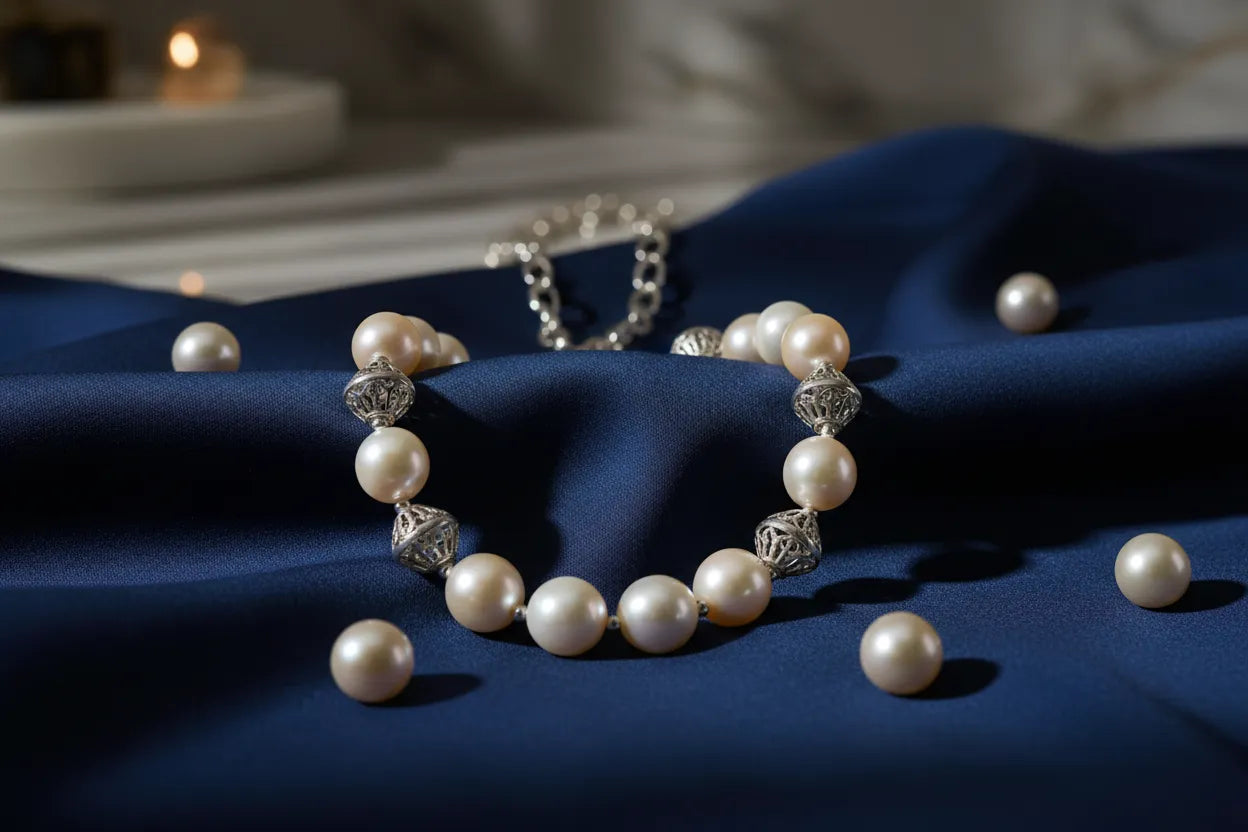

Leave a comment
This site is protected by hCaptcha and the hCaptcha Privacy Policy and Terms of Service apply.