
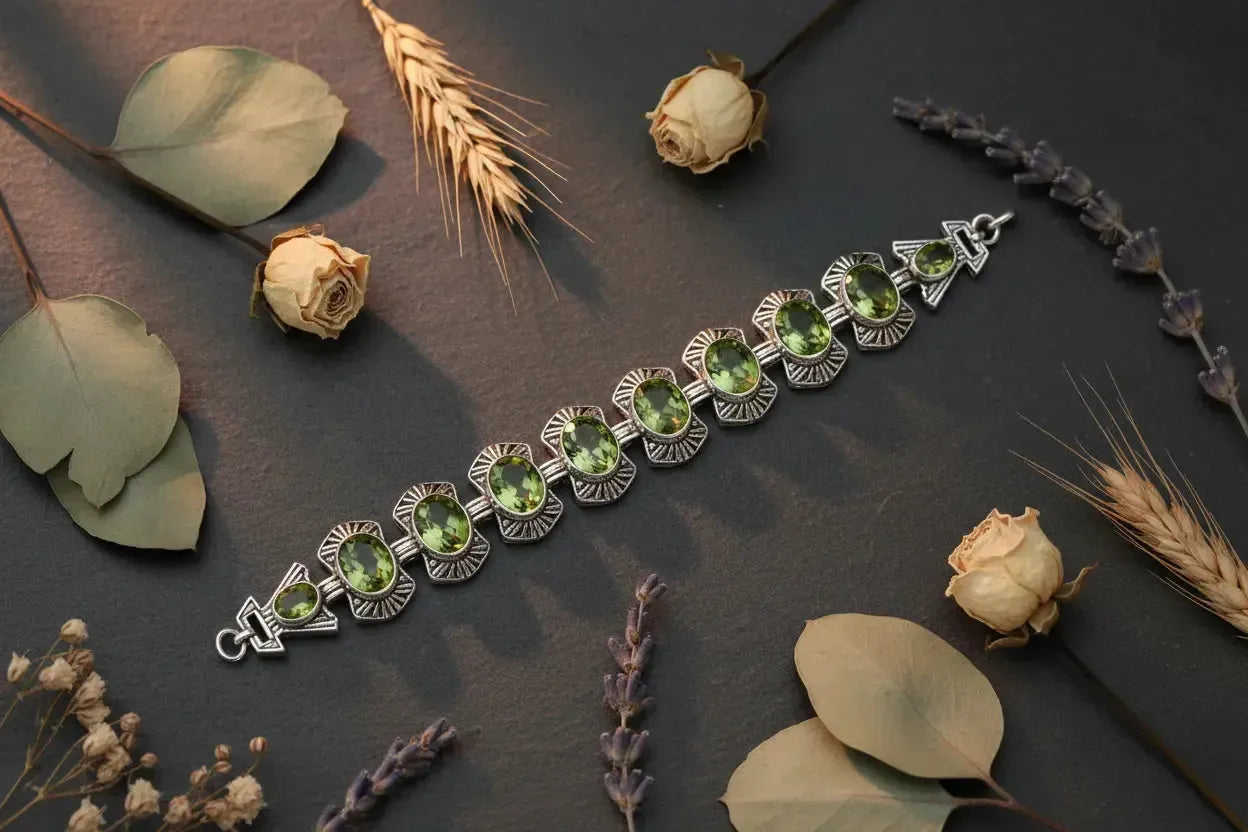
Peridot
Spotlight on Peridot
Summary
- Introduction
- Peridot Characteristics
- History and Symbolism
- Peridot Qualities and Origins
- Meaning and Virtues
- Deposits Around the World
- Peridot Jewelry at Vindicta
- The Vindicta Perspective
- Care and Advice
- Stones to Discover
- Frequently Asked Questions
- Conclusion
Introduction
Peridot is one of the oldest and most distinctive gemstones in jewelry. Its unique golden-yellow-green color—ranging from pale olive green to intense emerald green—is immediately recognizable and belongs only to it. It is one of the rare gemstones that exists in only one color: green, in all its nuances.
A gem variety of olivine (Mg,Fe)₂SiO₄, peridot is one of the oldest stones in the universe—peridot crystals have been found in meteorites and even in lunar samples. It is also one of the rare gemstones that forms in the Earth's mantle, at depths of 40 to 80 km. Combined with sterling silver 925, it creates jewelry of unique freshness and originality.
Peridot Characteristics
Composition and Structure
- Mineral: olivine (gem variety, (Mg,Fe)₂SiO₄ — magnesium iron silicate)
- Color: golden-yellow-green to emerald green, due to iron (Fe²⁺)
- Appearance: transparent to translucent, vitreous luster
- Crystal system: orthorhombic
Hardness and Resistance
- 6.5 to 7 on the Mohs scale — good resistance for daily wear
- Sensitive to acids (even weak acids can damage it)
- Sensitive to thermal shocks
Physical Properties
- Density: 3.27 to 3.37
- Refractive index: 1.654 – 1.690
- Transparency: transparent to translucent
- Cleavage: imperfect
History and Symbolism of Peridot
Peridot is one of the oldest stones in human jewelry. Ancient Egyptians mined it for over 3,500 years on Zabargad Island (Red Sea)—which they called "Snake Island." They called it the "gem of the sun" and believed it protected against evil spirits, especially at night.
The famous "Cleopatra's emerald" was actually peridot—Greeks and Romans often confused the two green stones. This confusion persisted until the Middle Ages: many "emeralds" in European royal treasures are actually peridots.
In Islamic tradition, peridot (زبرجد, zabarjad) is mentioned in classical texts as a stone of light and protection. Its green color was associated with Paradise and divine blessing. Ottoman jewelers used it in prestigious jewelry.
Peridot is also one of the rare extraterrestrial gemstones—peridot crystals have been found in pallasite meteorites, giving it a unique cosmic dimension.
Peridot Qualities and Origins
- Zabargad Peridot (Egypt): the most historic, now depleted, highly sought after by collectors
- Pakistani Peridot (Kohistan): currently the best quality, intense and transparent green, spectacular crystals
- Arizona Peridot (USA): significant production, variable quality, often paler in color
- Burmese Peridot (Myanmar): high-quality intense green, highly valued in fine jewelry
- Meteoritic Peridot: extremely rare, found in pallasite meteorites, exceptional collector's value
Meaning and Virtues of Peridot
Emotional & Spiritual Level
- Light & Joy 🟢: stone of the sun and light, associated with joy and optimism
- Protection: used since antiquity as a talisman against negative energies
- Abundance: associated with prosperity and growth
- Heart Chakra: its green color connects it to the Anahata chakra, promoting emotional openness
- Renewal: stone of spring and renewal, symbol of life and growth
Physical Level (beliefs in lithotherapy)
- Associated with strengthening the digestive system and detoxification
- Used to improve eyesight and relieve eye strain
- Considered a general healing stone in many traditions
Note: the virtues of lithotherapy are not scientifically proven and do not replace medical advice.
Peridot Deposits Around the World
- Pakistan (Kohistan, Gilgit-Baltistan): currently the best global quality, intense and transparent green
- USA (Arizona, San Carlos Reservation): largest global producer by volume, variable quality
- Myanmar (Burma): high-quality peridot, intense green
- China (Hebei): significant production, variable quality
- Egypt (Zabargad): historic deposit, now depleted
- Norway, Tanzania: secondary deposits, variable quality
Peridot Jewelry at Vindicta
Peridot, with its unique golden-yellow-green color and crystalline transparency, naturally pairs with sterling silver 925 to create jewelry of unique freshness and originality. Its golden-green color is particularly flattering when combined with the silvery luster of the metal.
Our peridot creations:
- Sterling Silver 925 Ring with Amethyst, Citrine, Peridot & Garnet — Multicolored palette, all seasons
Also discover our natural stone sterling silver 925 jewelry collection.
The Vindicta Perspective
Peridot is the stone that most reminds us of the importance of history in jewelry. When we learn that "Cleopatra's emeralds" were actually peridot, that medieval royal treasures contained peridots mistaken for emeralds, that peridot crystals have been found in meteorites—the stone takes on a dimension that far exceeds its visual beauty.
Its golden-green color is also particularly interesting in our aesthetic. Peridot is not the subdued green of green agate nor the intense green of malachite—it's a luminous and warm green, almost golden, that naturally pairs with sterling silver to create a fascinating warm-cold contrast.
Peridot is also the birthstone for August—making it a particularly meaningful gift for summer birthdays.
Care and Advice for your Peridot Jewelry
- Acids: avoid all contact with acidic substances—peridot is sensitive even to weak acids
- Heat: avoid thermal shocks—peridot can crack under significant temperature variations
- Cleaning: use a soft, slightly damp cloth only. No ultrasonic cleaner
- Storage: soft cloth pouch, separate from other jewelry
- Chemicals: avoid perfumes, creams, and detergents
To go further: Complete guide to caring for your sterling silver 925 jewelry.
Stones to Discover
- 💚 Green Agate — natural green, same family of green stones
- 💚 Green Aventurine — sparkling tender green, same growth energy
- 🟡 Citrine — golden-yellow, same luminous warmth
- ❤️ Garnet — deep red, classic companion to peridot in multicolored jewelry
- 📖 Complete Guide to Natural Stones 2026 — everything about jewelry stones
Frequently Asked Questions about Peridot
What is the difference between peridot and emerald?
Both are transparent green stones, but they are very different minerals. Emerald (beryl) is generally more precious and has a deeper, bluer green. Peridot (olivine) has a more golden-yellow-green and warmer color. Both have been confused for millennia.
Does peridot really exist in meteorites?
Yes—this is one of peridot's most fascinating features. Olivine crystals (of which peridot is the gem variety) have been found in pallasite meteorites—meteorites composed of a mixture of iron-nickel and olivine. These extraterrestrial crystals are extremely rare and have exceptional collector's value.
Is peridot suitable for daily wear?
With caution. Its hardness of 6.5-7/10 is good, but its sensitivity to acids and thermal shocks requires precautions. Avoid contact with acidic products (perspiration, perfumes, lemon juice) and significant temperature variations.
Conclusion
Peridot is an exceptional stone—ancient, cosmic, steeped in millennia of history and symbolism. From ancient Egypt to extraterrestrial meteorites, through medieval royal treasures and Islamic tradition, it has always been associated with light, protection, and joy.
Combined with sterling silver 925, peridot creates jewelry of unique freshness and originality—pieces that carry millennia of history and the magic of a stone from the depths of the Earth and space.
✦ Vindicta — Argent 925 Massif
La pièce qui fait la différence
Certifié argent 925 · Livraison offerte dès 69€ · 10 ans d'excellence
Bijoux Pierres Naturelles →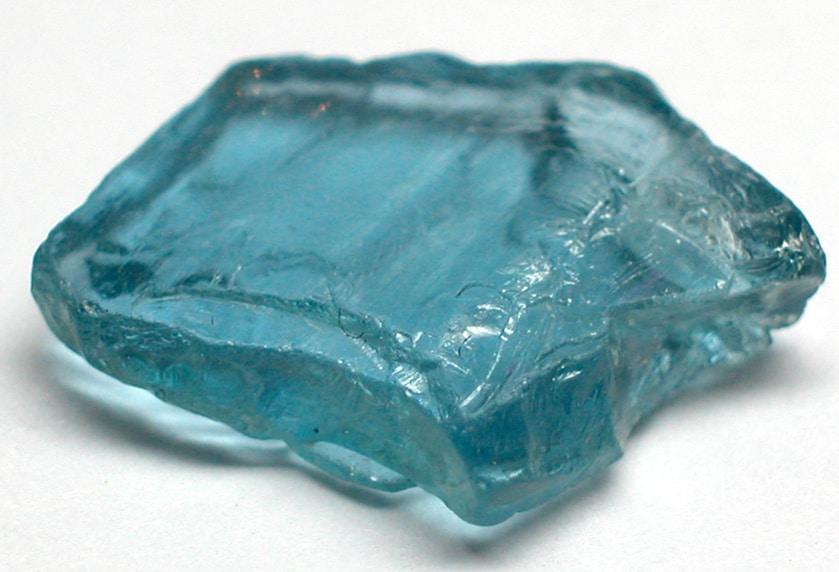

Leave a comment
This site is protected by hCaptcha and the hCaptcha Privacy Policy and Terms of Service apply.