
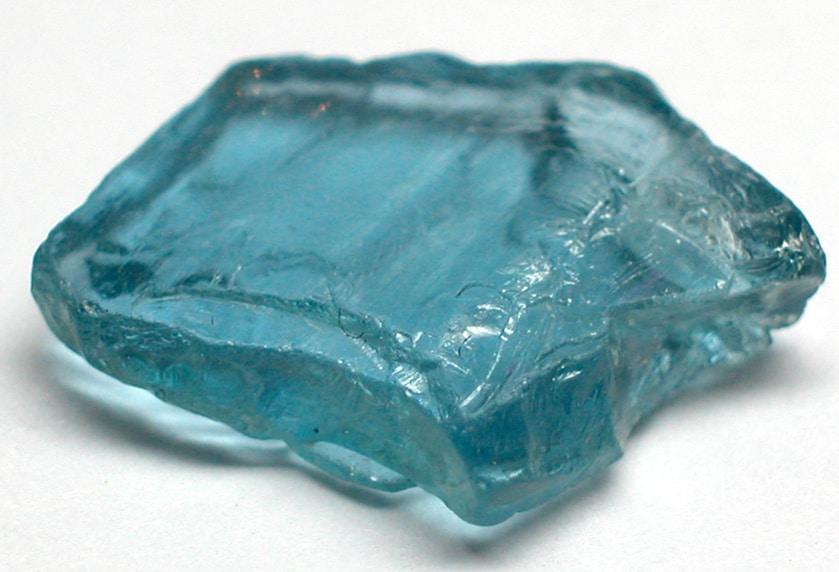
Aquamarine
Spotlight on Aquamarine
Table of Contents
- Introduction
- Characteristics of Aquamarine
- History and Symbolism
- Varieties of Aquamarine
- Meaning and Virtues
- Deposits Around the World
- Aquamarine Jewelry at Vindicta
- The Vindicta Perspective
- Care and Tips
- Stones to Discover
- Frequently Asked Questions
- Conclusion
Introduction
Aquamarine is one of the most elegant and poetic fine gemstones in jewelry. Its clear blue-green hue — reminiscent of the clear waters of the Mediterranean or tropical seas — earned it its name: aqua marina, "seawater" in Latin. Its crystalline transparency and soothing color make it a stone of natural and unparalleled beauty.
A blue variety of beryl (Be₃Al₂Si₆O₁₈), aquamarine is a cousin of emerald — both belong to the same mineral family. Its blue-green color is due to traces of iron in its crystal structure. Paired with sterling silver 925, it creates jewelry with a unique marine freshness and elegance.
Characteristics of Aquamarine
Composition and Structure
- Family: beryls (Be₃Al₂Si₆O₁₈ — beryllium aluminum silicate)
- Color: pale blue to intense blue-green, due to traces of iron (Fe²⁺)
- Appearance: transparent to translucent, vitreous luster
- Crystal system: hexagonal
Hardness and Resistance
- 7.5 to 8 on the Mohs scale — excellent durability for daily wear
- Resistant to scratches from most fine gemstones
- Stable to common acids and chemicals
Physical Properties
- Density: 2.68 to 2.74
- Refractive index: 1.577 – 1.583
- Transparency: transparent to translucent
- Cleavage: imperfect
History and Symbolism of Aquamarine
Aquamarine has been associated with the sea since ancient times. Greek and Roman sailors wore it as a protective talisman during sea voyages — believing it was the treasure of mermaids and protected against storms and shipwrecks. Poseidon, god of the sea, was its divine protector.
In ancient Rome, aquamarine was used to carve cups and ritual objects. Its transparency was associated with the purity of water and clarity of vision. Roman diviners used aquamarine spheres to foresee the future.
In the Middle Ages, aquamarine was considered an antidote to poisons and a healing stone. Medieval doctors prescribed it for eye and throat ailments.
In Islamic tradition, aquamarine was associated with purity and spiritual clarity. Its blue-green color evoked both the sky and the sea — two fundamental elements of Islamic cosmology.
Varieties of Aquamarine
- Classic Aquamarine: pale blue to blue-green, the most common
- Santa Maria Aquamarine: intense and deep blue, the most sought after, originally from the Santa Maria de Itabira mine in Brazil
- Martha Rocha Aquamarine: intense blue, from Brazil, named in honor of a Brazilian Miss Universe
- Pakistan Aquamarine: intense blue-green, spectacular crystals
- Mozambique Aquamarine: deep blue, excellent gem quality
Meaning and Virtues of Aquamarine
Emotional & Spiritual Level
- Calm & Serenity 💙: stone of inner peace and emotional appeasement
- Communication: associated with the throat chakra, promotes clear and authentic expression
- Courage: traditionally worn by sailors as a talisman of courage in the face of adversity
- Clarity: promotes mental clarity and decision-making
- Protection: protective talisman during travels, especially sea voyages
Physical Level (lithotherapy beliefs)
- Associated with relieving throat problems and respiratory issues
- Used to improve eyesight and relieve eye strain
- Considered a general healing stone in many traditions
Note: the virtues of lithotherapy are not scientifically proven and do not replace medical advice.
Aquamarine Deposits Around the World
- Brazil (Minas Gerais): world's leading producer, aquamarine of all qualities, spectacular crystals
- Pakistan (Shigar Valley, Gilgit): high-quality aquamarine, intense blue, exceptional crystals
- Mozambique: gem-quality aquamarine, deep blue
- Madagascar: aquamarine of varying quality
- Russia (Urals): historic high-quality aquamarine
- Nigeria: growing production, gem quality
Aquamarine Jewelry at Vindicta
Aquamarine, with its clear and crystalline blue-green, naturally pairs with sterling silver 925 to create jewelry with a unique marine freshness and elegance. Its high hardness (7.5-8/10) makes it one of the most suitable stones for daily wear.
Discover our natural stone 925 silver jewelry collection to explore our creations in aquamarine and other fine gemstones.
The Vindicta Perspective
Aquamarine is the stone we most naturally associate with blue topaz in our selection. Both are transparent and crystalline blue stones — but they have different characters. Topaz is more intense and brilliant, aquamarine is softer and more poetic. Topaz says "sky," aquamarine says "sea."
What fascinates us about aquamarine is its kinship with emerald. Both are beryls — the same mineral family, the same crystal structure — but one is green and the other is blue. It's the same stone, dressed differently by nature.
Aquamarine is also the birthstone for March and the stone for 19th wedding anniversaries in jewelry tradition — making it a particularly meaningful gift for these occasions.
Care and Tips for your Aquamarine Jewelry
- Cleaning: lukewarm soapy water + soft cloth. Rinse and dry immediately
- Storage: soft fabric pouch, separate from other jewelry
- Chemical products: avoid contact with perfumes, creams, and detergents
- Sun: avoid prolonged exposure — color may alter under intense UV
- Daily wear: perfectly suited thanks to its hardness of 7.5-8/10
To learn more: Complete care guide for your 925 silver jewelry.
Stones to Discover
- 🔵 Blue Topaz — intense crystalline blue, aquamarine's cousin
- 🔵 Turquoise — opaque blue-green, same chromatic palette
- 🔵 Lapis Lazuli — royal blue and gold, depth and prestige
- 💚 Chrysocolla — intense blue-green, same marine evocation
- 📖 Complete Guide to Natural Stones 2026 — everything about stones in jewelry
Frequently Asked Questions about Aquamarine
What is the difference between aquamarine and emerald?
Both are beryls (same mineral family), but emerald is green (due to chromium and vanadium) and aquamarine is blue (due to iron). Emerald is generally more valuable, but aquamarine is often more transparent and less included.
Is the color of aquamarine natural?
Most aquamarines on the market are heat-treated to intensify or standardize their blue color — an ancient and accepted practice in jewelry. Untreated natural aquamarines exist but are rarer and more expensive.
Is aquamarine suitable for daily wear?
Absolutely. With a hardness of 7.5-8/10, aquamarine is one of the most suitable stones for permanent wear. Its scratch resistance and chemical stability make it an ideal choice for rings and earrings worn regularly.
What is the birthstone for March?
Aquamarine is the traditional birthstone for the month of March in Western jewelry tradition. It is also associated with the 19th wedding anniversary.
Conclusion
Aquamarine is an exceptional stone — poetic, luminous, charged with millennia of maritime and spiritual symbolism. From ancient Greece to contemporary jewelers, it has always been associated with the sea, inner peace, and clarity of the soul.
Paired with sterling silver 925, aquamarine creates jewelry with a unique marine freshness and elegance — pieces that carry the poetry of the sea and the clarity of water.
✦ Vindicta — Argent 925 Massif
La pièce qui fait la différence
Certifié argent 925 · Livraison offerte dès 69€ · 10 ans d'excellence
Bijoux Pierres Naturelles →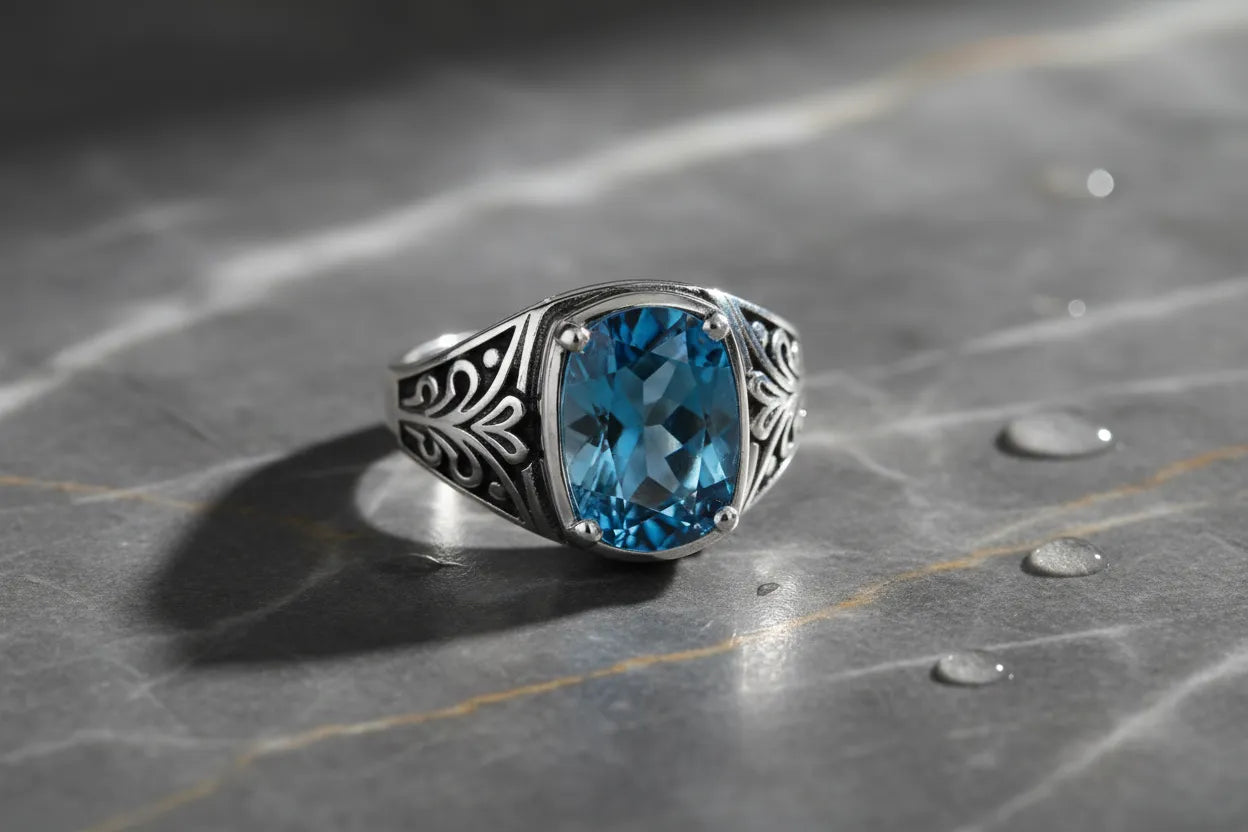

Leave a comment
This site is protected by hCaptcha and the hCaptcha Privacy Policy and Terms of Service apply.