Empire Period Cameos and Intaglios in Sterling Silver
The Art of Cameo and Intaglio: Neoclassical Revival
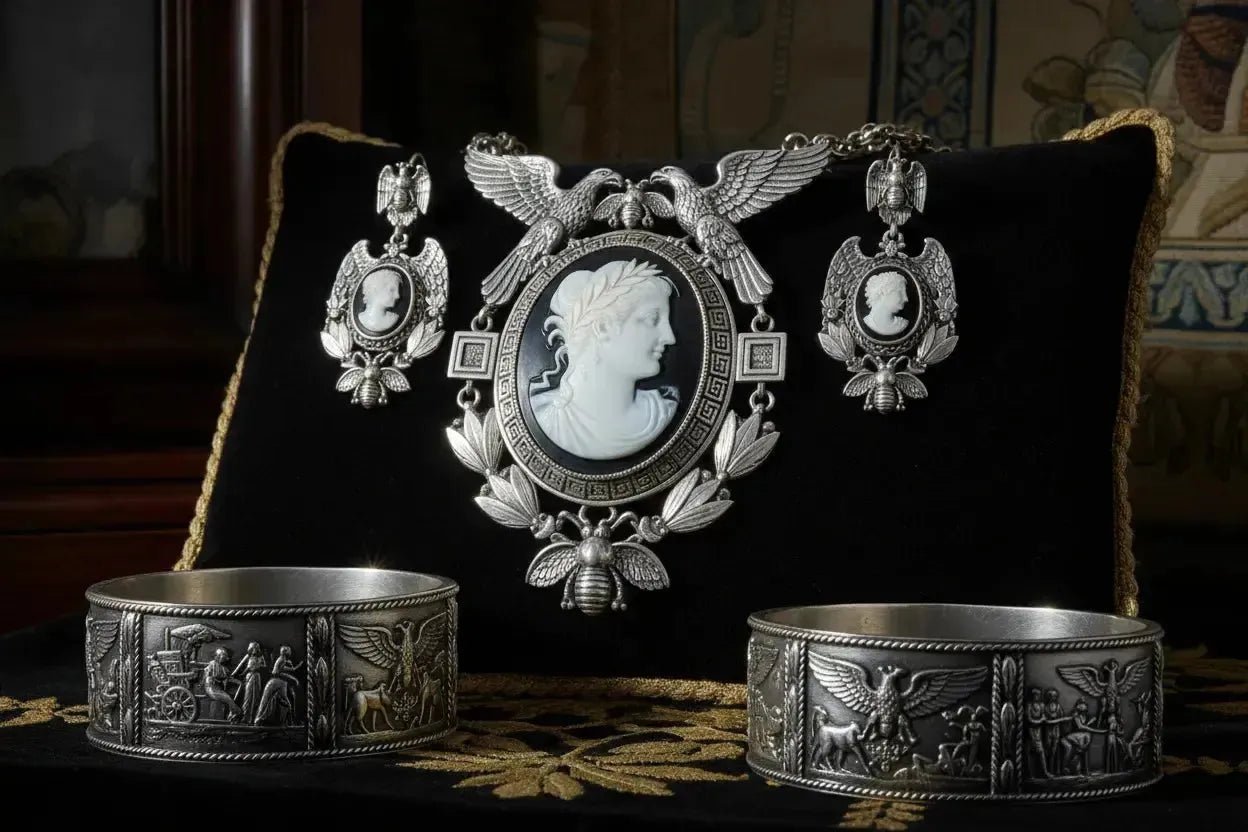
The Napoleonic era marked the peak of the cameo and intaglio fashion, these engraved stones inspired by Greek and Roman antiquity. Napoleon Bonaparte, fascinated by the grandeur of Rome, encouraged this ancestral art which became one of the symbols of the Empire style. Today, these 925 sterling silver jewels continue to captivate with their timeless elegance.
Cameo and Intaglio: What's the Difference?
Although often confused, cameos and intaglios are two opposing engraving techniques:
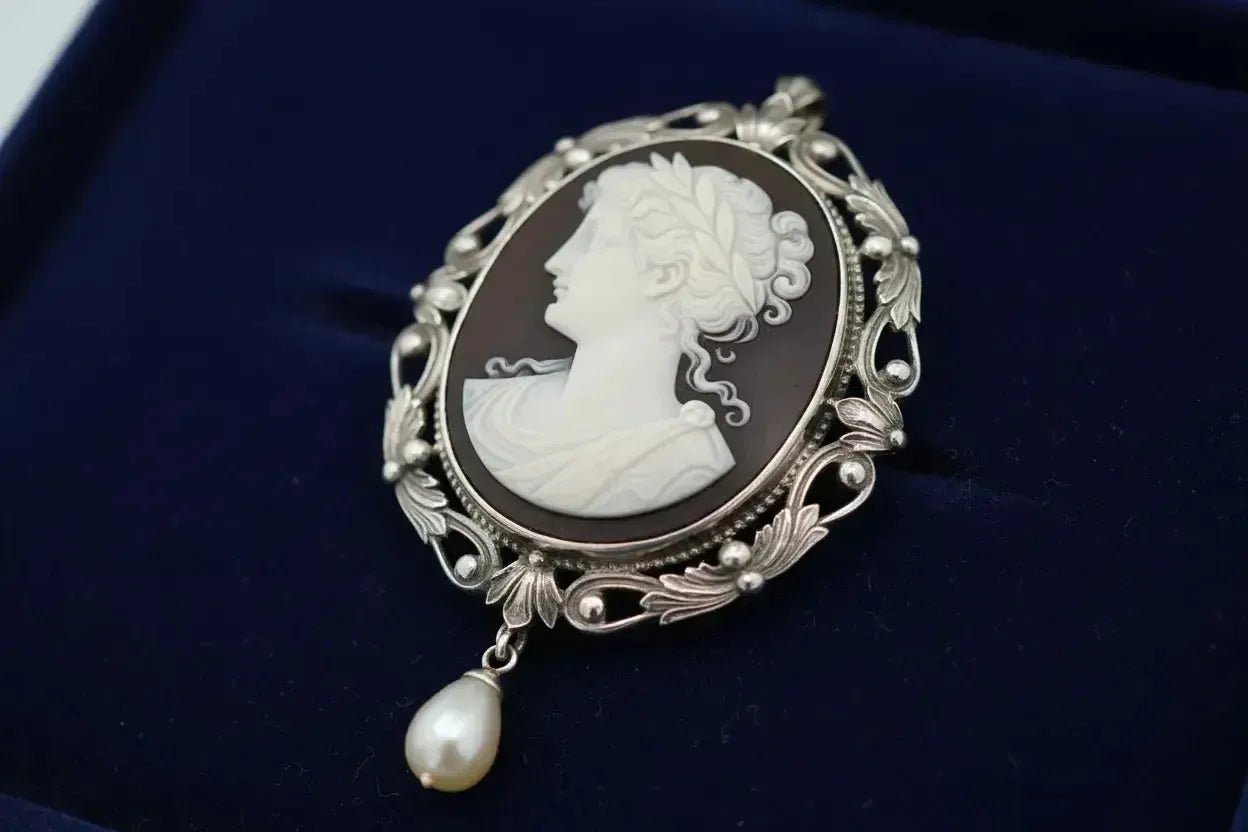
A cameo is a positive relief engraving. The artisan sculpts the stone by removing material around the motif, which thus stands out in relief. Cameos often use stratified stones (agate, onyx, shell) whose different color layers create contrasts: the motif usually appears in white on a brown or black background.
An intaglio is an engraving in hollow. The motif is carved into the stone, creating a negative impression. Historically, intaglios served as seals: pressed into hot wax, they left a raised impression. Intaglios were often mounted as signet rings for this purpose.
The Napoleonic Craze for Engraved Stones
Napoleon was a passionate collector of antique cameos and intaglios. He owned a collection of over 800 engraved stones, now preserved at the National Library of France. This personal passion profoundly influenced the fashion of the era.
The reasons for this craze:
- Legitimation by Antiquity: adorning oneself with antique cameos was to follow in the footsteps of Roman emperors
- Political symbolism: the profiles of Roman emperors recalled imperial grandeur
- Neoclassical aesthetic: the pure and refined lines corresponded to the Empire taste
- Cultural refinement: owning cameos demonstrated a classical education
Themes and Motifs of Empire Cameos
Cameos from the Napoleonic era primarily depicted:
Antique profiles: portraits of famous Greek and Roman figures (Alexander the Great, Caesar, Augustus, Minerva, Apollo). These idealized profiles embodied classical virtues.
Mythological scenes: representations of gods and heroes from mythology (Venus, Cupid, Bacchus, the Three Graces). These scenes provided a narrative and poetic dimension.
Allegories: personifications of abstract concepts (Victory, Peace, Justice, Glory). Napoleon used these allegories for his imperial propaganda.
Contemporary portraits: profiles of Napoleon, Josephine, Marie-Louise, and members of the imperial family, treated in the antique manner.
925 Sterling Silver Mounts for Cameos
Cameos and intaglios were set in 925 sterling silver or gold mounts, often very simple so as not to distract from the engraved stone. The Empire style favored minimalist mounts with geometric lines.
Types of mounts:
- Simple mount: a fine silver frame surrounding the cameo, sometimes engine-turned
- Palmette mount: decoration of palmettes or laurel leaves at the corners
- Pearl mount: a row of fine pearls surrounding the stone
- Grecian mount: geometric motifs inspired by Greek architecture
Empire Era Cameo Jewelry
Complete parures: Empress Josephine owned sumptuous cameo parures including a tiara, necklace, earrings, bracelets, and rings. These coordinated sets were worn during major imperial ceremonies.
Cameo brooches: worn on the bodice or a shawl, they were the most common cameo jewel. Large oval or rectangular brooches highlighted antique profiles.
Cameo necklaces: composed of several cameos linked by 925 sterling silver chains, they created a spectacular effect. Some featured up to fifteen cameos of decreasing sizes.
Intaglio rings: intaglio signet rings served as personal seals. Men of the Empire wore them to authenticate their correspondence and official documents.
Empire Era Engravers
The Napoleonic era saw the emergence of great stone engravers who rivaled the ancient masters. Among the most famous:
Jacques Guay: engraver to King Louis XV, whose influence continued under the Empire
Jeuffroy: creator of numerous cameos for the imperial family
Girometti: Italian engraver active in Paris, specialized in portraits
Vindicta 925 Silver Cameo Collection
Our collection draws inspiration from this tradition to create 925 sterling silver jewelry set with contemporary cameos. Classical profiles, mythological scenes, and antique motifs are crafted with the same meticulousness as the master engravers of the Empire.
The rings, pendants, and cameo brooches offer timeless elegance, combining the heritage of antiquity and the refinement of the Empire style.
Contemporary Symbolism of the Cameo
Today, wearing a cameo jewel means affirming:
- A love for history: appreciation of classical art and culture
- Timeless elegance: rejection of ephemeral trends in favor of lasting beauty
- Refinement: artistic and cultural sensibility
- Individuality: each cameo is unique, like the wearer
Solid 925 sterling silver gives these jewels the nobility that perfectly suits the art of cameo, creating heirloom pieces that transcend generations.
Care for Your Cameo Jewelry
Cameos, often made of shell or soft stone, require special care. Avoid shocks that could damage the delicate engraving. Clean the 925 sterling silver mount with a soft cloth, avoiding rubbing the cameo directly.
To clean the cameo itself, simply use a slightly damp cloth. Never use chemicals that could alter the stone or shell. Store your cameo jewelry separately to prevent scratches.
✦ Vindicta — Solid 925 silver
The piece that makes the difference
Certified 925 silver · Free shipping from €69 · 10 years of excellence
Women's 925 Silver Rings →