
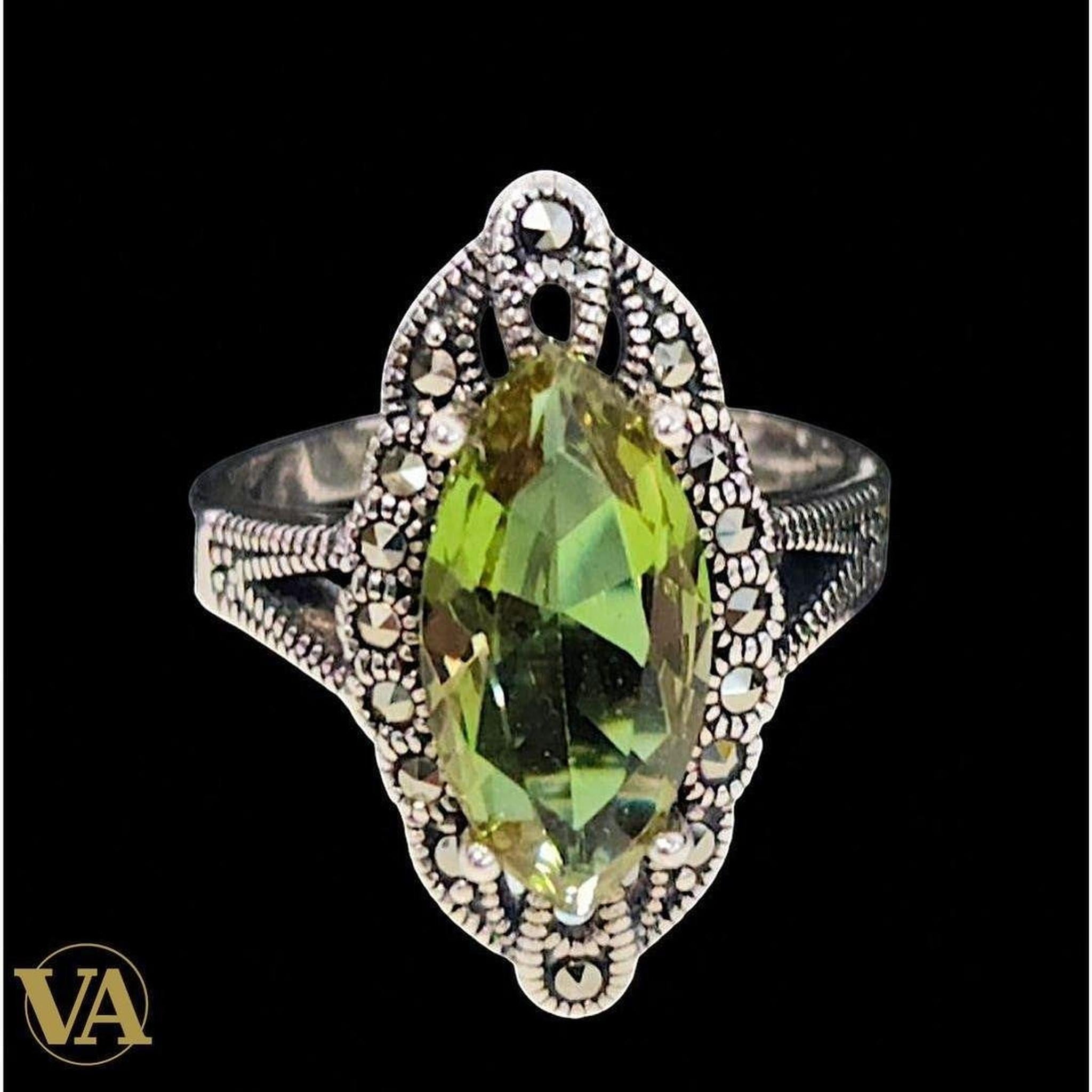
Zultanite or Sultanite: why these two names refer to the same stone
You may have already come across both spellings when searching for a color-changing ring: zultanite and sultanite. Many customers ask us which is the "real" stone, and if one is more authentic than the other. The answer is simple: it is exactly the same gemstone, known by two different commercial names for the same mineral variety.
One stone, two commercial names
Mineralogically, this stone is a gem variety of diaspore, a hydroxide of aluminum almost exclusively extracted from the Anatolian mountains in Turkey. The Ilbir Dağ deposit, in the Muğla region, remains to this day the only known worldwide source of jewelry-quality for this stone — which largely explains its rarity.
The name "sultanite" appeared first, chosen in homage to the Ottoman sultans to emphasize the precious and royal character of the gem. The name "zultanite" was then registered as a trademark by an American company that acquired the rights to operate the deposit in the mid-2000s, before experiencing legal disputes over trademark ownership. Since then, both appellations circulate in parallel depending on sellers and regions of the world: "sultanite" remains more common in Europe and Turkey, "zultanite" is more widely used in the Anglo-Saxon market.
The phenomenon that makes it unique
What truly distinguishes this stone is not its name but its optical behavior: it changes color depending on the light source. In natural daylight, it displays khaki green to olive green hues. Under artificial incandescent light, it shifts to burgundy, reddish-brown, or even violet shades. This accentuated pleochroism phenomenon brings it closer to alexandrite, a much rarer and more expensive stone — sultanite is often presented as a more accessible alternative offering a comparable effect.
Since each stone is cut from a unique and limited deposit, no two sultanites are ever perfectly identical: the intensity of the color change, the base hue, and the clarity vary from stone to stone, making it an intrinsically singular piece of jewelry.
How to recognize an authentic sultanite
Given the growing popularity of the stone, imitations made of glass or synthetic stone circulate under the same name. A few simple guidelines can help tell the difference:
- The color change must be clear between daylight and artificial light — a simple reflection or a variation in brilliance is not enough.
- The origin must always be Turkish: there is no other recognized gem-quality deposit to date.
- The price reflects the stone's true rarity: a natural sultanite of several carats trades significantly higher than a glass imitation, which often displays a color change that is too uniform or too pronounced to be natural.
- A certificate of authenticity, when offered by the seller, provides additional assurance for larger pieces.
We detail the properties, symbolism, and virtues attributed to this stone in our dedicated article: Sultanite & Zultanite: rare color-changing stone.
Sultanite in 925 silver jewelry
At Vindicta, sultanite holds a special place: it is one of the stones that best embodies our attachment to the Ottoman heritage and Turkish craftsmanship. Set in solid 925 silver, it is most often combined with marcasite, whose dark and sparkling luster enhances the play of colors of the central stone — a classic pairing in Ottoman-style jewelry.
It is mainly found in three families of jewelry:
- Rings with an oval or teardrop central stone, often surrounded by a halo of marcasites;
- Bracelets where sultanite forms the central motif of a bangle or chain;
- Watches with a dial or strap adorned with the stone, for a piece that is both functional and precious.
Discover our entire selection on the page 925 Silver Sultanite Jewelry, or explore our wider catalog of women's 925 silver rings to discover other natural stones associated with the same Ottoman spirit.
Caring for sultanite jewelry
Sultanite is a relatively soft stone compared to sapphire or ruby, which requires a few simple precautions in everyday life. Avoid shocks and rubbing against hard surfaces, remove the jewelry before sports activities or prolonged contact with chlorinated water, and clean it with a soft, slightly damp cloth rather than a harsh chemical product. Stored separately from other jewelry to prevent scratches, a 925 silver and sultanite ring or bracelet will retain its sparkle for decades.
In summary
Whether you are looking for a "zultanite ring" or a "sultanite ring," you are looking for exactly the same piece of jewelry: a rare, exclusively Turkish stone, capable of changing color depending on the light. The choice between the two spellings is primarily a matter of commercial usage, not authenticity. What really matters is checking the origin, the quality of the cut, and the clarity of the color change.
Vindicta — authenticity in 925 silver since 2016. Discover our story.
✦ Vindicta — Solid 925 silver
The piece that makes the difference
Certified 925 silver · Free shipping from €69 · 10 years of excellence
Natural Stone Jewellery →



Leave a comment
This site is protected by hCaptcha and the hCaptcha Privacy Policy and Terms of Service apply.