Imperial Russian Goldsmithing: From the Tsars to Fabergé
There are few civilizations in history where silversmithing reached such a degree of refinement as in Imperial Russia. From the workshops of Moscow under Ivan the Terrible to the legendary creations of the House of Fabergé under Nicholas II, solid silver was the common thread of a unique jewelry tradition—at once powerful, spiritual, and of unparalleled sophistication.
At Vindicta, a house of solid 925 sterling silver jewelry with over 10 years of excellence, we follow this tradition of rigorous selection: each piece is chosen for its quality, character, and history. The solid 925 sterling silver we use is the same quality standard as that of the great imperial Russian workshops.
The Origins: Silver in Medieval Russia
The history of Russian silversmithing begins long before the tsars. As early as the 9th century, artisans in Kyiv—then the capital of Kievan Rus'—mastered sophisticated techniques inherited from Byzantium: filigree, cloisonné enamel, granulation. Silver was omnipresent in jewelry, reliquaries, adorned icons, and liturgical objects.
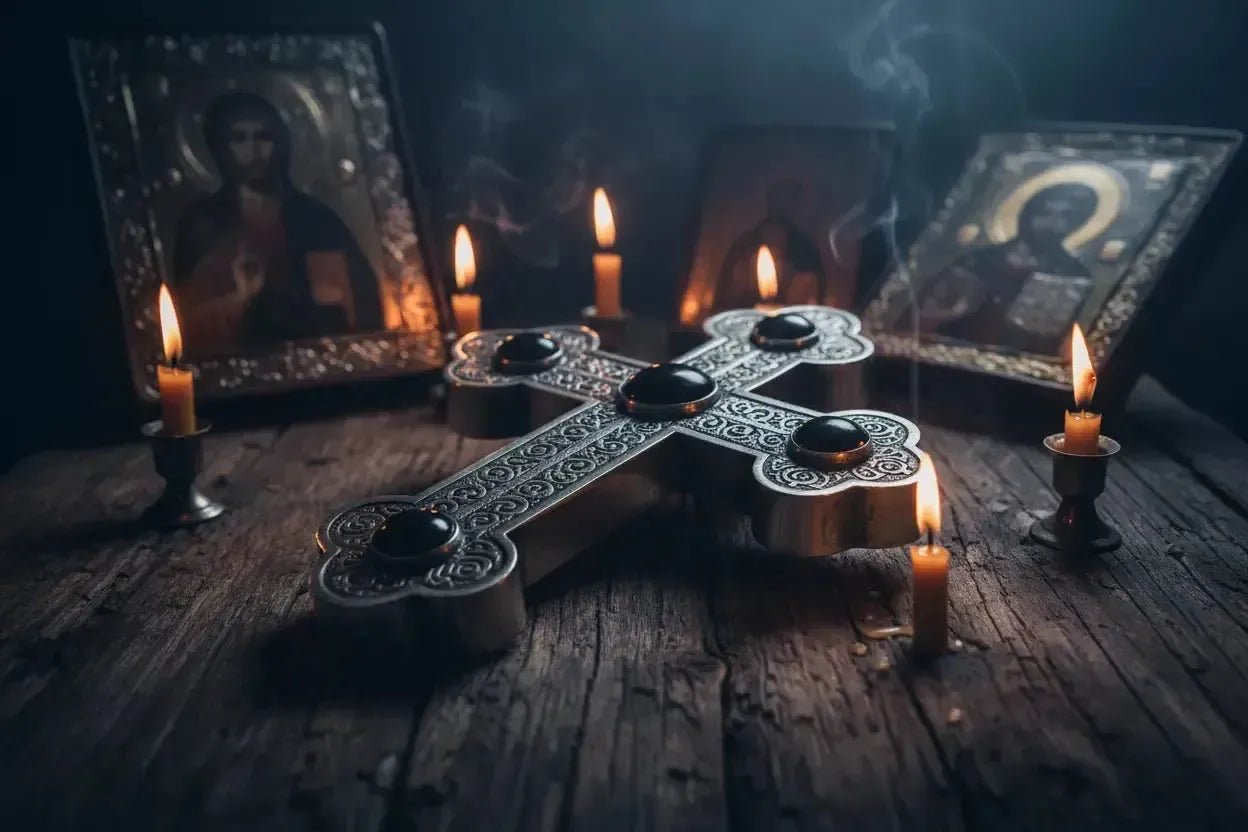
With the rise of Moscow in the 15th century, the Kremlin workshops—the Gold and Silver Chambers—became the nerve center of Russian jewelry production. Under Ivan III and then Ivan the Terrible, these workshops produced exceptionally rich pieces: ceremonial cups, signet rings with tsarist coats of arms, solid silver pectoral crosses adorned with precious stones.
The Golden Age: Peter the Great and Catherine II
It was in the 18th century that Russian silversmithing experienced its first great revolution. Peter the Great, fascinated by Western Europe, invited master silversmiths from France, Germany, and Holland to Saint Petersburg. The result was a unique synthesis: European technical rigor serving Russian imperial aesthetics.
Catherine II pushed this ambition even further. A great collector and patron, she commissioned solid silver services from the greatest silversmiths of the time, including the famous Orlov service—more than 3,000 pieces of solid 925 sterling silver. Court jewelry reached an unprecedented level of sophistication: signet rings with Siberian stones, engraved bracelets with imperial coats of arms, necklaces adorned with double-headed eagles.
The 19th Century: The Birth of the Great Houses
The 19th century saw the emergence of the great Russian silversmithing houses that would mark the world history of jewelry. Among them:
- Sazikov (founded in 1793) — the first Russian house to exhibit at the London Universal Exhibition in 1851
- Khlebnikov — specialist in cloisonné enamel on silver, official supplier to the imperial court
- Ovchinnikov — master of the Slavic filigree technique, awarded at international exhibitions
- Fabergé — the house that would bring Russian silversmithing to its absolute peak
These houses shared a common feature: the systematic use of solid 925 sterling silver as the basis of their creations, guaranteeing durability and authenticity.
Fabergé: The Pinnacle of Imperial Silversmithing
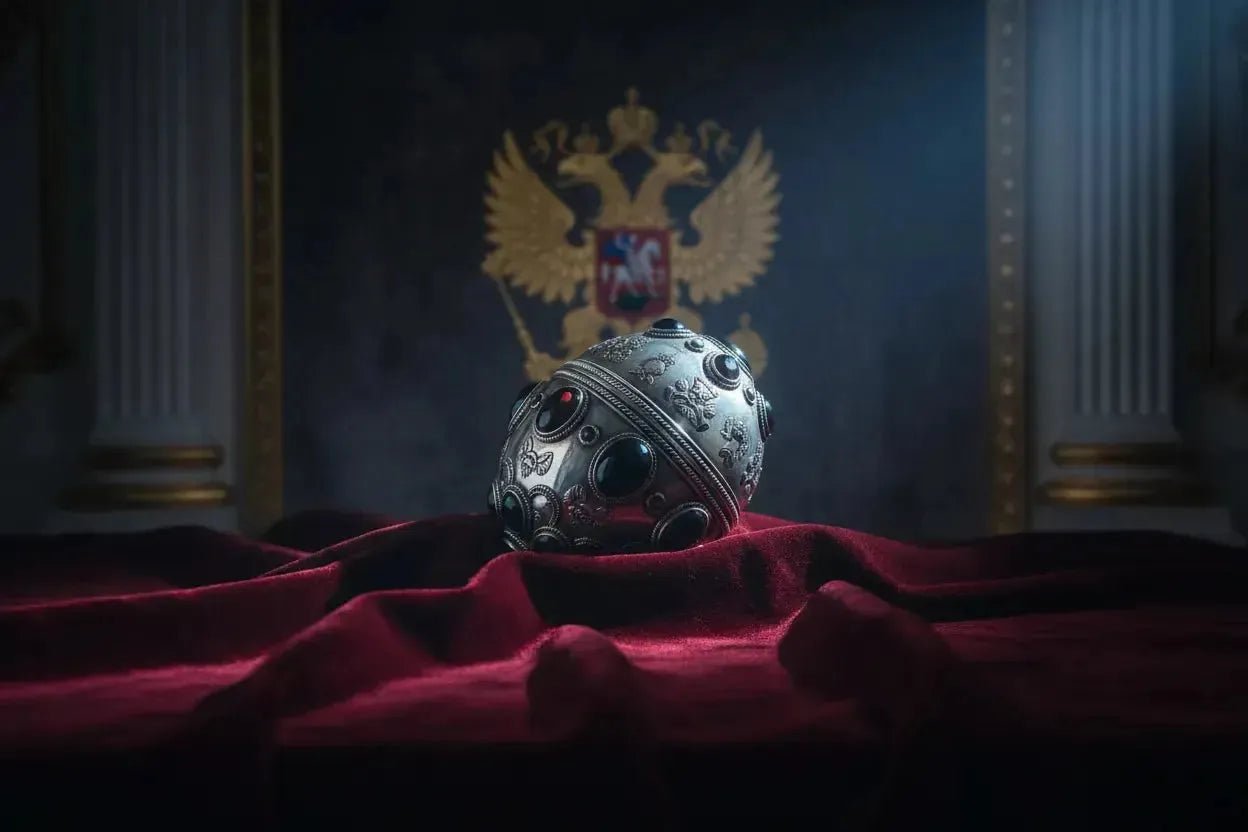
Peter Carl Fabergé took over the family business in 1872. In a few years, he became the official jeweler to the Russian imperial court and major European royal families. His creations—including the famous imperial eggs given by the tsars to their wives—are now considered the greatest masterpieces of world silversmithing.
What distinguished Fabergé was his revolutionary approach: he refused to hierarchize materials. Solid silver was treated with as much care and creative genius as gold or platinum. The 925 sterling silver pieces from the House of Fabergé—snuff boxes, frames, signet rings, desk objects—are of a technical finesse that remains inimitable today.
The Signature Techniques of Imperial Russian Silversmithing
Several techniques define the aesthetic of Imperial Russian silversmithing:
- Niello — inlaying a black alloy into silver engravings, creating a striking contrast between the shiny metal and dark patterns
- Cloisonné enamel — vibrant colors trapped within silver partitions, a technique inherited from Byzantium
- Filigree — silver threads woven into extremely fine metallic lace
- Chiseling — working with a chisel on solid silver to create relief and deep patterns
- Granulation — tiny silver beads soldered to the surface to create textures
These techniques, developed over centuries, explain why Russian solid silver jewelry has unparalleled visual depth and tactile richness.
The Imperial Heritage in Contemporary Jewelry
The 1917 revolution ended the empire, but not the heritage. The techniques and aesthetic codes of Imperial Russian silversmithing continue to inspire jewelers worldwide. Engraved motifs, dark stones, oxidized silver reminiscent of niello, massive and authoritative forms: all elements found in the most sought-after contemporary men's jewelry.
At Vindicta, we select pieces that embody this tradition of character and high standards. Our men's 925 sterling silver signet rings and our men's 925 sterling silver rings carry this heritage in their weight, engravings, and finish. Fans of dark stones will find in our black onyx jewelry collection a direct echo of the Siberian stones that adorned tsarist jewelry.
For those interested in the broader history of silver in civilizations, our article on silver in Slavic civilizations offers a complete overview of this millennial heritage. And to understand the techniques that determine the value of a solid silver jewel, discover our page dedicated to authenticity and certification.
Imperial Russian silversmithing reminds us of a fundamental truth: a well-crafted solid 925 sterling silver jewel endures through centuries. This is exactly what we select at Vindicta—certified, durable, and meaningful pieces.
✦ Vindicta — Argent 925 Massif
La pièce qui fait la différence
Certifié argent 925 · Livraison offerte dès 69€ · 10 ans d'excellence
Chevalières Homme Argent 925 →