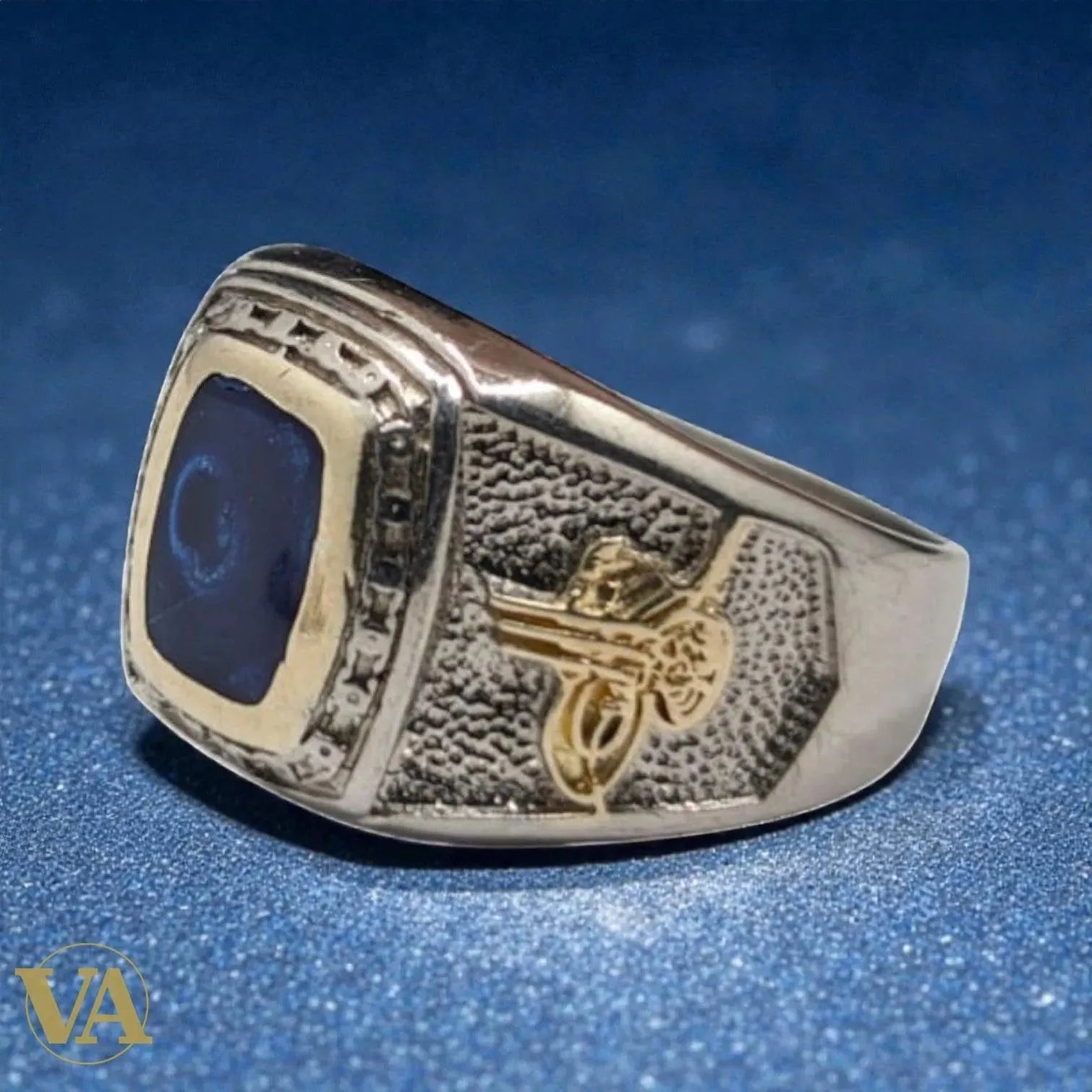
Jewelry and Ottoman Culture: The Legacy of the Sultans in 925 Silver
Between 1299 and 1922, the Ottoman Empire reigned over three continents, uniting peoples, languages, and artistic traditions of exceptional diversity under one banner. At the heart of this empire, silver jewelry—and particularly signet rings—was much more than an ornament: it was a language, a sign of power, a declaration of identity and faith. Discover our selection of 925 sterling silver Islamic jewelry inspired by this imperial heritage.
The Ottoman Empire and Silver: A Sacred Metal
In Ottoman culture, silver was the metal of faith and dignity. In accordance with Islamic tradition, men wore silver—never gold. But this silver was crafted with a refinement that rivaled the finest gold pieces of the Western world. Ottoman artisans—the küyümcü—were masters of filigree, chasing, engraving, and stone inlay.
Today, the Topkapi Palace in Istanbul preserves hundreds of pieces testifying to this art: sultans' signet rings, official seals, chased silver jewelry boxes, belts, and baldrics adorned with precious stones. Each piece tells a story—that of an empire that made beauty a political and spiritual act.
The Tughra: The Sultans' Signature
The tughra is one of the most fascinating symbols of Ottoman culture. It is the calligraphic monogram of the sultan—an official signature of extraordinary complexity and graphic beauty. Each sultan had his own tughra, drawn by the palace calligraphers and affixed to all official documents, coins, and royal jewelry.
On a silver signet ring, the tughra became a personal seal—the heir to a tradition that dated back to Prophet Muhammad ﷺ himself, who used his silver ring as an official seal. Wearing jewelry adorned with a tughra is to become part of this lineage of grandeur and faith.
Explore our 925 sterling silver signet rings inspired by Ottoman tradition.
The Sultans and Their Jewelry: A Story of Power and Faith
Each Ottoman sultan had a particular relationship with their jewelry. Suleiman the Magnificent—Kanuni Sultan Suleiman—was known for his refined taste and his collection of silver rings adorned with turquoise and rubies. Selim I, the conqueror of Egypt, wore a silver signet ring engraved with Quranic verses. Mehmed II, the conqueror of Constantinople, had Byzantine jewels melted down to create Islamic pieces.
These sultans understood that jewelry was an instrument of soft power—a way to assert their authority and faith without the need for words.
Ottoman Craftsmanship Techniques
Ottoman silver jewelry craftsmanship relied on several exceptionally masterful techniques:
- Filigree (telkari): silver threads braided and soldered into extremely fine, ethereal patterns. The city of Prizren, Kosovo, was the world center of Ottoman filigree.
- Chasing (kakma): relief engraving on solid silver, creating three-dimensional floral and geometric patterns.
- Repoussé: a technique of shaping silver by pressing, creating relief forms from the inside.
- Stone Inlay (kakma taş): setting natural stones—turquoise, carnelian, onyx, tiger's eye—into chased silver settings.
- Niello (savat): inlaying a black alloy into silver engravings, creating a striking contrast between black and shiny silver.
Ottoman Stones: Colors of the Empire
The Ottoman Empire had access to precious and semi-precious stones from all over the world, thanks to its trade routes. These same stones adorned both men's signet rings and women's rings and earrings throughout the empire. Certain stones were particularly valued:
- Turquoise: the quintessential imperial Ottoman stone. Its blue-green color evoked the sky and the sea—the two horizons of the empire.
- Carnelian: reddish-orange, the stone of the Prophet ﷺ, omnipresent in the jewelry of pious sultans.
- Black Onyx: sober and powerful, the stone of warriors and statesmen.
- Tiger's Eye: golden and shimmering, the stone of discernment and strategy.
The Ottoman Legacy in France: An Identity to Claim
In France, millions of people of Turkish, Algerian, Moroccan, Tunisian, or Balkan origin carry this Ottoman heritage within them. Wearing 925 sterling silver jewelry inspired by Ottoman tradition is a way to affirm this identity with elegance—without nostalgia, without retreat, but with the pride of knowing one's origins.
This is exactly what Vindicta offers: jewelry that carries history without betraying it, accessible to all who seek to express their identity with authenticity and quality.
Our Selection Inspired by Ottoman Culture
For over 10 years, Vindicta has been selecting solid 925 sterling silver jewelry inspired by Ottoman traditions—certified, authentic pieces chosen for their quality and consistency with this imperial heritage.
Explore our collection of 925 sterling silver Islamic jewelry, our men's signet rings, our women's rings, and our Art Deco jewelry.
Also consult our article on Islamic signet rings: Sunnah and history, our article on 925 sterling silver Islamic rings, and our buying guide for Muslim men's silver rings.
Vindicta is a house of solid 925 sterling silver jewelry inspired by Ottoman, Andalusian, and Art Deco traditions. By choosing Vindicta, you wear a heritage—not an accessory. Consult our authenticity page to learn more about our certifications.
✦ Vindicta — Solid 925 silver
The piece that makes the difference
Certified 925 silver · Free shipping from €69 · 10 years of excellence
Oriental 925 Silver Jewellery →