Stone Setting: Techniques Explained | Complete Guide 2026
Introduction: The Art of Setting a Stone
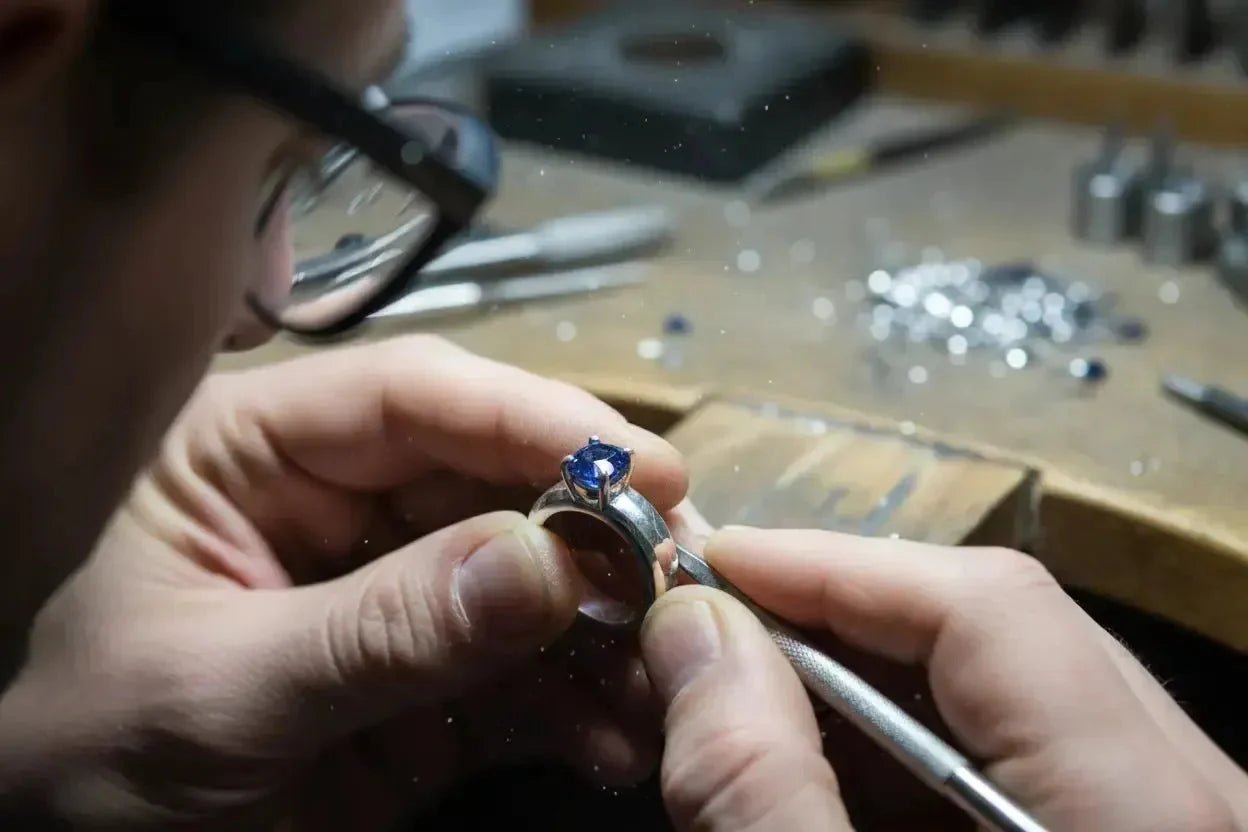
Setting is the art of securing a natural stone onto a 925 silver piece of jewelry. It is a crucial step that determines not only the security of the stone but also the final aesthetic of the jewelry.
Good setting must be both solid (the stone should never fall out), elegant (highlighting the gem), and durable (withstanding daily wear).
In this comprehensive guide, we explore the main setting techniques used in 925 silver jewelry, their advantages, disadvantages, and ideal uses.
What is Setting?
Definition
Setting is the set of techniques used to secure a precious or semi-precious stone onto a metallic support (in this case, 925 silver).
Objectives of setting:
- 🔒 Secure the stone: Prevent it from falling out
- ✨ Enhance its beauty: Optimize its sparkle and brilliance
- 🛡️ Protect: Limit shocks and scratches
- 🎨 Aesthetics: Create a harmonious design
History of Setting
Setting has existed since Antiquity:
- Ancient Egypt: Bezel setting for scarabs
- Ancient Rome: Rudimentary prong setting
- Middle Ages: Development of bezel setting
- Renaissance: Refinement of techniques
- 19th Century: Invention of the Tiffany setting (6 prongs)
- Today: Multitude of specialized techniques
1. Prong Setting
Description
Prong setting is the most popular technique. The stone is held in place by small silver prongs (usually 4 or 6) that fold over its edges.
Characteristics:
- Thin prongs that "grip" the stone
- Maximum light passes through the stone
- Stone visible from all sides
- Light and airy
Variations
Tiffany Setting (6 prongs):
- Invented by Tiffany & Co. in 1886
- 6 prongs for maximum security
- Ideal round shape
- Classic and timeless
4-Prong Setting:
- More modern and minimalist
- Less visible metal
- Ideal for square or princess cut stones
- Slightly less secure than 6 prongs
3-Prong Setting:
- Very minimalist
- For small stones
- Contemporary design
Advantages
- ✅ Maximum light: The stone sparkles more
- ✅ Lightweight: Little metal used
- ✅ Elegant: Airy and refined appearance
- ✅ Versatile: Works with almost all stones
- ✅ Easy cleaning: Easy access under the stone
Disadvantages
- ❌ Fragile prongs: Can bend or break
- ❌ Snagging: Prongs can catch on clothing
- ❌ Maintenance: Regularly check that the prongs are secure
- ❌ Less protected: The stone is more exposed to impacts
Ideal Stones
- Diamonds (faceted)
- Sapphires
- Rubies
- Topazes
- Amethysts
- All hard and faceted stones
2. Bezel Setting
Description
Bezel setting consists of completely encircling the stone with a 925 silver border that folds over its edges.
Characteristics:
- Metallic border all around the stone
- Stone encased in a "frame"
- Smooth and modern appearance
- Very secure
Variations
Full Bezel Setting:
- Complete 360° border
- Maximum security
- Vintage or modern look depending on the design
Partial Bezel Setting:
- Border only on 2 opposite sides
- More light than full bezel
- Contemporary design
Advantages
- ✅ Very secure: The stone cannot fall out
- ✅ Maximum protection: Stone edges are protected
- ✅ No snagging: Smooth surface
- ✅ Clean style: Minimalist and modern appearance
- ✅ Durable: Resists daily wear well
- ✅ Ideal for fragile stones: Protects the edges
Disadvantages
- ❌ Less light: The border blocks some light
- ❌ More metal: More massive appearance
- ❌ Difficult to clean: Dirt can accumulate under the stone
- ❌ Less brilliance: For faceted stones
Ideal Stones
- Cabochons (onyx, turquoise, lapis lazuli)
- Opals (fragile)
- Emeralds (fragile)
- Pearls
- Moonstones
- All smooth-surfaced stones
3. Pave Setting (Grain Setting)
Description
Pave setting involves securing small stones by creating tiny silver beads (grains) around each stone.
Characteristics:
- Multiple small stones side by side
- Metallic grains that hold each stone
- Scintillating "pave" effect
- Very precise work
Technique
- Drill holes for each stone
- Place stones in the holes
- Raise small portions of silver around each stone
- Form beads (grains) with a special tool
- Polish the entire piece
Advantages
- ✅ Scintillating effect: Multiple stones = maximum brilliance
- ✅ Little visible metal: Stones dominate
- ✅ Luxurious: Rich and elegant appearance
- ✅ Versatile: Can cover large surfaces
Disadvantages
- ❌ Very technical: Requires an experienced artisan
- ❌ Costly: Significant working time
- ❌ Fragile: Grains can wear out
- ❌ Delicate maintenance: Professional cleaning recommended
- ❌ Risk of loss: If a grain breaks, the stone can fall out
Ideal Stones
- Small diamonds
- Zircons
- Small faceted stones (< 3mm)
4. Channel Setting
Description
Channel setting consists of placing several stones side by side in a silver channel, held by two parallel rails.
Characteristics:
- Stones aligned in a channel
- Two silver rails on each side
- Smooth and continuous surface
- Modern and sleek appearance
Advantages
- ✅ Very secure: Stones are well protected
- ✅ Smooth surface: No snagging
- ✅ Modern: Contemporary design
- ✅ Durable: Resists wear well
- ✅ Ideal for wedding bands: Comfortable for daily wear
Disadvantages
- ❌ Less light: Rails block the sides
- ❌ Calibrated stones: Must be of identical size
- ❌ Difficulty of repair: If a stone falls out, difficult to replace
Ideal Stones
- Square diamonds (princess cut)
- Calibrated sapphires
- All stones of the same size
5. Tension Setting
Description
Tension setting is a modern technique where the stone is held solely by the tension of the metal, without visible prongs or bezel.
Characteristics:
- Stone "suspended" between two ends of the jewelry
- No visible prongs
- "Floating" effect
- Very contemporary
Advantages
- ✅ Spectacular: Unique visual effect
- ✅ Maximum light: No metal blocking
- ✅ Modern: Avant-garde design
- ✅ Original: Uncommon
Disadvantages
- ❌ Very technical: Requires expertise
- ❌ Costly: Complex manufacturing
- ❌ Hard stones only: Risk of breakage for fragile stones
- ❌ Impossible to resize: For rings
- ❌ Fragile: Impacts can dislodge the stone
Ideal Stones
- Diamonds (very hard)
- Sapphires
- Rubies
- Moissanite
6. Other Setting Techniques
Invisible Setting
- Grooved stones that interlock
- No visible metal
- "Carpet" effect of stones
- Very technical and costly
Flush Setting
- Stone set into a mass of silver
- Raw and organic appearance
- Contemporary style
Peg Setting
- Small silver pegs hold the stone
- Industrial look
- For small stones
How to Choose the Right Setting?
According to the Type of Stone
Faceted stones (diamond, sapphire, topaz):
- ✅ Prong setting (maximum light)
- ✅ Pave setting (scintillating effect)
Cabochons (onyx, turquoise, lapis):
- ✅ Bezel setting (protection and enhancement)
- ✅ Flush setting (organic style)
Fragile stones (opal, emerald, pearl):
- ✅ Bezel setting (maximum protection)
- ❌ Avoid tension setting
According to Style
Classic/Timeless:
- Tiffany setting (6 prongs)
- Vintage bezel setting
Modern/Minimalist:
- 4-prong setting
- Sleek bezel setting
- Tension setting
Luxurious/Glamorous:
- Pave setting
- Invisible setting
According to Use
Daily wear:
- ✅ Bezel setting (durable, no snagging)
- ✅ Channel setting (smooth, comfortable)
- ❌ Avoid pave setting (fragile)
Special occasions:
- ✅ Prong setting (elegant, brilliant)
- ✅ Pave setting (luxurious)
Maintenance According to Setting Type
Prong Setting
- Regular check-up: Every 6 months with a jeweler
- Tightening: If prongs are bent
- Cleaning: Soft brush under the stone
Bezel Setting
- Professional cleaning: Annually
- Check the border: No cracks
- Avoid impacts: Can deform the border
Pave Setting
- Professional cleaning only
- Frequent checking: Every 3-6 months
- Delicate handling: Avoid impacts
Cost of Different Settings
Price Order (from least to most expensive)
- Simple bezel setting: Quick to create
- 4-prong setting: Standard technique
- 6-prong setting: More work
- Channel setting: Precision required
- Pave setting: Very technical
- Tension setting: Specialized expertise
- Invisible setting: The most complex
Conclusion: Choosing the Ideal Setting
The choice of setting depends on three main factors:
- Type of stone: Faceted, cabochon, fragile?
- Desired style: Classic, modern, luxurious?
- Intended use: Daily or occasional?
A good setting must be both secure, aesthetic, and adapted to your lifestyle. Do not hesitate to ask a professional jeweler for advice on choosing the most suitable technique for your 925 silver jewelry.
At Vindicta, we use the most appropriate setting techniques for each natural stone to guarantee security, durability, and beauty. Discover our collection of authentic natural stone set 925 sterling silver jewelry.
✦ Vindicta — Solid 925 silver
The piece that makes the difference
Certified 925 silver · Free shipping from €69 · 10 years of excellence
Men's 925 Silver Signet Rings →