
French Art Deco: 1920s Elegance in Sterling Silver
Art Deco, A French Aesthetic Revolution
Born in post-war Paris, Art Deco (1920-1939) is much more than a style: it is a declaration of optimism. After the dark years of the Great War, France wanted to celebrate modernity, luxury, and geometry. The International Exhibition of Modern Decorative and Industrial Arts in Paris in 1925 cemented this movement before the entire world, making the French capital the global center of contemporary elegance. In jewelry, the great Parisian masters—Cartier, Van Cleef & Arpels, Boucheron—abandoned the organic curves of Art Nouveau to embrace straight lines, sharp angles, and perfect symmetry. 925 sterling silver, with its cold brilliance and precision, became the ideal metal to express this rigorous and luminous aesthetic.
The Visual Codes of Art Deco Jewelry
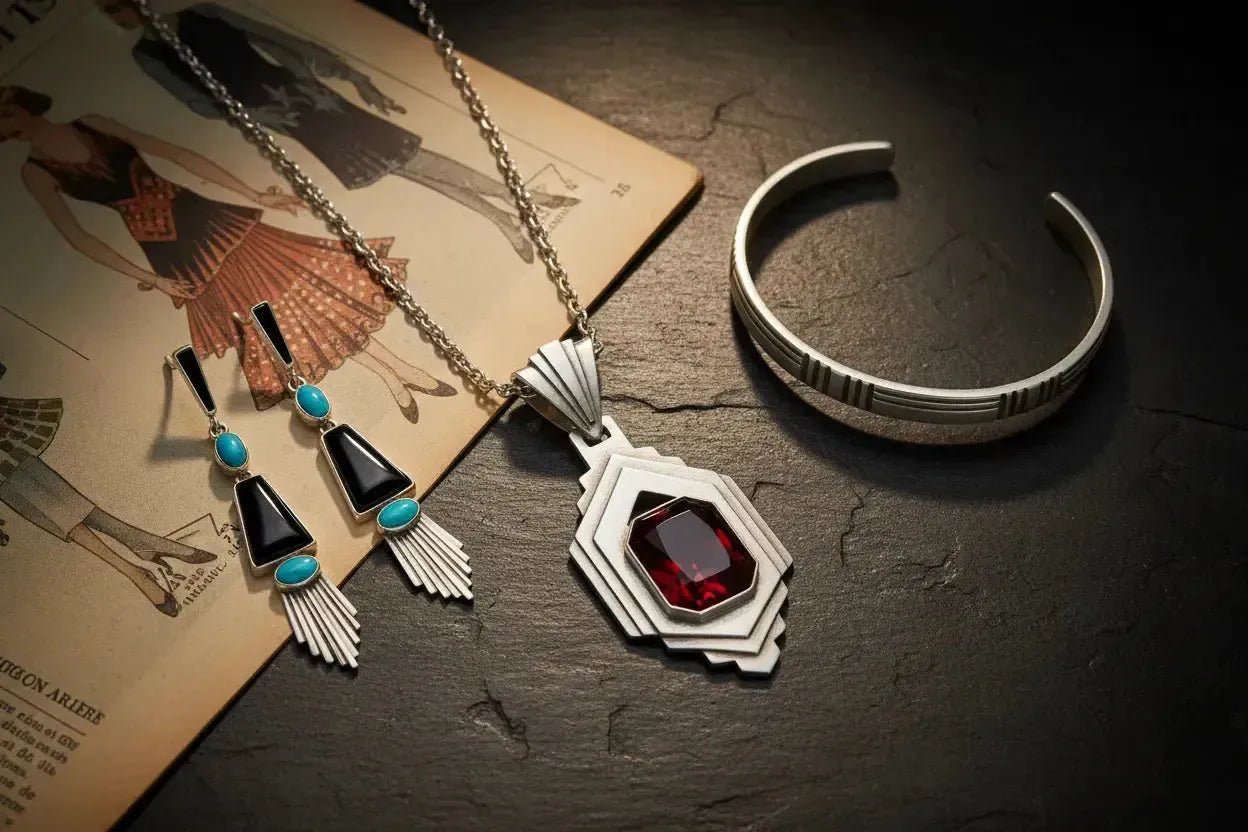
What immediately distinguishes an Art Deco jewel is its overt geometry: squares, rectangles, triangles, chevrons, and zigzags repeat with almost architectural precision. Symmetry is absolute, visual balance an obsession. Marcasite—that cut pyrite with metallic silver reflections—became the style's mineral signature. Set in 925 sterling silver, it creates fascinating light effects that evoke both luxury and vintage sophistication. The contrast between deep black onyx and brilliant white silver is another constant: dramatic, elegant, timeless. Discover our Art Deco 925 sterling silver jewelry that faithfully perpetuates these codes.
The Influences that Shaped the Style
Art Deco is a syncretic style, nourished by multiple sources of inspiration. The Cubism of Picasso and Braque introduced the geometric decomposition of forms, while the machine age imposed its sleek lines and industrial precision. The discovery of Tutankhamun's tomb in 1922 triggered a true Egyptian fever in Parisian workshops, and Ottoman and Oriental influences brought their intertwined motifs and colored stones—turquoise, carnelian, lapis lazuli. It is precisely this richness of influences that makes Art Deco so universal and enduring. Our 925 sterling silver marcasite jewelry and our pieces with black onyx stones are part of this very tradition.
Gatsby, the Roaring Twenties, and the Spirit of Art Deco Jewelry
It is impossible to mention Art Deco without summoning the image of Jay Gatsby and his sumptuous parties. F. Scott Fitzgerald's novel, published in 1925, perfectly captures the spirit of that era: displayed luxury, long necklaces swaying on Charleston dresses, geometric rings shimmering in the light of chandeliers, marcasite sparkling like a thousand little stars. Wearing an Art Deco 925 sterling silver jewel today means invoking this heritage with elegance—a way of saying that certain aesthetics transcend eras. Whether you wear a geometric marcasite ring with a minimalist contemporary outfit or a square-motif signet ring with a three-piece suit, Art Deco adapts and enhances.
The "Garçonne" and the Revolution of the Female Body
Art Deco did not just impose itself in jewelers' windows—it accompanied a profound transformation of the female silhouette. After the First World War, women cut their hair into the "garçonne" bob, lightened their dresses, and freed their arms and necks, which had been covered by 19th-century fashions. This suddenly visible skin called for new jewelry: long sautoirs that accompanied the movement of the Charleston dance, multiple bracelets stacked on the bare forearm, and drop earrings that swung freely with every step. Art Deco jewelry was therefore not just a matter of geometric style—it responded to a real social change, that of women demanding more freedom of movement and refusing the corsets and constraints of the previous generation.
This contrast stands out sharply from the period that preceded it, where the organic floral motifs of the Belle Époque Art Nouveau still dominated Parisian displays. In the span of just two decades, French jewelry went from the sensual, vegetal curve to the straight, architectural line—one of the fastest stylistic mutations in the entire history of Western goldsmithing.
New York, Architectural Mirror of Paris
While Art Deco was born in Paris, it found an immediate echo on the other side of the Atlantic, where New York skyscrapers—the Chrysler Building, the Empire State Building—translated into architecture the same obsession for the straight line and geometric repetition found on Parisian rings and brooches. This transatlantic conversation reinforced the style rather than diluting it: French houses remained the absolute reference for refinement, but the aesthetic itself became an international language, recognizable just as easily on a Manhattan building as on a bracelet sold at Place Vendôme.
A Still-Living Technical Heritage
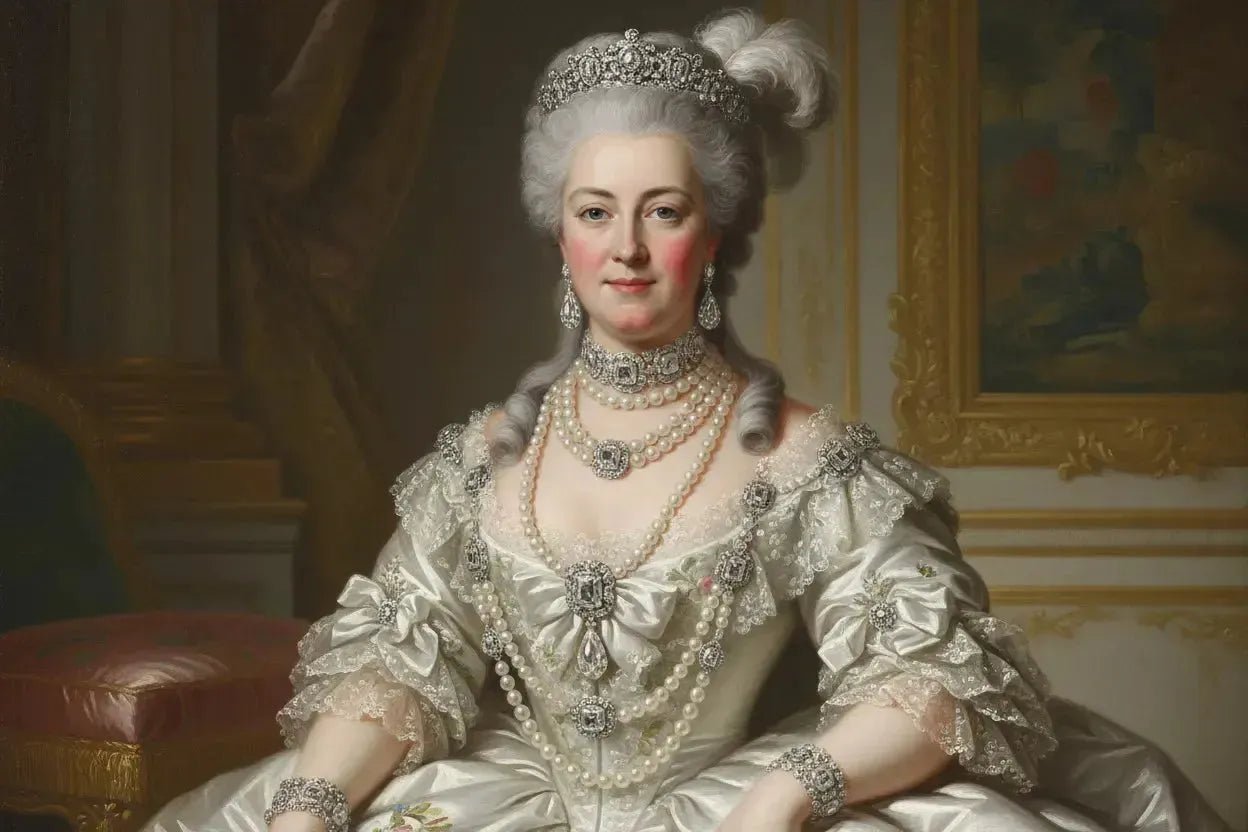
The setting techniques that enabled the rise of Art Deco—bezel settings to protect fragile stones, pavé settings to create continuous sparkling surfaces—are part of the long tradition of French royal goldsmithing, whose 18th-century masters had already brought these skills to a very high level of precision. This uninterrupted technical thread, from the workshops of Versailles to the Art Deco workshops of Place Vendôme, explains why France was able to establish itself so naturally as the world capital of this new style in the 1920s: the expertise was already there, only the aesthetic language changed.
Art Deco at Vindicta
At Vindicta, Art Deco is one of our house's three souls, alongside Ottoman and Andalusian traditions. We select pieces that respect the foundational codes of the style: pure geometry, carefully set marcasite, onyx-silver contrasts, and rigorous symmetry. Each piece of jewelry is certified solid 925 sterling silver, ensuring the Roaring Twenties heritage lasts long beyond our era. To learn more about our quality commitment, consult our authenticity page and explore our Art Deco 925 sterling silver collection.
✦ Vindicta — Solid 925 silver
The piece that makes the difference
Certified 925 silver · Free shipping from €69 · 10 years of excellence
Women's 925 Silver Rings →



%20is%20much%20more%20than%20a%20style:%20it%20is%20a%20declaration%20of%20optimism.%20After%20the%20dark%20years%20of%20the%20Great%20War,%20France%20wante...)