
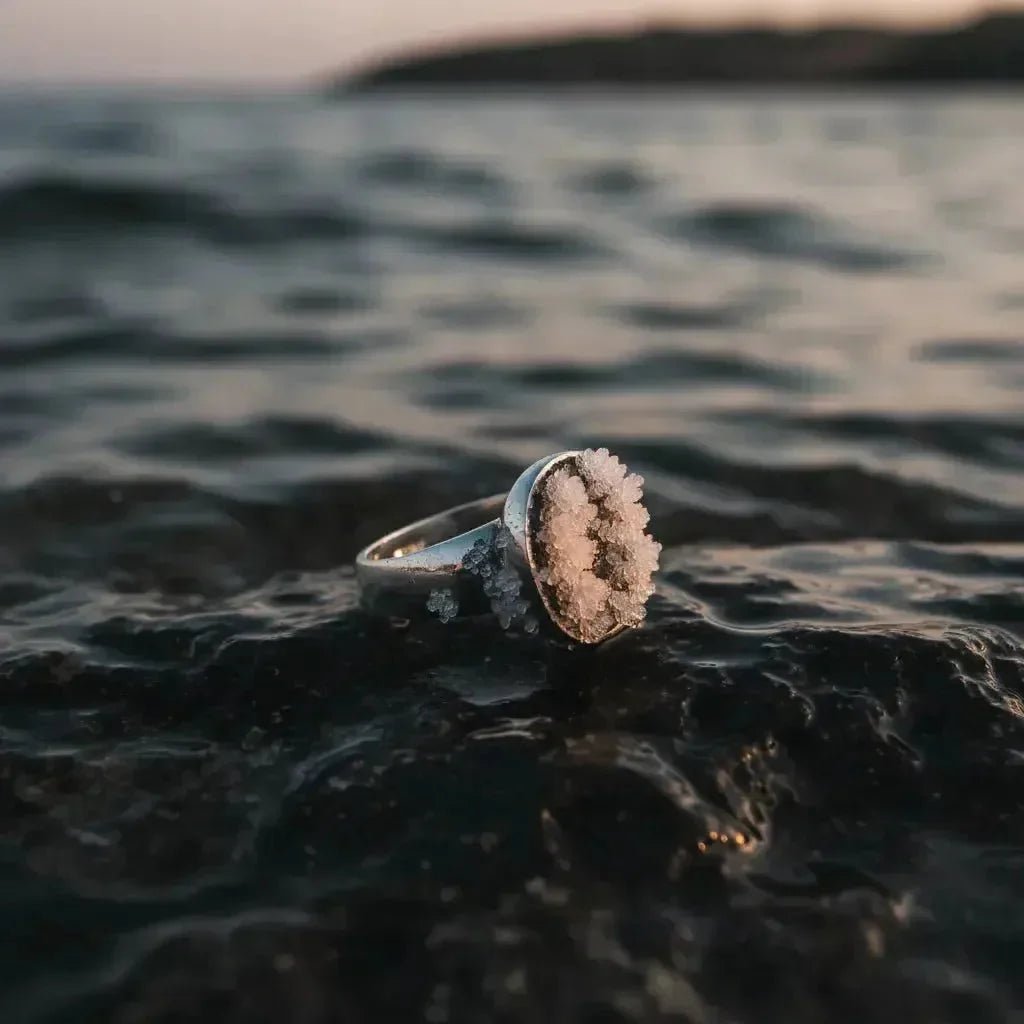
925 Silver and Saltwater: What Really Happens
In the summer, the question inevitably arises: can you keep your 925 sterling silver jewelry on at the beach? Can you dive with your signet ring, swim with your bracelet, or tan with your necklace? The short answer is no—and understanding why will help you avoid damage that can sometimes be irreversible to pieces you hold dear.
Sea salt, the enemy of silver
Seawater is a chemically aggressive environment for 925 sterling silver. Its sodium chloride content—salt—triggers an accelerated oxidation reaction on the silver-copper alloy. In practical terms, prolonged exposure to seawater can cause in a few hours what ambient air takes months to produce: marked blackening, whitish spots on the surface, and in the most severe cases, corrosion that alters the very texture of the metal.
The problem is exacerbated by several factors inherent to the marine environment. The heat of the sun accelerates chemical reactions. Seawater dries on the jewelry, leaving behind concentrated salt deposits that continue to attack the metal even after you have finished swimming. Sunscreen, applied to the skin before entering the water, also contains chemical agents that react with silver. It is the combination of all these factors that makes seawater particularly dangerous for your jewelry.
What happens to natural stones
If your jewelry is set with natural stones, the risk is even higher. Porous stones—turquoise, carnelian, opal, malachite—absorb saltwater and chemical products. Turquoise is particularly vulnerable: repeated exposure to seawater can cause it to turn green or gray irreversibly. Carnelian, which is denser, is more resistant—but its luster can be dulled by salt deposits that become embedded in the micro-pores of the surface.
Black onyx and agate are more resistant, but even these stones benefit from being protected from seawater. The general rule is simple: the more colorful and porous a stone is, the more vulnerable it is to the chemical agents of the marine environment.
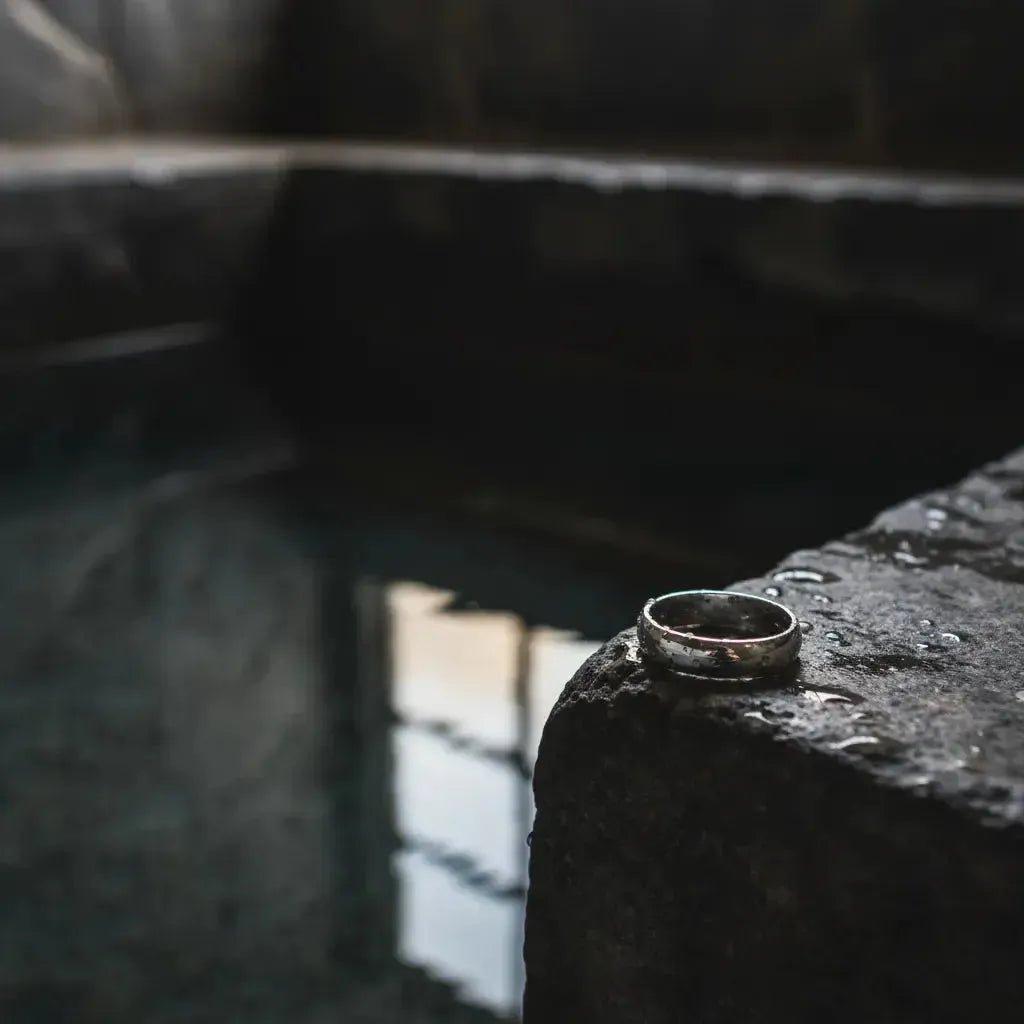
I forgot my jewelry at the beach: what should I do?
It happens to everyone. If you have swum with your 925 sterling silver ring or bracelet, here are the steps to take immediately to limit the damage.
Rinse thoroughly with fresh water as soon as possible—this is the most important step. Fresh water dissolves the salt deposits and stops the ongoing chemical reaction. The faster you act, the less significant the damage will be. Then, dry carefully with a soft cloth—do not let the jewelry air dry with water residue, as evaporation concentrates the salt on the surface. If you notice whitish spots, a gentle polish with a special silver cloth may be enough to remove them. For more severe cases, a bath in lukewarm water with a few drops of neutral dish soap, followed by a thorough rinse and drying, often restores the original luster.
Why tanning worsens the problem
An often-ignored factor: sweat accumulated during a day of tanning combined with unrinsed salt residue creates a particularly corrosive cocktail for silver. Unlike a quick swim followed by a shower, prolonged exposure to the sun with jewelry damp from sweat and salt multiplies the contact time between the metal and the oxidizing agents. It is often after this type of full day at the beach, rather than after a simple swim, that jewelry ends up looking the most blackened.
Prevention rather than cure
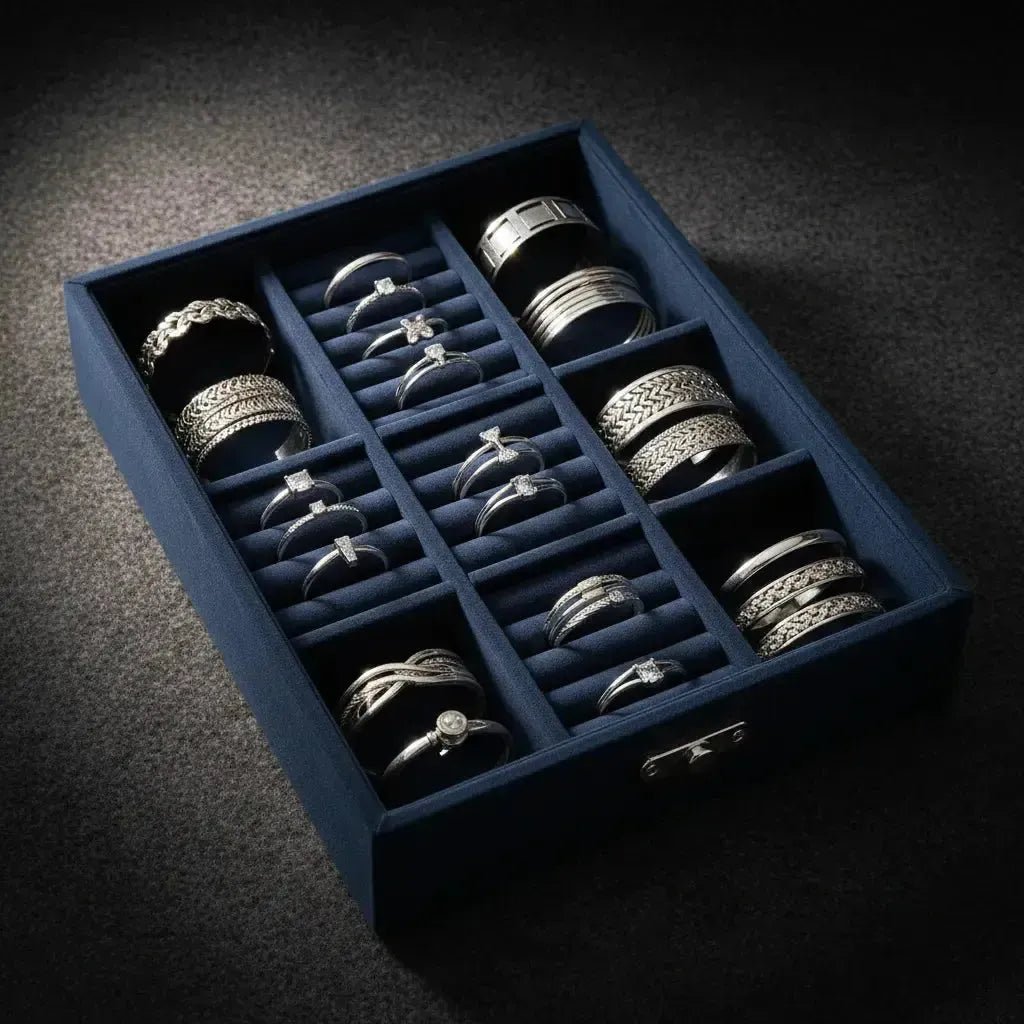
The best protection remains prevention. Before going to the beach, remove all your 925 sterling silver jewelry and store it in a box or a closed pouch away from direct sunlight. Do not leave them on a towel or in an open bag—sea sand, laden with salt and abrasive particles, can scratch the surface of the silver even without contact with water.
This simple habit—removing your jewelry before the beach, putting it back on after your shower—is what makes the difference between a piece of 925 sterling silver jewelry that stays beautiful for decades and jewelry that degrades in just a few summers. At Vindicta, we select pieces designed to last—provided they are given the care they deserve. Discover our men's 925 sterling silver rings, our women's 925 sterling silver rings, and our jewelry with natural stones.
✦ Vindicta — Solid 925 silver
The piece that makes the difference
Certified 925 silver · Free shipping from €69 · 10 years of excellence
Natural Stone Jewellery →



Leave a comment
This site is protected by hCaptcha and the hCaptcha Privacy Policy and Terms of Service apply.