Article: Women of the Ottoman Court: Hürrem Sultan and the Hidden Power of Imperial Jewelry
Women of the Ottoman Court: Hürrem Sultan and the Hidden Power of Imperial Jewelry
Ottoman History Retold: The Power of Women in the Imperial Harem
When Ottoman jewelry is mentioned, the imagination almost always conjures the same figures: the Sultan, his Janissaries, the military might of the Empire. Yet, much of the artistic refinement that shaped Ottoman goldsmithing — the motifs, the commissions to the greatest masters, the court's taste — directly stemmed from a very real female power, long minimized in popular narratives: that of the women of the imperial harem, and particularly the Queen Mothers and favorite wives who directed the Empire's politics and artistic patronage for nearly a century.
Hürrem Sultan: From Slavery to the Throne
Born Roxelana in what is now Ukraine, captured and brought to the harem of Topkapi Palace, Hürrem Sultan became the legal wife of Suleiman the Magnificent in the 16th century—a complete break with Ottoman tradition, which dictated that sultans never officially marry women from the harem. This unprecedented position gave her considerable political influence, but also a major role as an artistic patron: she commissioned jewels, financed architectural complexes, and imposed a personal taste that would profoundly shape the court's aesthetic. The imperial goldsmiths, those very artisans who worked silver and gold for the Topkapi Palace treasury, responded directly to her commissions as much as to those of the Sultan himself.
The Sultanate of Women: A Century of Assumed Power
The period following Hürrem Sultan, which historians now call the "Sultanate of Women" (Kadınlar Saltanatı), saw several generations of Queen Mothers—notably Kösem Sultan and Nurbanu Sultan—wield direct political influence over the Empire, sometimes as de facto regents. This period, far from being a marginal anomaly, lasted nearly a century and a half and profoundly influenced the refinement of the Ottoman court, including in the field of prestigious goldsmithing and jewelry. Narratives focused solely on male sultans and their imperial legacy often overlook this decisive female influence on the taste and art of living of the era.
Jewelry of Ottoman Women: Codes and Symbolism
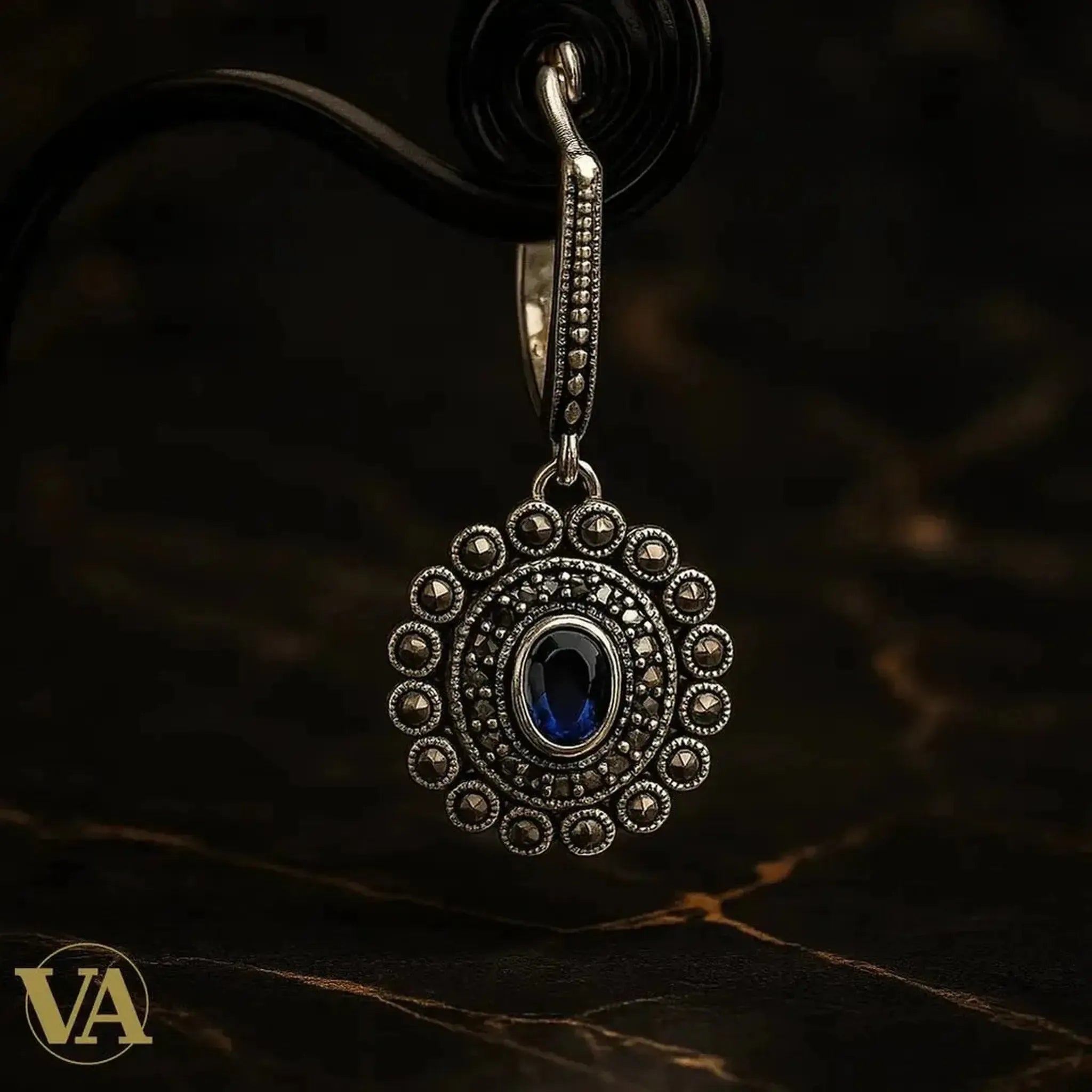
Beyond political figures, Ottoman women's jewelry adhered to very rich codes, still visible in some contemporary traditions. The hotoz, a headdress adorned with stones and pearls worn by high-ranking women, literally framed the face with precious jewels. The bindallı, a traditional wedding dress embroidered with gold and silver threads, was accompanied by complete sets of adornments—layered necklaces, dangling earrings, multiple bracelets—whose richness indicated the family's social standing. These traditions of layering and accumulating female jewelry find a direct echo in our women's 925 silver necklaces and our oriental earrings, designed to be worn in successive layers, in the manner of court adornments.
Garnet and Turquoise, Preferred Stones of Court Women
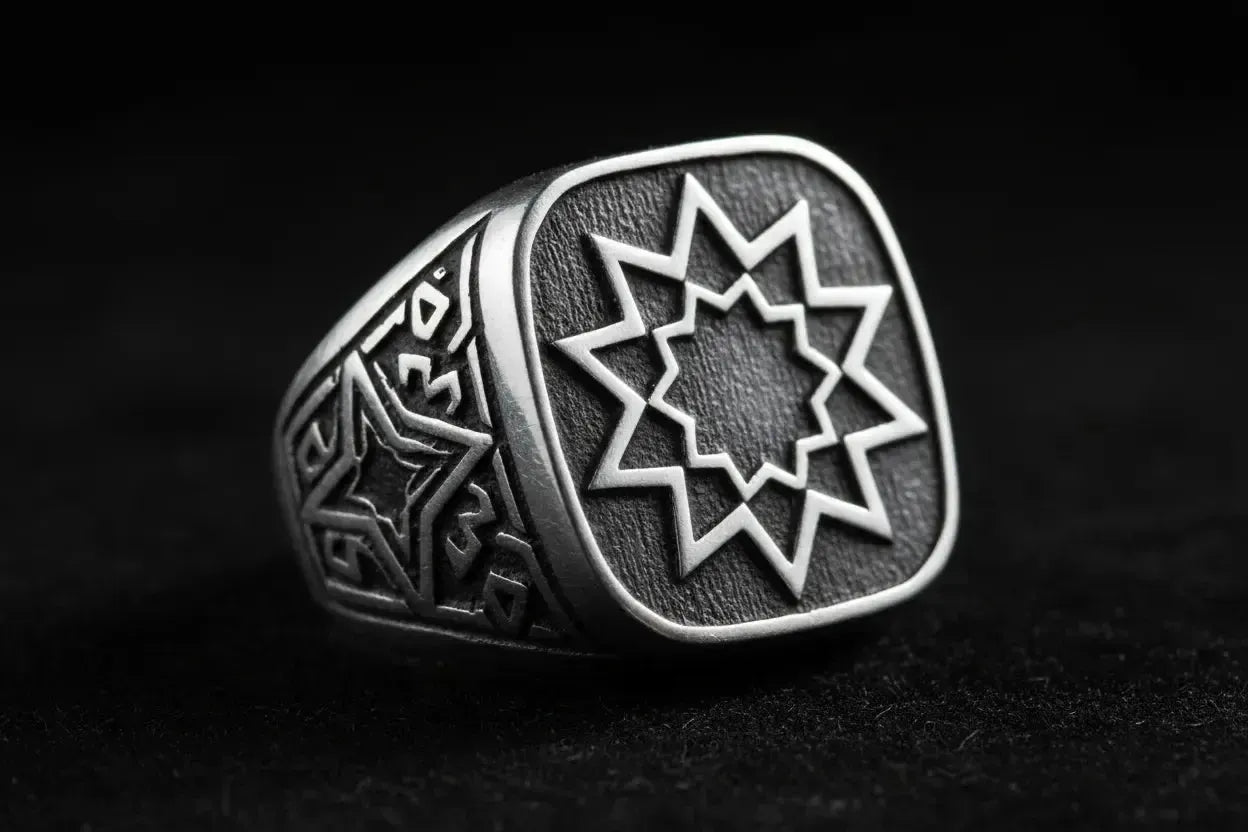
While the solid silver signet ring is today often associated with the image of male Ottoman power, court women also had their preferred stones, equally rich in meaning. Garnet, associated with passion and vitality, frequently adorned rings and pendants offered to young wives. Turquoise, the ultimate protective stone throughout the Ottoman world, was found in both male and female jewelry—proof that the boundary between "men's" and "women's" jewelry was often more porous in the original tradition than it has become in some simplified contemporary interpretations.
Kösem Sultan: Twice Regent, Builder of Foundations
Among the most prominent figures of this period, Kösem Sultan holds a special place. Wife of Sultan Ahmed I, then mother and grandmother of several successive sultans, she served as regent twice, decades apart—a rare occurrence that testifies to the strength of her authority within the imperial system. Beyond her political role, she financed the construction of mosques, fountains, and charitable complexes, and her personal taste for fine goldsmithing directly influenced the commissions placed with the palace workshops. This ability to mobilize the Empire's best artisans for personal projects placed the Queen Mothers at the same level of artistic patronage as the sultans themselves, a fact that the popular history of Ottoman goldsmithing has often relegated to the background.
Embracing This Legacy Today, in its Entirety
Understanding this complete history changes the way one approaches contemporary Ottoman jewelry: it is not just a legacy of masculine power passed down from sultan to sultan, but a tradition shaped equally by women who knew exactly what they wanted to see emerge from the goldsmiths' workshops. Our women's 925 silver bracelets, designed to be stacked like multiple court adornments, directly extend this tradition of feminine refinement too often overshadowed by the grand male imperial narrative.
A Legacy to Rediscover Today
Restoring this feminine history of Ottoman jewelry to its rightful place is not rewriting the past—it is simply telling the entire story rather than its most spectacular half. At Vindicta, our women's 925 silver rings and our pieces adorned with garnet or turquoise are directly part of this legacy of refinement carried by the women of the Ottoman court—a legacy as rich and legitimate as that, more often told, of the sultans and their imperial signet rings.
✦ Vindicta — Solid 925 silver
The piece that makes the difference
Certified 925 silver · Free shipping from €69 · 10 years of excellence
Oriental 925 Silver Jewellery →