925 Silver Hamsa: Hand of Fatima, Symbol of Protection
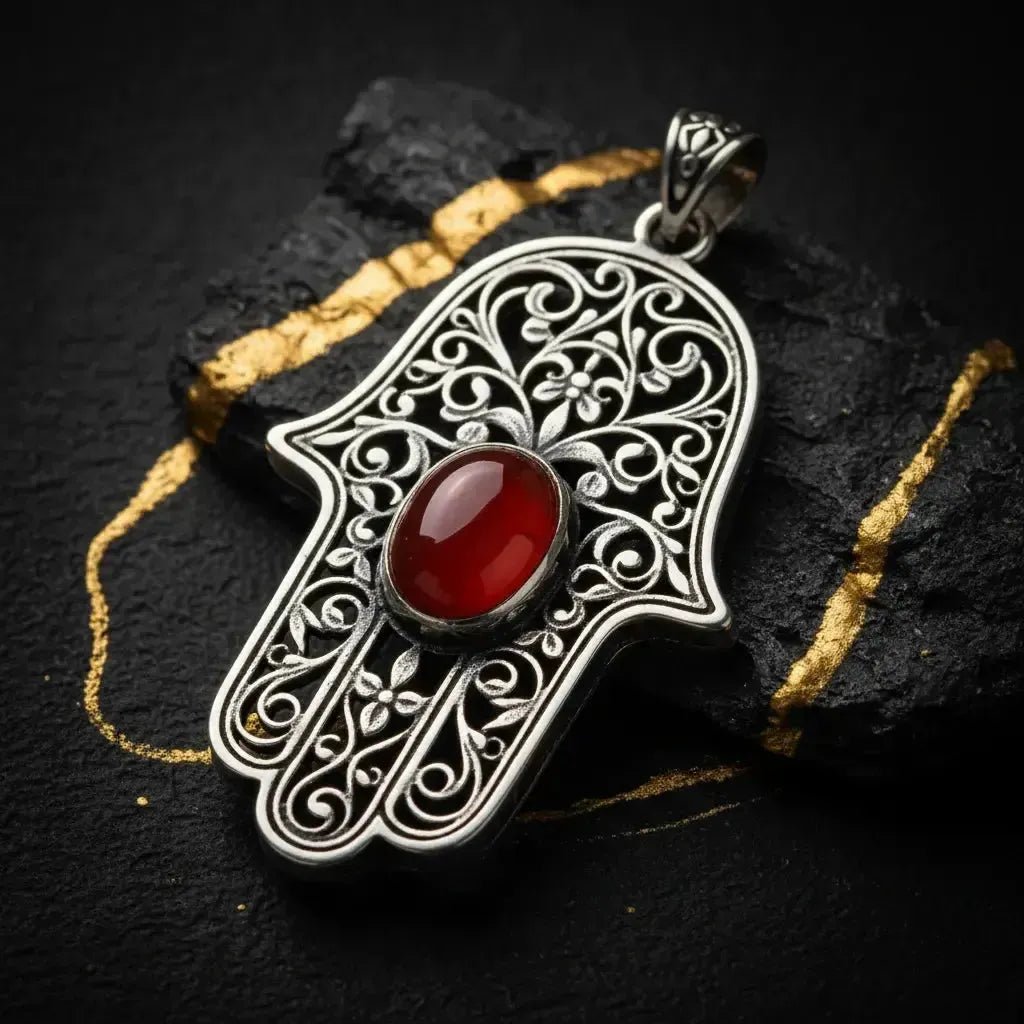
There are symbols that transcend centuries without losing their power. The Khamsa—this open hand with five fingers found hanging on house doors, engraved on jewelry, tattooed on wrists—is one of them. Present since antiquity throughout the Mediterranean basin, it carries a simple and universal promise: to protect its wearer from the evil eye, negative energies, and envious glances.
Its name comes from the Arabic khams, meaning five—the number of fingers, but also, in Islamic tradition, that of the pillars of faith. In the Muslim world, it is often called the Hand of Fatima, in reference to Fatima Az-Zahra, daughter of the Prophet Muhammad, a figure of purity, patience, and feminine strength. In the Sephardic Jewish tradition, it is called the Hamsa and refers to the hand of Miriam, Moses' sister. Among the Berbers of the Maghreb, it predates Islam by several centuries and is part of a much older system of symbolic protection, linked to the forces of nature and the spirits of ancestors.
What is remarkable about the Khamsa is that it belongs to no one in particular—and to everyone at once. It circulates between cultures, religions, and generations, without ever losing its meaning. A sterling silver piece of jewelry adorned with this hand is not just beautiful: it carries an intention, a history, an belonging.
In jewelry, the Khamsa comes in pendants, rings, and bracelets. Sterling silver is the metal of choice for this symbol—in Islamic tradition, the Prophet wore a silver ring, and this metal is associated with purity and baraka. Some pieces incorporate a Nazar eye in the center of the palm, combining two of the most powerful protective symbols of the Mediterranean world. Others are adorned with carnelian, the Prophet's stone par excellence, or turquoise, the stone of Ottoman sultans.
Wearing a sterling silver Khamsa is choosing a piece of jewelry that goes beyond fashion. It is part of a cultural continuity that connects Marrakech to Istanbul, Algiers to Cordoba, the present to millennia of transmitted wisdom. At Vindicta, each piece adorned with this symbol is selected for its faithfulness to this tradition—certified 925 silver, rigorous craftsmanship, a piece made to last.
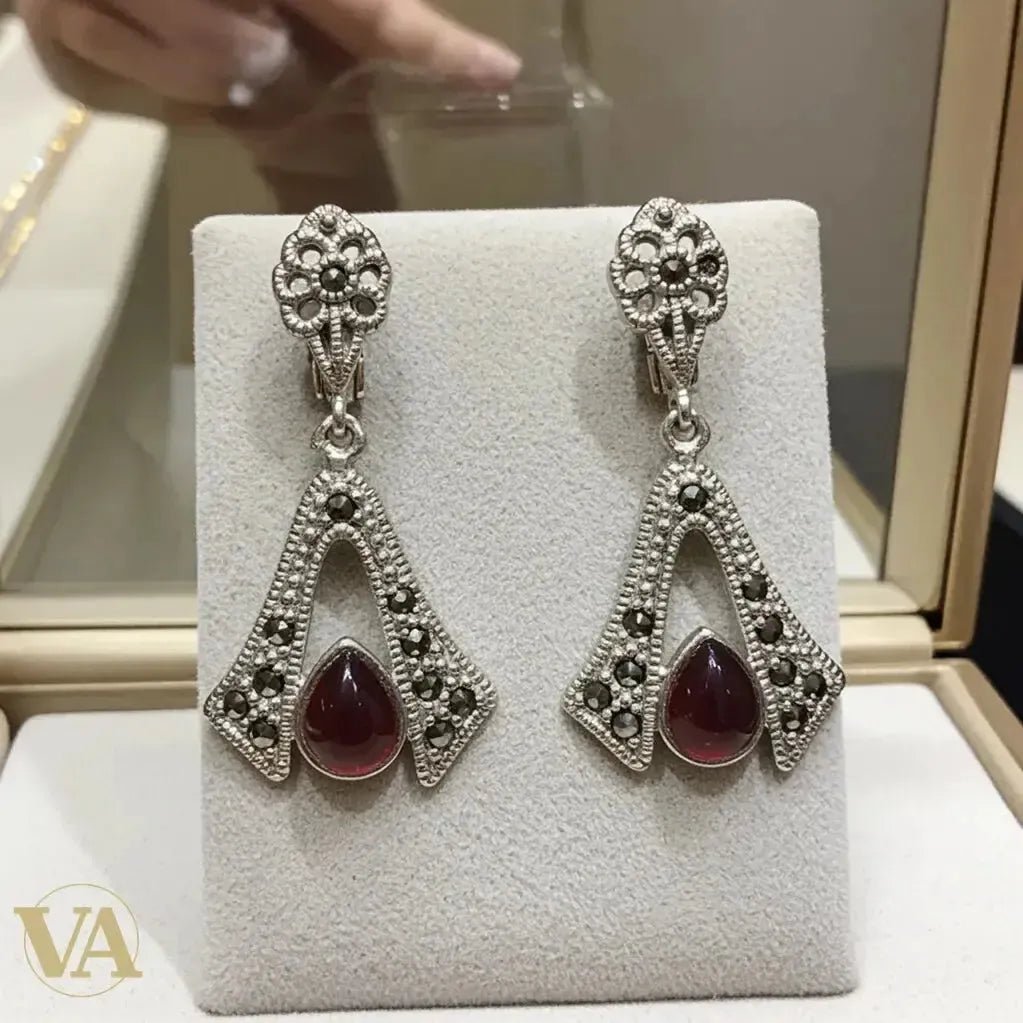
Discover our selection of sterling silver jewelry with natural stones, our men's sterling silver rings and our women's sterling silver rings to find the piece that suits you, as well as our women's earrings adorned with the Khamsa.
A Hand with Origins Predating Islam
Contrary to popular belief, the Khamsa was not born with Islam. Representations of protective hands already appear in Phoenician and Carthaginian civilizations, associated with the goddess Tanit, several centuries before our era. This ancient origin explains why the symbol today crosses religious boundaries with such fluidity—worn in both Muslim and Jewish traditions of North Africa and the Middle East, each superimposing its own interpretation without ever erasing the previous one. It is this rare ability to bring together several heritages around the same form that makes the Khamsa one of the most universally worn symbols of the Mediterranean basin.
Finger Orientation: A Detail That Changes the Meaning
In some traditional interpretations, the orientation of the Khamsa changes its meaning: worn with fingers pointing upwards, it actively repels negative energies outwards; with fingers pointing downwards, it instead attracts abundance and good fortune to the wearer. This nuance, transmitted orally rather than written, varies according to regions and families—some consider it essential, others as a simple regional variant without consequence. Whatever the interpretation chosen, the hand is always represented strictly symmetrically, the five fingers clearly visible and spread apart, never curled up or partially hidden, because it is this total openness of the palm that carries the protective charge of the symbol.
The Khamsa in Homes, Not Just Around the Neck
While jewelry remains the most intimate form of the Khamsa, the symbol has also adorned doorways, window lintels, and facades of many Mediterranean houses for centuries—a sculpted or painted hand meant to watch over the entire household rather than just one individual. This dual presence, domestic and personal, shows how much the Khamsa goes beyond the simple status of an accessory: it structures a daily relationship to protection, from the threshold of the house to the hollow of the wrist. Wearing a sterling silver Khamsa is thus extending a vigilance traditionally attached to both places and people.
Offering a Khamsa: A Meaningful Gesture
Offering a Khamsa is never an insignificant choice in cultures that carry this symbol. It is traditionally offered to a newborn, to a loved one going on a journey, or to someone one wishes to protect during a difficult period—the act of offering itself carrying a protective intention that adds to that of the jewelry.
✦ Vindicta — Solid 925 silver
The piece that makes the difference
Certified 925 silver · Free shipping from €69 · 10 years of excellence
Oriental 925 Silver Jewellery →