Filigree, Chasing, Repoussé: The Secrets of Ottoman Artisans
An Ottoman jewel is not manufactured — it is sculpted, woven, chased. Behind every piece in solid 925 sterling silver lie hours of meticulous work, a savoir-faire passed down from master to apprentice for centuries. At Vindicta, with over 10 years of excellence in selecting 925 silver jewelry, we have made this artisanal heritage our compass. Here are the techniques that make Ottoman jewelry some of the most refined in the world.
Filigree: Weaving Silver Like Lace
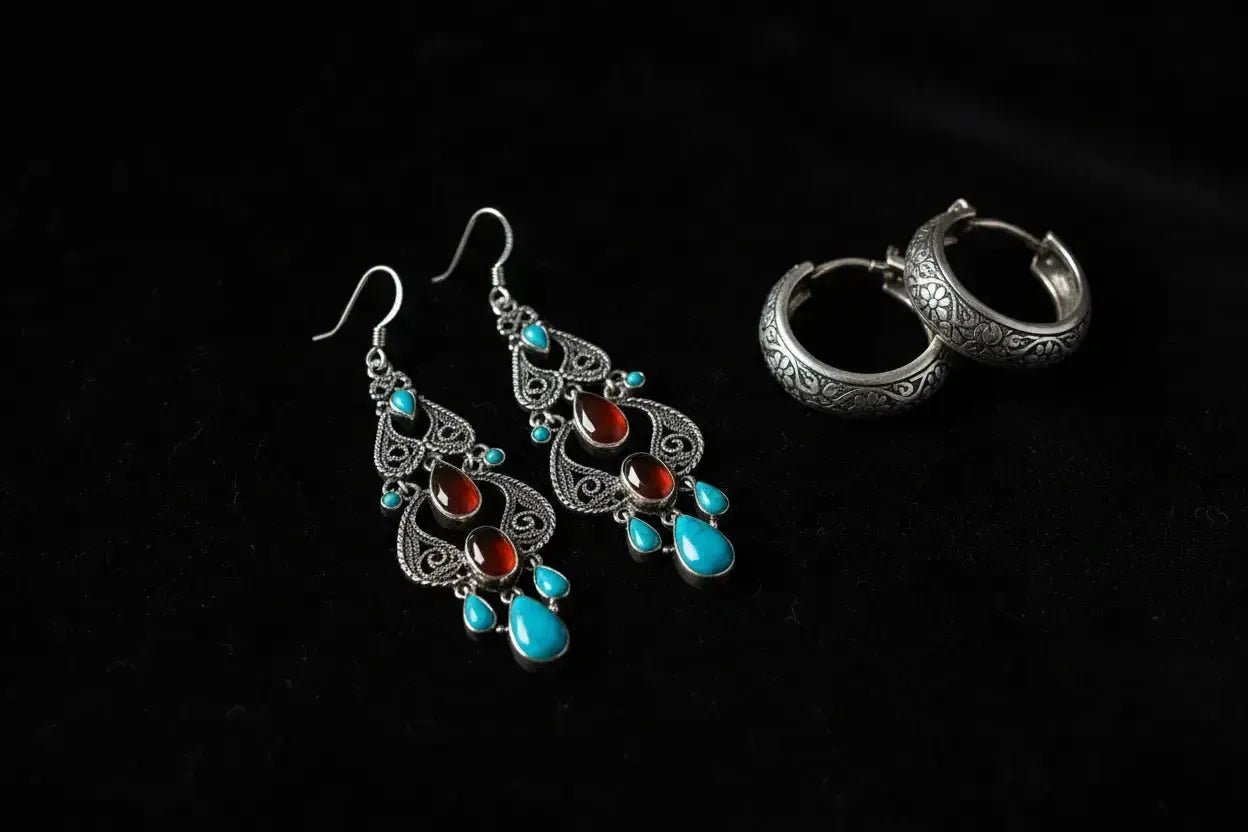
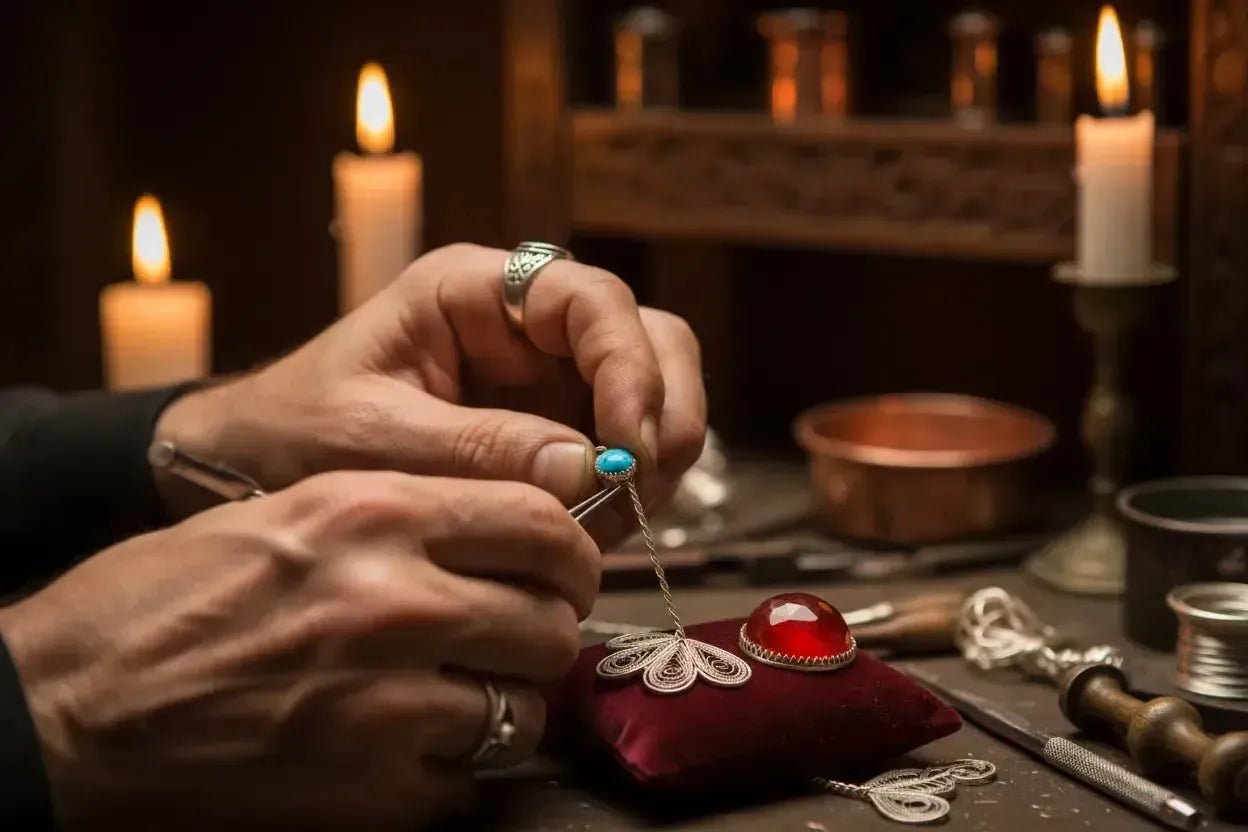
Filigree is arguably the most emblematic technique of Ottoman goldsmithing. Its name comes from the Latin filum (thread) and granum (grain) — an etymology that perfectly summarizes the essence of this art: silver wires as fine as hair, twisted and soldered to form openwork patterns of extraordinary delicacy.
How does it work?
The artisan begins by drawing 925 silver into extremely fine wires, sometimes less than a millimeter in diameter. These wires are then:
- Twisted by hand to create regular spirals
- Shaped according to the desired pattern — arabesques, rosettes, geometric interlacings
- Soldered with surgical precision to assemble the whole
- Polished to reveal the natural luster of the silver
The result is a true lace of metal, light and airy, that seems to defy the laws of matter. A filigree piece can require several days of work for just a few square centimeters of surface.
Filigree in the Ottoman Tradition
In the Ottoman Empire, filigree was reserved for prestige pieces. The workshops of Topkapi Palace employed master filigree artists whose reputation reached beyond the borders of the empire. This technique spread from Constantinople to the Balkans, the Maghreb, and Andalusia, creating regional variations while retaining its Ottoman essence.
Discover our 925 sterling silver Art Deco collection, which perpetuates this heritage of meticulous metalwork, and our 925 sterling silver marcasite jewelry where the precision of the setting recalls the rigor of Ottoman filigree.
Chasing: Sculpting the Surface of Silver
If filigree works in volume, chasing works on the surface. It is the art of engraving, modeling, and ornamenting the visible face of a silver piece using chasing tools — small steel instruments struck with a hammer with millimeter-perfect precision.
The Chaser's Tools
The Ottoman chaser worked with a collection of tools with varied shapes:
- The tracing tool: to outline the contours of the pattern
- The lowering tool: to depress the background and make the pattern stand out in relief
- The planishing tool: to smooth surfaces and even out flat areas
- The matting tool: to create granular textures imitating orange peel
- The stippling tool: to obtain matte surfaces that contrast with polished areas
Chasing and Ottoman Patterns
It is through chasing that the great motifs of Ottoman art come to life: stylized tulips, symbols of the empire; acanthus leaves inherited from antiquity; and geometric interlacings inspired by mosque architecture. Each hammer blow is calculated, each line is definitive — there is no turning back on chased silver.
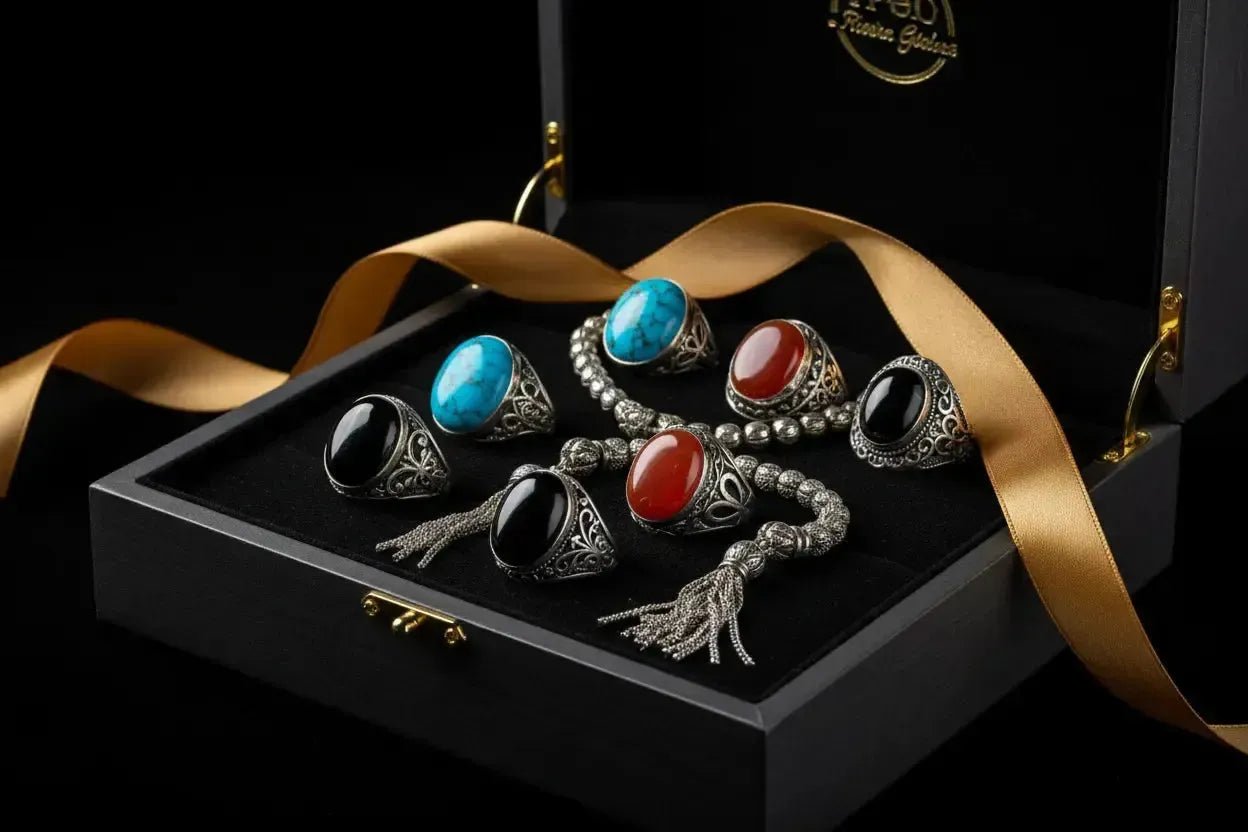
This requirement for absolute precision is found in the pieces we select at Vindicta. Our 925 sterling silver men's rings and our 925 sterling silver men's signet rings often bear the marks of this meticulous surface work, visible in the details of the mountings and the engraved patterns.
Repoussé: Giving Relief to Silver
Repoussé is the technique that allows for transforming a flat sheet of silver into a three-dimensional surface. Unlike chasing, which works from the front, repoussé works from the back — the artisan pushes the metal from the inside out to create relief.
The Repoussé Process
- Annealing: the silver sheet is heated to soften it and make it malleable
- Fixing: the piece is fixed onto a pitch block that absorbs shocks while holding the metal
- Repoussage: the artisan strikes from the reverse side with rounded punches to make the metal bulge
- Finishing chase: once the relief is obtained, chasing refines the details from the front
- Intermediate annealing: the metal is reheated regularly to prevent it from becoming brittle
Repoussé in Ottoman Jewelry
Repoussé allowed Ottoman artisans to create pieces of exceptional visual richness — domed medallions, domed pendants, bracelets with floral motifs in relief. This technique gave the jewels a sculptural dimension that brought them closer to art than mere adornment.
The natural stone jewelry we select at Vindicta inherits this tradition of relief and volume, where the 925 silver mounting is worked to highlight the stone as much as the stone highlights the metal.
Setting: The Art of Enshrining Stones
No Ottoman technique is complete without mentioning setting — the art of enshrining precious stones in metal. Ottoman artisans mastered several types of setting, each producing a distinct visual effect.
Bezel Setting
The stone is entirely surrounded by a rim of silver folded over its girdle. Effect: sober, protective, elegant. Ideal for colored stones like turquoise, carnelian, or black onyx.
Prong Setting
The stone is held by fine silver prongs that allow light to pass through. Effect: luminous, airy, highlights the brilliance of the stone. Perfect for sultanite, whose changing reflections require maximum light.
Pavé Setting
Many small stones are set side by side to entirely cover the surface. This is the technique used for marcasite jewelry, where dozens of small marcasite crystals are paved onto the mounting to create that discreet and refined sparkle characteristic of the Ottoman style.
Niello: The Art of Black and Silver Contrast
Less known but equally emblematic, niello is an Ottoman technique consisting of inlaying a black alloy into the engravings of the silver. The contrast between the black of the niello and the luster of the silver creates a striking graphic effect.
This technique, highly prized in the workshops of Istanbul and Ankara, gave the pieces exceptional readability of the patterns — the arabesques and calligraphy stood out with perfect clarity against the silver background.
The black and silver aesthetic it produces is found today in our 925 sterling silver black onyx jewelry and our vintage jewelry, which perpetuate this Ottoman taste for contrast and pattern readability.
Why These Techniques Are Irreplaceable
In the era of industrial production, these artisanal Ottoman techniques represent a precious resistance to standardization. A machine-produced jewel can imitate the form of an Ottoman jewel — it cannot reproduce its soul.
For it is in the mastered imperfection of the filigree, in the chasing blow that is slightly firmer here, in the relief of the repoussé that is never exactly symmetrical, that the life of an artisanal piece resides. This is what makes an Ottoman jewel unique — not in the marketing sense of the term, but in the literal sense.
At Vindicta, we select each piece in solid 925 sterling silver with this requirement: that the craftsmanship be visible, that the material be noble, that the piece tells a story. Not an accessory — a legacy.
Discover all of our 925 sterling silver natural stone jewelry, our 925 sterling silver women's rings, and our 925 sterling silver men's rings, selected for their authenticity and character.
All our jewelry is certified solid 925 sterling silver. Consult our authenticity page to learn more about our quality commitments.
✦ Vindicta — Solid 925 silver
The piece that makes the difference
Certified 925 silver · Free shipping from €69 · 10 years of excellence
Oriental 925 Silver Jewellery →