Article: 925 Sterling Silver: From Ancient Egypt to Minimalist Design

925 Sterling Silver: From Ancient Egypt to Minimalist Design
Silver has accompanied humanity for over 5000 years. From Pharaonic Egypt to contemporary workshops, here is the complete journey of a precious metal that has never ceased to fascinate.
Ancient Egypt: Silver Rarer than Gold
In ancient Egypt, silver was rarer and more precious than gold. Gold came from the Egyptian desert, but silver had to be imported—mainly from Asia Minor and Greece. The Egyptians called it "nub hedj"—white gold.
Egyptian silver jewelry was reserved for pharaohs and high priests. It can be found in the royal tombs of Tanis (XXIst Dynasty), alongside gold and lapis lazuli. Silver was associated with the moon, the goddess Isis, and the cycles of life.
The Tanis Treasure: An Underrated Discovery
Discovered in 1939 by Egyptologist Pierre Montet, the royal tombs of Tanis should have garnered as much attention as Tutankhamun's tomb fifteen years earlier. They notably contained the solid silver sarcophagus of Pharaoh Shoshenq II—an extremely rare piece, as silver was harder to obtain in Egypt than gold itself. However, the discovery occurred in September 1939, on the eve of the outbreak of World War II: the event went almost unnoticed by a global press focused on military news. Yet, this silver sarcophagus remains one of the most spectacular proofs of the value accorded to this metal in ancient Egypt, where it was literally reserved for deified royalty.
Why Was Silver Rarer Than Gold in Egypt?
This relative rarity is explained by the region's very geology. Ancient Egypt had abundant gold deposits in the eastern desert and Nubia, exploited from the earliest dynasties. Native silver, however, is almost absent there: it had to be imported via complex trade networks from Asia Minor or the Aegean islands, often in exchange for gold or wheat. This dependence on imports explains the apparent paradox of a civilization incredibly rich in gold but sparingly endowed with silver—a value ratio exactly inverse to that known by European civilizations centuries later, once the silver mines of the New World were discovered.
The Lunar Symbolism of Silver Among Egyptians
Beyond its material rarity, silver in Egypt carried a very precise symbolic meaning, distinct from that of gold. Where gold, eternal and unalterable, was associated with the flesh of the gods and the sun of Ra, silver was linked to their bones and to the moon, a changing star that is born, grows, and disappears according to a regular cycle. This association explains why ritual objects intended for lunar goddesses, such as Isis, were preferentially crafted in silver rather than gold, even when financial means would have allowed the opposite choice. The white metal thus carried its own spiritual significance, independent of its simple commercial rarity.
Greco-Roman Antiquity: Silver as Currency and Jewelry
Greeks and Romans democratized silver. The mines of Laurion (Greece) and Hispania (Roman Spain) produced massive quantities. Silver became both currency (the drachma, the denarius) and a jewelry material accessible to the middle classes.
The techniques of the time—repoussé, granulation, filigree—reached remarkable sophistication. Greek filigree, in particular, remains a technical benchmark even today.
The Islamic World: The Ottoman and Andalusian Heritage
Between the 7th and 15th centuries, the silversmiths of the Islamic world—Persia, Anatolia, Al-Andalus—brought the art of silver to its peak. Ottoman techniques of niello, granulation, and stone inlay created pieces of unparalleled complexity.
It is this Ottoman and Andalusian heritage that directly inspires Vindicta's identity—jewelry that carries a memory, not just a metal.
The Renaissance: The Golden Age of Goldsmithing
The European Renaissance (15th-16th century) saw silver goldsmithing reach artistic peaks. The great European courts—Florence, Versailles, Madrid—competed with spectacular pieces. Benvenuto Cellini, a Florentine goldsmith, became the emblematic figure of this era.
Potosí: The Mountain That Changed the World
In 1545, the discovery of the Potosí mines (present-day Bolivia) revolutionized the world economy. Millions of tons of silver flooded Europe, democratizing the metal and transforming global trade. Potosí's silver financed empires, wars, and the arts.
19th Century: The Standardization of 925
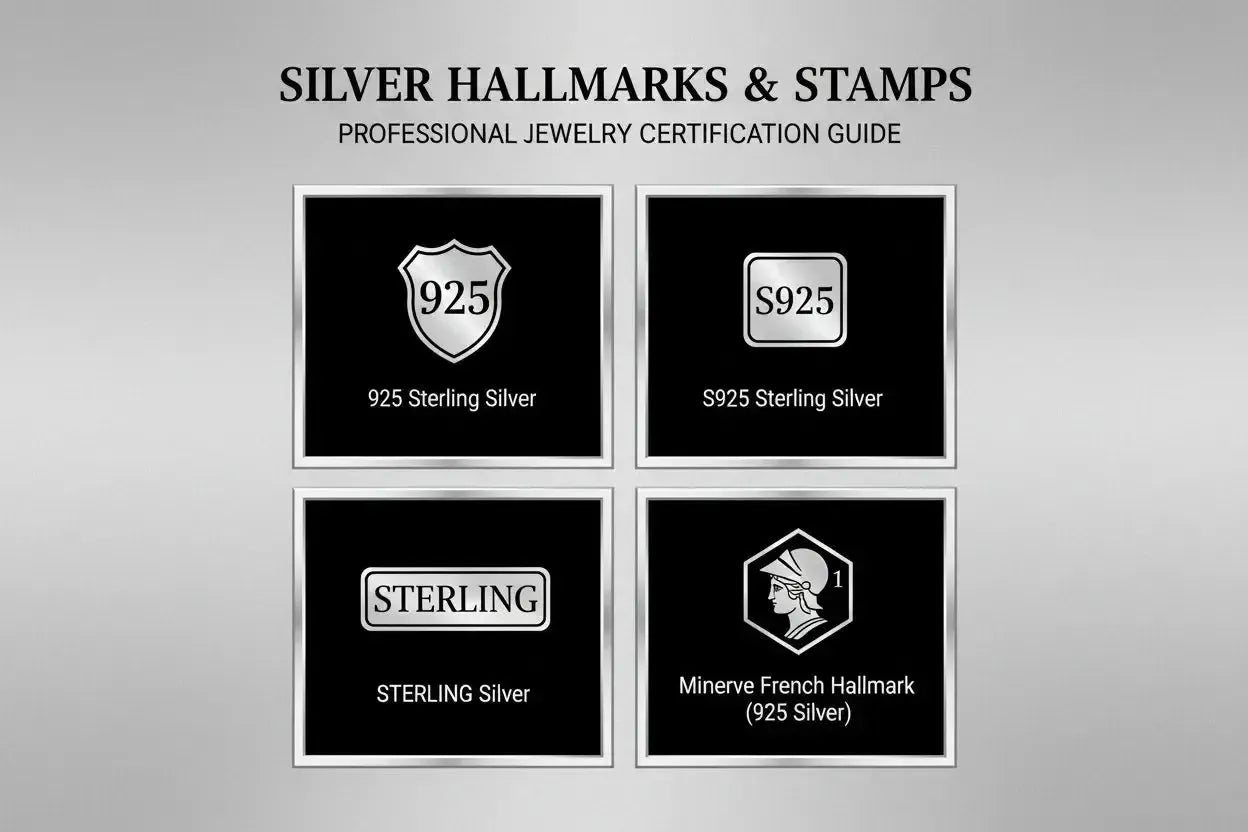
The Industrial Revolution standardized silver production. In 1851, the United Kingdom officially adopted the 925 standard (92.5% pure silver) as the standard for sterling silver. This norm gradually spread throughout Europe and became the international standard we know today.
Art Nouveau and Art Deco: Two Aesthetic Revolutions
At the turn of the 20th century, Art Nouveau (1890-1910) and then Art Deco (1920-1940) reinvented silver. Art Nouveau associated it with organic forms and colored stones. Art Deco geometrised it, modernized it, and combined it with marcasite to create pieces of unparalleled elegance.
Contemporary Minimalist Design
Today, 925 silver embodies two opposing and complementary trends: Scandinavian minimalism (Georg Jensen, clean lines, sobriety) and a return to artisanal roots (ethnic jewelry, natural stones, Ottoman heritage).
Vindicta is at the intersection of these two currents—contemporary elegance nourished by a millennia-old heritage. Discover our minimalist jewelry and our natural stone collection, which embody these two combined legacies.
Every Vindicta jewel is certified solid 925 silver, verifiable on our authenticity page.
✦ Vindicta — Solid 925 silver
The piece that makes the difference
Certified 925 silver · Free shipping from €69 · 10 years of excellence
Men's 925 Silver Signet Rings →