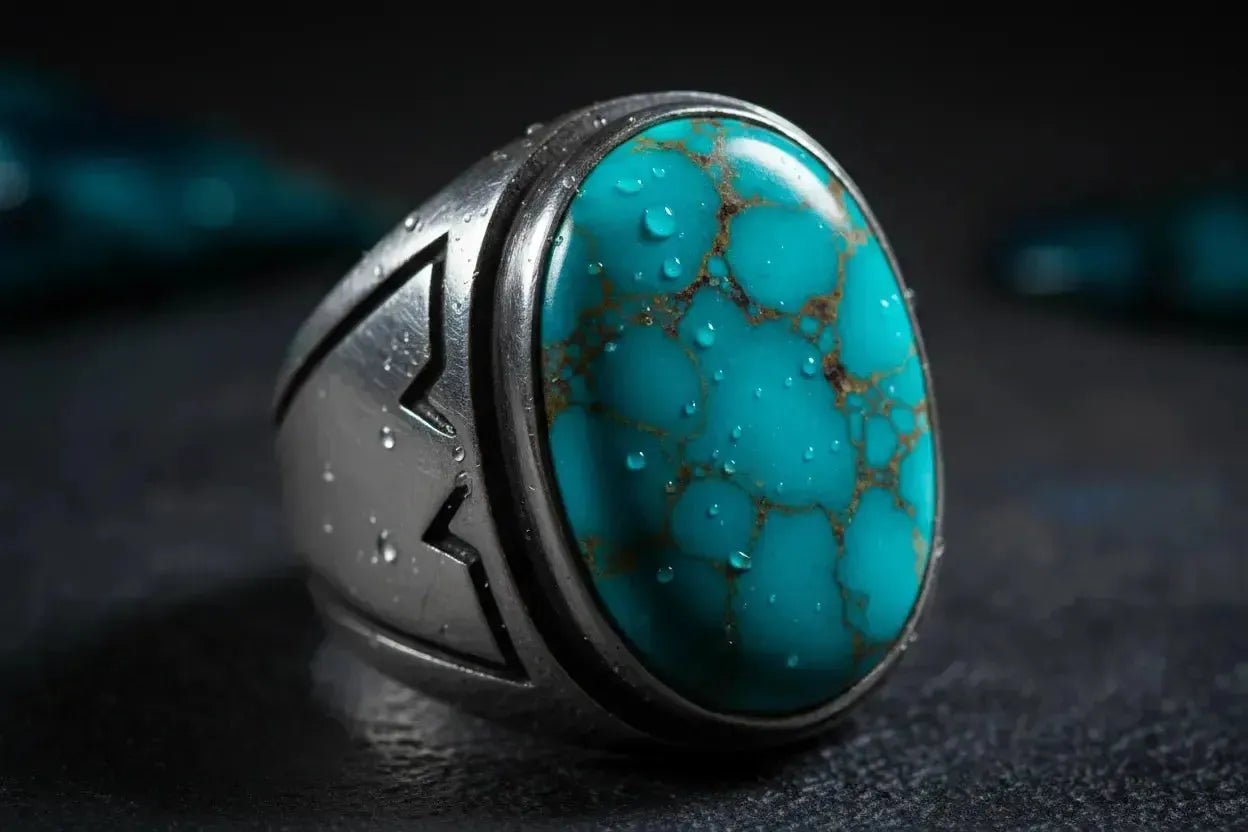
Men's Turquoise 925 Silver Ring — The Warriors' Stone
Few stones have traveled as far as turquoise. From the mines of Sinai to the palaces of Topkapi, from the saddles of Mongol horsemen to the signet rings of Berber chiefs in the Sahara—it has crossed continents and centuries without ever losing its status. Blue like the winter sky, green like an oasis, veined with black like a world map—turquoise is a stone that tells stories before you even touch it.
At Vindicta, we select it for what it brings to a men's 925 silver ring: an immediate presence, a color unlike any other, and a historical depth that few stones can claim. It is a stone of character for men of character.
Turquoise through history
Turquoise is one of the oldest stones used by humans. The earliest known mines date back over 6,000 years, in the Sinai Peninsula. The Egyptians called it mefkat—"joy"—and adorned the funerary jewelry of their pharaohs with it. Tutankhamun's mask is inlaid with it. That says it all.
In Persia, it was considered the national stone. The domes of the mosques of Isfahan and Samarkand are covered with enameled turquoise—its color was that of paradise. Ottoman sultans adorned their armor, sabers, and turbans with it. To wear turquoise was to wear divine protection and the power of the sovereign.
Among Native American peoples—Navajo, Zuni, Hopi—turquoise has been sacred for millennia. It represents the sky, water, life. Warriors wore it for protection in battle. Shamans used it in their healing rituals. Even today, Navajo silver and turquoise jewelry is recognized as an art form in its own right.
In the Berber and Tuareg world, turquoise is omnipresent. Desert men wore it as an amulet against the evil eye and the dangers of travel. It was also a sign of wealth and status—the larger and purer the stone, the more respected its wearer.
Virtues and properties of turquoise
Turquoise is one of the most symbolically charged stones in lithotherapy. Here's what traditions consistently attribute to it across cultures:
Protection. This is its primary, universally recognized property. Turquoise protects against the evil eye, accidents, and negative energies. In many cultures, turquoise was offered to a traveler before a long journey. Horsemen attached it to their harnesses to protect their horses.
Communication and truth. Associated with the throat chakra (Vishuddha), turquoise is said to promote clear expression, sincere speech, and the ability to be heard. For a man who needs to convince, negotiate, lead—it's a consistent stone.
Wisdom and intuition. It is linked to the third eye chakra in some traditions, promoting mental clarity, perspective, and informed decisions. Chiefs and kings wore it to govern wisely.
Luck and abundance. In many Asian and Mediterranean cultures, turquoise attracts luck, prosperity, and opportunities. It is considered an active lucky stone—not passive like a good luck charm, but a stone that opens doors.
Emotional balance. It soothes excessive emotions, reduces stress, and helps maintain a stable inner state in the face of external pressures. For men who bear many responsibilities, this is a valuable quality.
Natural, stabilized, or reconstituted turquoise: the differences
This is the crucial point when buying a turquoise ring. The market is flooded with stones of very variable quality, and the appellations are often misleading. Here's what you need to know:
Natural turquoise. Untreated, extracted and cut directly. It is the rarest and most expensive. Its color can vary, its veins are unique. The best come from Iran (Nishapur), the United States (Nevada, Arizona), and Tibet. A truly high-quality natural turquoise is an investment.
Stabilized turquoise. Natural stone impregnated with resin under pressure to harden it and stabilize its color. This is the most common category in quality jewelry. The stone remains natural in its composition but is treated to be more durable. Acceptable and honest if clearly indicated.
Reconstituted turquoise. Turquoise powder mixed with resin and molded. Contains turquoise, but is essentially a composite material. Less noble, but often sold as "turquoise" without further detail.
Imitation. Glass, plastic, or howlite dyed blue. No relation to turquoise. Unfortunately very common in low-priced markets.
At Vindicta, we select natural or stabilized turquoise of quality, always clearly identified. Never imitations, never deception about the material.
How to wear a men's turquoise ring
Turquoise is an assertive stone—it doesn't hide. Its color catches the light and attracts the eye. That's why it looks best on simple, structured settings that allow the stone to express itself without being drowned in details.
As a signet ring, it is sovereign. The wide face highlights its veins and depth of color. In an oval or round cabochon ring, it takes on a more classic, almost timeless look. In a Berber or Ottoman spirit, it naturally pairs with geometric patterns engraved on silver.
In terms of color, turquoise pairs perfectly with black (leather, textile), white, beige, and earthy tones. It contrasts beautifully with oxidized 925 silver—the dark metal strikingly brings out the blue-green of the stone.
Caring for your turquoise ring
Turquoise is a porous stone—that's its nature, and that's what makes it alive. But this porosity also makes it sensitive to certain external agents. Some essential rules:
Avoid contact with perfumes, creams, oils, and household products—they penetrate the stone and can irreversibly alter its color. Remove your ring before washing your hands, swimming, or playing sports. Never clean it with ultrasound. A soft, dry cloth is sufficient for routine maintenance.
Turquoise can evolve over time—its color may slightly shift to green due to humidity and perspiration. Some collectors consider this patina a quality—proof that the stone is alive and natural.
Turquoise in the Vindicta collection
We select our turquoise rings for their consistency with the Vindicta identity: certified 925 silver, identified quality stones, settings inspired by Berber, Ottoman, and Art Deco traditions. Pieces that have meaning, not just color.
Discover our selection of men's 925 silver turquoise rings—pieces designed for men who wear their history on them.
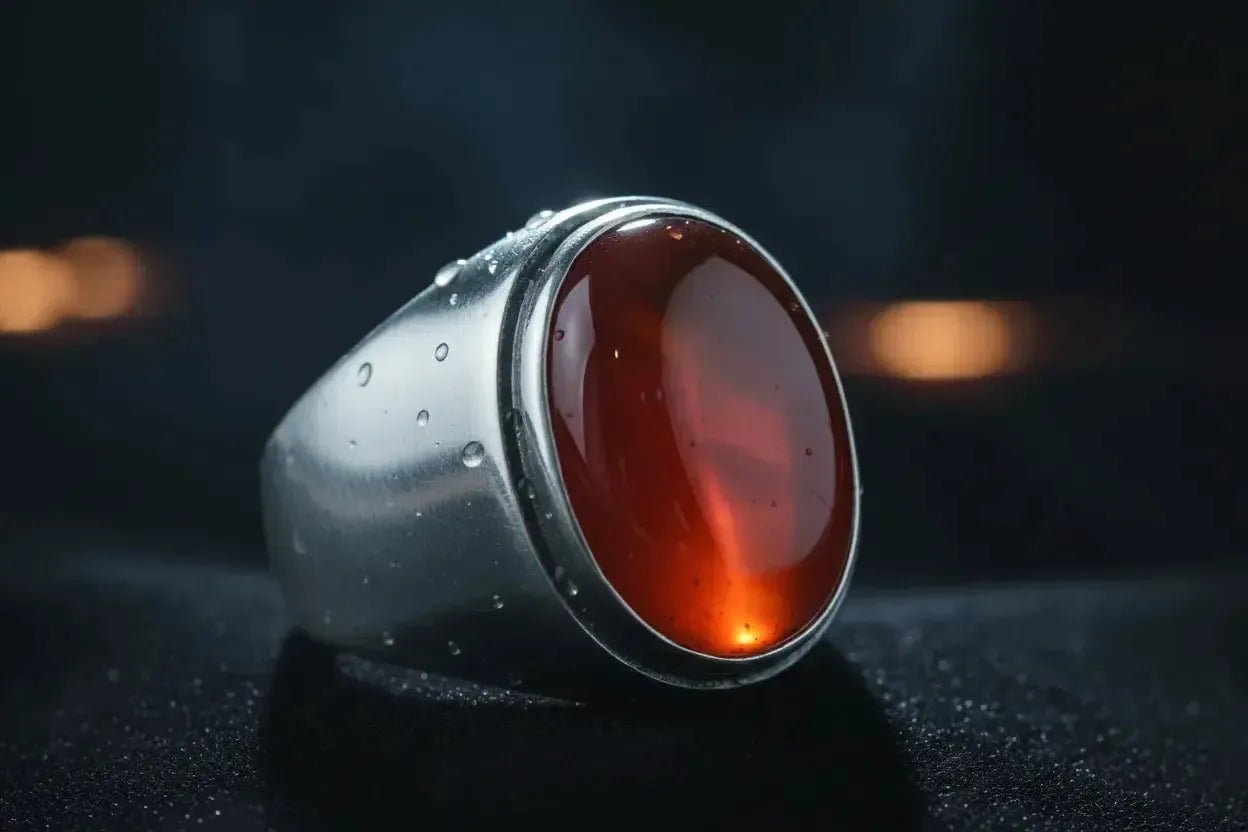
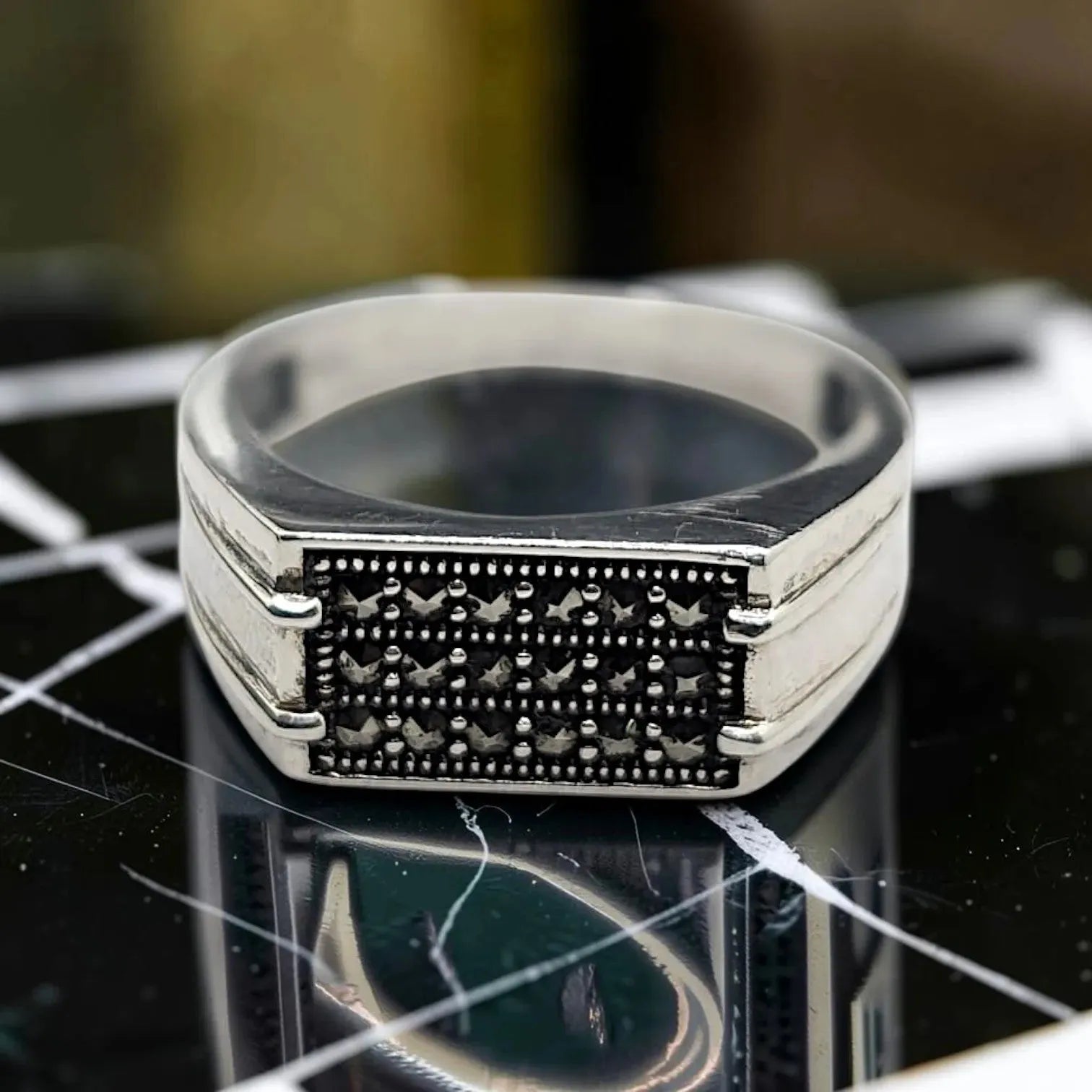
And if you want to explore other stones of character, find all our men's 925 silver signet rings—carnelian, marcasite, onyx, tiger's eye—each stone has its soul.
✦ Vindicta — Argent 925 Massif
La pièce qui fait la différence
Certifié argent 925 · Livraison offerte dès 69€ · 10 ans d'excellence
Chevalières Homme Argent 925 →