
Lapis Lazuli
Focus on Lapis Lazuli

Table of Contents
- Introduction
- Characteristics of Lapis Lazuli
- History and Symbolism
- Qualities and Grades of Lapis Lazuli
- Meaning and Virtues
- Deposits Around the World
- Lapis Lazuli Jewelry at Vindicta
- The Vindicta Perspective
- Care and Advice
- Stones to Discover
- Frequently Asked Questions
- Conclusion
Introduction
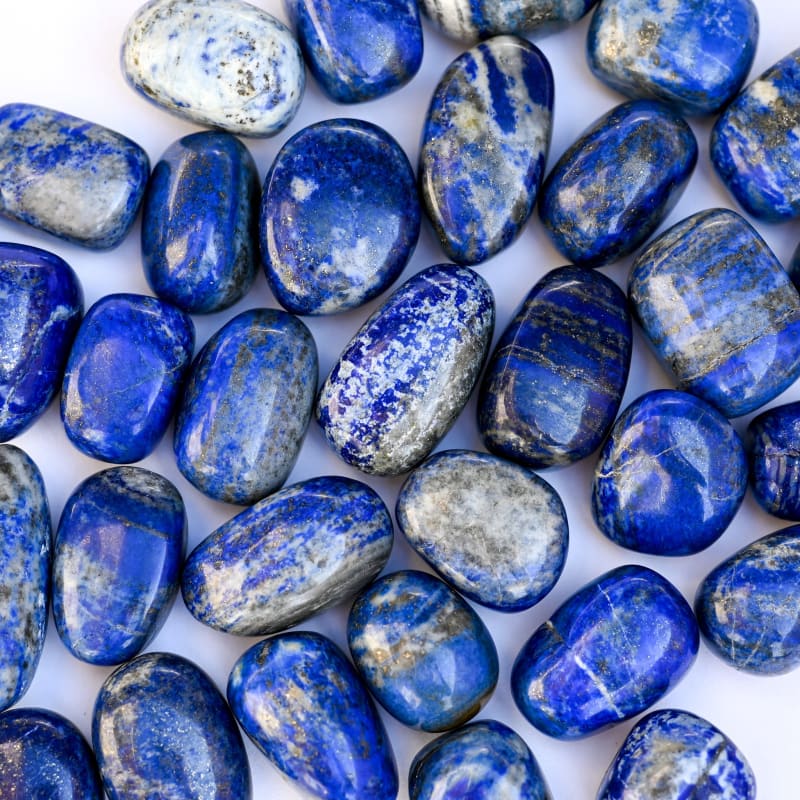
Lapis lazuli is one of the most precious stones in human history. Its intense, deep blue — flecked with golden pyrite that evokes a starry sky — is immediately recognizable and uniquely its own. For millennia, it was more precious than gold, reserved for kings, gods, and the greatest artists.
It is not an ordinary gemstone — it is a rock primarily composed of lazurite, calcite, and pyrite. Its unique blue, called "ultramarine blue," was used for centuries as a pigment in the most valuable paintings in art history. When combined with solid 925 sterling silver, it creates jewelry of rare depth and prestige.
Characteristics of Lapis Lazuli
Composition and Structure
- Type: metamorphic rock (not a single mineral)
- Main composition: lazurite (blue), calcite (white), pyrite (golden)
- Color: intense to violet-blue, with inclusions of golden pyrite and white calcite
- Appearance: opaque, waxy to greasy luster
Hardness and Resistance
- 5 to 6 on the Mohs scale — a relatively soft stone, to be handled with care
- Sensitive to acids (calcite reacts to acids)
- Can be scratched by harder stones
Physical Properties
- Density: 2.7 to 2.9
- Transparency: opaque
- Cleavage: absent
History and Symbolism of Lapis Lazuli
Lapis lazuli has been mined for over 6,000 years in the Sar-e-Sang mines in Afghanistan — the same mines that still supply the global market today. It is one of the oldest mining activities known to humanity.
In ancient Egypt, lapis lazuli was the stone of the gods. Tutankhamun's funeral mask is inlaid with lapis lazuli. The Egyptians ground it to make blue eyeshadow — the color of the gods was also the color of beauty.
In Mesopotamia, the Sumerians and Babylonians made cylinder seals, royal jewelry, and temple ornaments from it. The famous Babylonian "Queen of the Night" is depicted with lapis lazuli wings.
In the European Renaissance, lapis lazuli was ground to produce "ultramarine blue" pigment — the most precious of all pigments, reserved for the cloaks of the Virgin Mary in religious paintings. Vermeer, Raphael, Michelangelo used it. A gram of pigment cost more than a gram of gold.
In Islamic and Ottoman tradition, lapis lazuli adorned mosques, palaces, and the jewelry of sultans. Its blue color was associated with the sky, infinity, and divine wisdom.
Qualities and Grades of Lapis Lazuli
The quality of lapis lazuli varies considerably depending on the proportion of lazurite (blue), calcite (white), and pyrite (golden):
- AAA Grade (Persian/Afghan): intense and uniform blue, little to no white calcite, fine and regular pyrite — the most sought-after quality
- AA Grade: deep blue with some calcite veins, visible pyrite — very good jewelry quality
- A Grade: medium blue with visible calcite, abundant pyrite — standard quality
- B/C Grade: pale blue with a lot of calcite, marbled appearance — decorative quality
Meaning and Virtues of Lapis Lazuli
Emotional & Spiritual Plane
- Wisdom & truth 🔵: stone of knowledge, honesty, and intellectual clarity
- Communication: associated with the throat chakra, promotes authentic and eloquent expression
- Intuition: stimulates the third eye and intuitive perception
- Protection: used since antiquity as a shield against negative energies
- Prestige: stone of authority and leadership, worn by kings and sages
Physical Plane (beliefs in lithotherapy)
- Associated with relieving headaches and nervous tension
- Used to improve sleep quality and reduce insomnia
- Considered a general healing stone in many traditions
Note: the virtues of lithotherapy are not scientifically proven and do not replace medical advice.
Lapis Lazuli Deposits Around the World
- Afghanistan (Sar-e-Sang, Badakhshan): the most famous deposit in the world, mined for 6,000 years, produces the highest quality lapis
- Chile (Ovalle): second largest producer, slightly lower quality than Afghan, often paler in color
- Russia (Lake Baikal): variable quality lapis, often more violet than blue
- Canada, United States: secondary deposits, decorative quality
Lapis Lazuli Jewelry at Vindicta
Lapis lazuli is one of the most historically rich stones we work with at Vindicta. Its royal blue combined with solid 925 sterling silver creates jewelry of immediate depth and prestige — pieces that carry 6,000 years of royal and artistic history.
Our lapis lazuli creations:
- 925 Sterling Silver Ring with Lapis Lazuli & Marcasite – Artisanal Vintage Style — Royal blue and marcasite, Art Deco elegance
Also discover our natural stone 925 sterling silver jewelry collection to explore all our gemstone creations.
The Vindicta Perspective
Lapis lazuli is the stone that demands the most rigor in our selection process. The difference between AAA quality lapis and B quality lapis is immediately visible — the blue must be deep, intense, and uniform. Lapis that is too pale or too marbled with white loses all its nobility.
What fascinates us about this stone is its artistic history as much as its jewelry history. When Vermeer painted the "Girl with a Pearl Earring," the blue of her turban came from the same Afghan mines as our stones. This continuity — between Renaissance art and contemporary jewelry — is exactly what Vindicta seeks to embody.
Lapis lazuli also poses the most questions for us regarding authenticity. Many "lapis" on the market are actually dyed howlite or sodalite. At Vindicta, we only work with certified natural lapis lazuli, and we always specify this.
Care and Advice for your Lapis Lazuli Jewelry
- Acids: absolutely avoid contact with vinegar, lemon, and acidic products — calcite reacts to acids and can be damaged
- Cleaning: soft, slightly damp cloth only. Never immerse in water
- Chemicals: avoid perfumes, creams, and detergents
- Storage: soft cloth pouch, separate from harder stones
- Impacts: avoid impacts — lapis can crack
To go further: Complete care guide for your 925 sterling silver jewelry.
Stones to Discover
If lapis lazuli attracts you, these stones will share your appreciation for royal and historically rich materials:
- 🔵 Turquoise — blue-green, the other great blue stone of Ottoman tradition
- 🖤 Onyx — deep black, same historical prestige
- 🔴 Carnelian — fiery red, historical companion of lapis in Egyptian jewelry
- 🟠 Tiger's Eye — shimmering gold, same roots in Eastern traditions
- 📖 Complete Guide to Natural Stones 2026 — everything about stones in jewelry
Frequently Asked Questions about Lapis Lazuli
How to recognize real lapis lazuli?
Real lapis lazuli is cool to the touch, heavy, and often has inclusions of golden pyrite and white calcite. Dyed howlite (a common imitation) will be lighter and its color will be too uniform. Sodalite (another imitation) is more blue-violet and lacks pyrite. When in doubt, ask for a certificate.
Why was lapis lazuli more precious than gold?
For centuries, the only quality deposit was in Afghanistan — thousands of miles from European and Mediterranean art centers. Transport was long, dangerous, and expensive. Moreover, the ultramarine blue pigment extracted from lapis was the only stable blue available to painters — its rarity and unsubstitutability made it a material of exceptional value.
Is lapis lazuli suitable for daily wear?
With caution. Its relatively low hardness (5-6/10) makes it more vulnerable than quartz or carnelian. Avoid intense physical activities, contact with water and acids. For daily wear, prefer a pendant or earrings rather than a ring.
What is the difference between Afghan and Chilean lapis lazuli?
Afghan lapis (Sar-e-Sang) is considered the best in the world — intense and uniform blue, fine and regular pyrite, little calcite. Chilean lapis is often paler, with more white calcite and less regular pyrite. The price difference can be significant for higher qualities.
Conclusion
Lapis lazuli is an extraordinary stone — one of the oldest, most precious, and most historically rich in all of human jewelry. From Egyptian pharaohs to Ottoman sultans, from Renaissance painters to contemporary jewelers, it has always been associated with prestige, wisdom, and absolute beauty.
Combined with solid 925 sterling silver in the tradition of Ottoman silversmithing, lapis lazuli creates jewelry of rare depth and prestige — pieces that carry 6,000 years of royal and artistic history.
✦ Vindicta — Argent 925 Massif
La pièce qui fait la différence
Certifié argent 925 · Livraison offerte dès 69€ · 10 ans d'excellence
Bijoux Pierres Naturelles →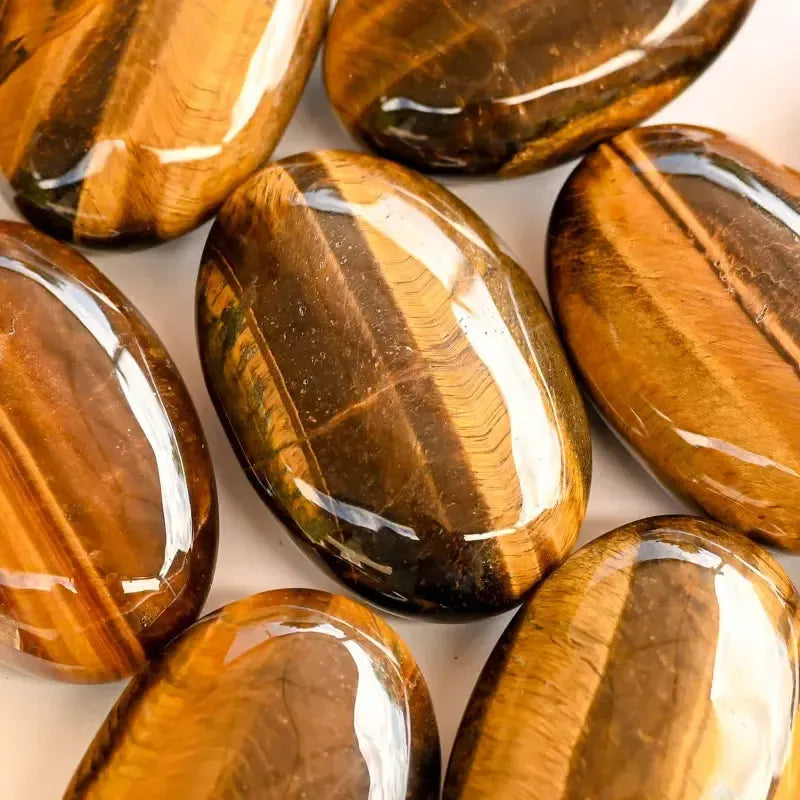

Leave a comment
This site is protected by hCaptcha and the hCaptcha Privacy Policy and Terms of Service apply.