Labradorite
Spotlight on Labradorite
Table of Contents
- Introduction
- Characteristics of Labradorite
- History and Symbolism
- Varieties of Labradorite
- Meaning and Virtues
- Deposits Around the World
- Labradorite Jewelry at Vindicta
- The Vindicta Perspective
- Care and Advice
- Stones to Discover
- Frequently Asked Questions
- Conclusion
Introduction
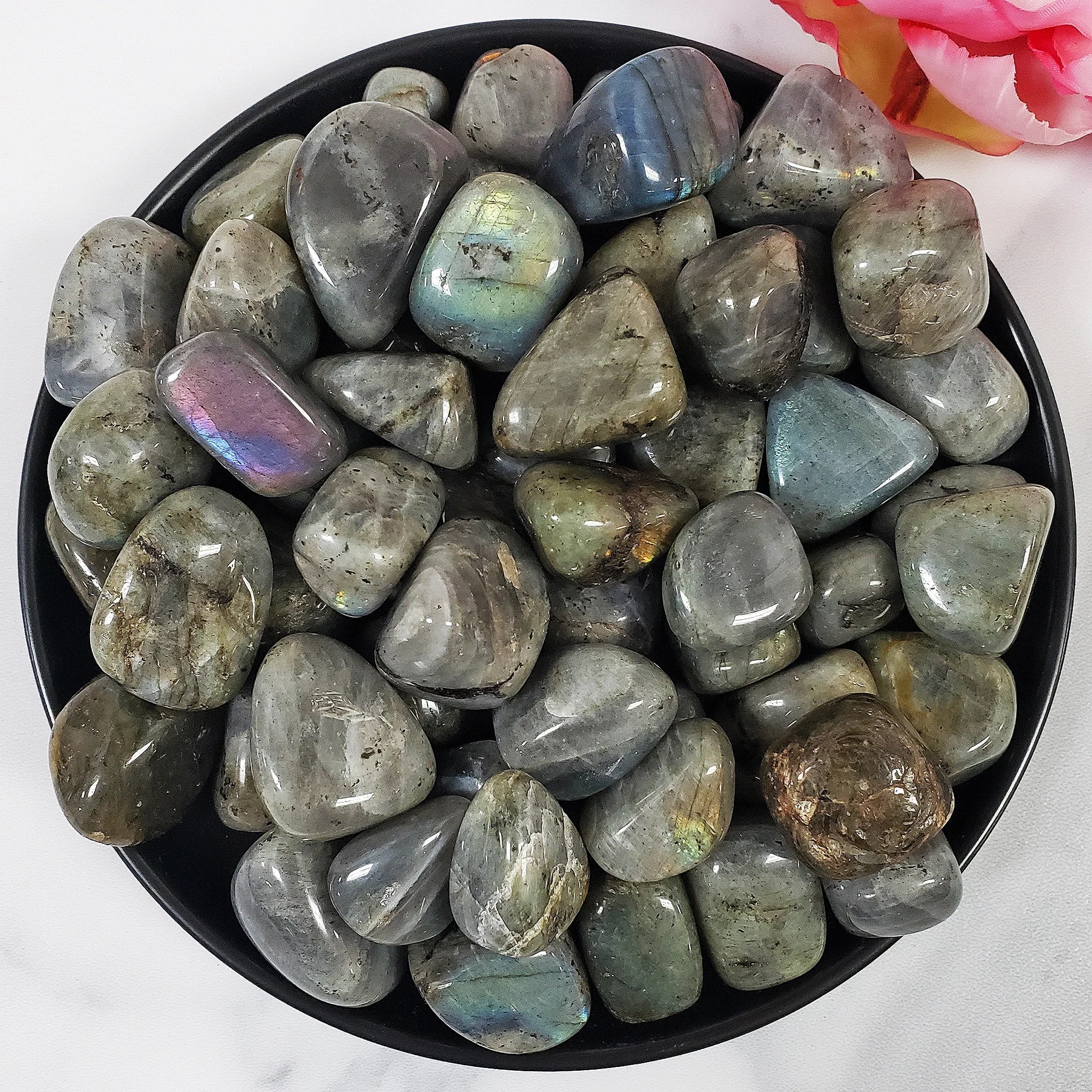
Labradorite is the stone of mystery and magic. Its unique optical phenomenon — labradorescence — creates spectacular iridescent reflections that seem to come from within the stone: deep blue, emerald green, gold, violet, sometimes red. These reflections move and change depending on the viewing angle, like auroras trapped in rock.
A variety of plagioclase feldspar (NaAlSi₃O₈ – CaAl₂Si₂O₈), labradorite owes its iridescent reflections to alternating layers of two feldspars that diffract light. Combined with solid 925 silver, it creates jewelry of absolutely unique depth and mystery — pieces that seem alive.
Characteristics of Labradorite
Composition and Structure
- Family: plagioclase feldspars (NaAlSi₃O₈ – CaAl₂Si₂O₈)
- Optical phenomenon: labradorescence (multicolored iridescent reflections due to alternating feldspar layers)
- Base color: dark gray to black, sometimes brown or green
- Reflections: blue, green, gold, violet, red — depending on quality and angle
- Appearance: opaque to translucent, vitreous luster
Hardness and Resistance
- 6 to 6.5 on the Mohs scale — decent resistance for daily wear with caution
- Perfect cleavage in two directions — sensitive to impact
- Stable to common acids and chemicals
Physical Properties
- Density: 2.68 to 2.72
- Transparency: opaque to translucent
- Cleavage: perfect in two directions
History and Symbolism of Labradorite
Labradorite was discovered in 1770 by Moravian missionaries on the Labrador Peninsula (Canada) — hence its name. But the indigenous Inuit people had known it for millennia and had a legend to explain its reflections: the aurora borealis was said to have been trapped in the rock by a warrior who struck them with his spear. Some reflections escaped into the sky — which is why the aurora borealis is still seen.
In Europe, labradorite was immediately adopted by 18th-century jewelers, fascinated by its iridescent reflections. It became very popular during the Art Nouveau period (1890-1910), where its mysterious and organic appearance perfectly matched the aesthetic of the movement.
In contemporary spiritual traditions, labradorite is considered a stone of transformation and protection — an energetic shield that protects the aura while promoting intuition and spiritual connection.
Varieties of Labradorite
- Classic Labradorite: dark gray with blue and green reflections, the most common
- Spectrolite Labradorite: exceptional Finnish variety, reflections of all colors of the spectrum on a deep black background — the most sought-after
- Golden Labradorite (Oregon Sunstone): yellow-gold to orange, without labradorescence, technically a different variety
- Rainbow Labradorite: intense multicolored reflections on a light background, often mistakenly called "rainbow moonstone"
Meaning and Virtues of Labradorite
Emotional & Spiritual Level
- Transformation & magic 🔮: stone of personal transformation and spiritual awakening
- Protection: powerful energy shield, protects the aura from negative energies
- Intuition: stimulates the third eye and intuitive perception
- Synchronicity: promotes meaningful coincidences and important encounters
- Creativity: stimulates imagination and artistic inspiration
Physical Level (lithotherapy beliefs)
- Associated with strengthening the immune system and general vitality
- Used to relieve tension and chronic stress
- Considered a stone of energetic regeneration
Note: The virtues of lithotherapy are not scientifically proven and do not replace medical advice.
Labradorite Deposits Around the World
- Canada (Labrador, Newfoundland): historical discovery site, gem quality
- Finland (Ylämaa): spectrolite, the most sought-after variety in the world, reflections of all colors
- Madagascar: gem-quality labradorite, significant production
- Russia (Karelia): historical high-quality labradorite
- Mexico, USA (Oregon): specific varieties, variable quality
Labradorite Jewelry at Vindicta
Labradorite is one of the most fascinating stones in our selection. Its iridescent reflections — which change depending on the viewing angle and light source — create vibrant and mysterious jewelry. Paired with solid 925 silver, the contrast between the dark gray of the stone and the silver sparkle of the metal is immediately striking.
Discover our 925 silver natural stone jewelry collection to explore our creations in labradorite and other fine stones.
The Vindicta Perspective
Labradorite is the stone that comes closest to moonstone in our selection. Both are feldspars, both exhibit fascinating optical reflections — but they have very different characteristics. Moonstone is soft, milky, feminine. Labradorite is dark, mysterious, powerful. Moonstone says "moon," labradorite says "aurora borealis."
What we observe: labradorite is often chosen by people who seek a stone that is discreet at first glance, but spectacular under light. It's a stone for those who don't need to show off their style — it reveals itself to those who look closely.
Labradorite is also the stone we most naturally associate with sultanite in our selection — two stones with optical phenomena, two stones that create an experience rather than just a piece of jewelry.
Care and Advice for Your Labradorite Jewelry
- Impacts: avoid impacts — labradorite's perfect cleavage makes it sensitive to shocks
- Cleaning: lukewarm soapy water + soft cloth. Rinse and dry immediately Chemicals: avoid perfumes, creams, and detergents
- Storage: soft fabric pouch, separate from other jewelry
- Daily wear: possible with caution thanks to its hardness of 6-6.5/10
For more information: Complete care guide for your 925 silver jewelry.
Stones to Discover
- 🪪 Moonstone — milky blue reflection, labradorite's gentle cousin
- 🌟 Sultanite — color change, same optical fascination
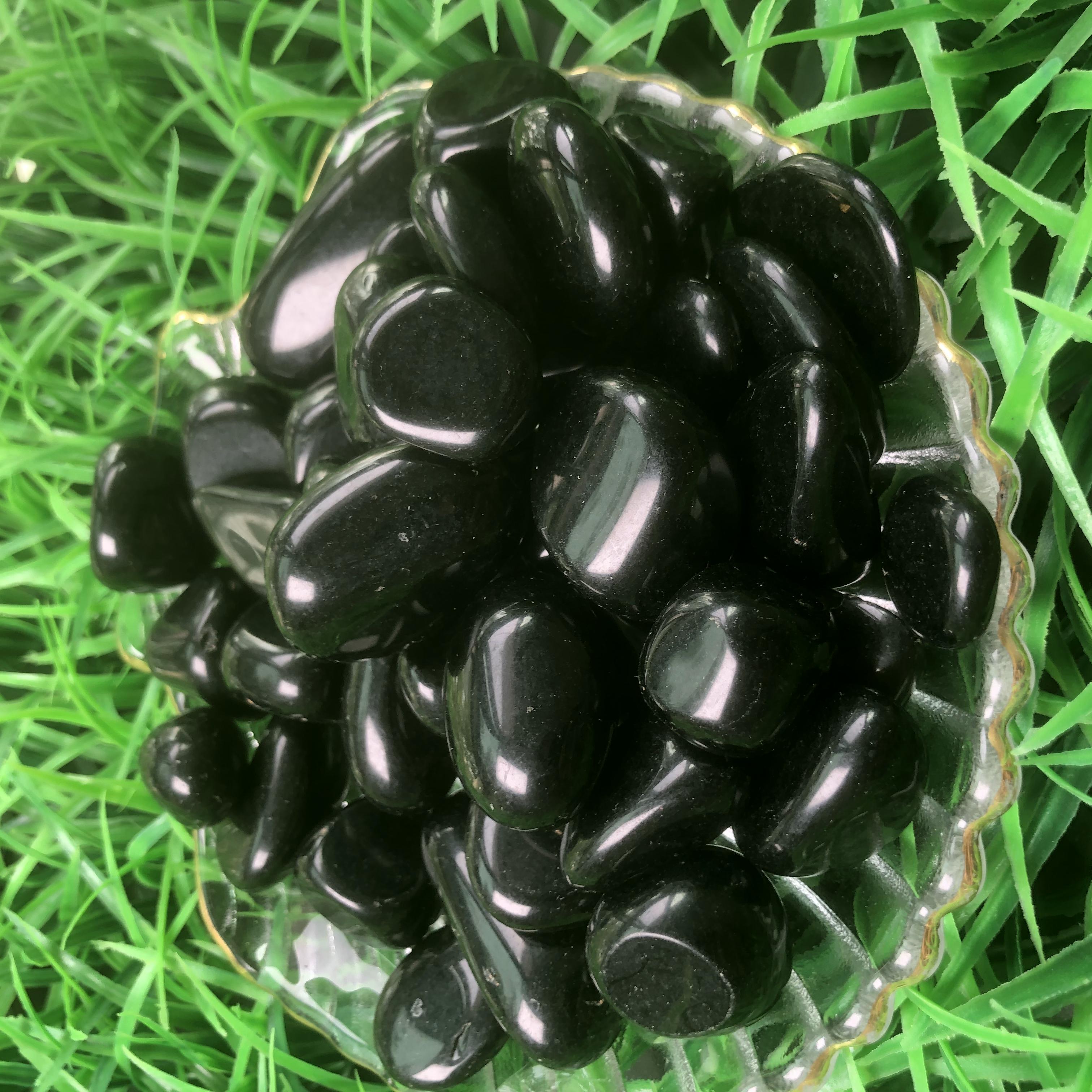
- 🖤 Onyx — deep black, same mystery and depth
- 💜 Amethyst — royal purple, same spiritual energy
- 📖 Complete Guide to Natural Stones 2026 — everything you need to know about stones in jewelry
Frequently Asked Questions about Labradorite
What is labradorescence?
Labradorescence is the optical phenomenon that gives labradorite its multicolored iridescent reflections. It is produced by the diffraction of light between alternating layers of two feldspars in the crystal structure. Unlike the adularescence of moonstone (soft blue-white reflection), labradorescence produces intense and multicolored reflections.
What is the difference between labradorite and moonstone?
Both are feldspars and exhibit optical reflections, but they are different minerals. Moonstone (orthoclase/adularia) has a soft, milky blue-white reflection. Labradorite (plagioclase) has intense multicolored reflections. Labradorite is often mistakenly called "black moonstone."
Is labradorite suitable for daily wear?
With caution. Its hardness of 6-6.5/10 and perfect cleavage make it more fragile than onyx or carnelian. For daily wear, prefer a pendant or earrings. If you choose a ring, avoid physical activities with it.
What is spectrolite?
Spectrolite is an exceptional variety of labradorite found only in Finland (Ylämaa region). It is distinguished by its reflections of all colors of the visible spectrum on a deep black background — blue, green, gold, red, violet, orange. It is the most sought-after and precious variety of labradorite.
Conclusion
Labradorite is an exceptional stone — mysterious, fascinating, steeped in Inuit legends and spiritual symbolism. Its iridescent reflections — which evoke auroras trapped in rock — make it one of the most visually spectacular stones in jewelry.
Paired with solid 925 silver, labradorite creates jewelry of absolutely unique depth and mystery — pieces that seem alive and reveal their beauty to those who look closely.
✦ Vindicta — Argent 925 Massif
La pièce qui fait la différence
Certifié argent 925 · Livraison offerte dès 69€ · 10 ans d'excellence
Bijoux Pierres Naturelles →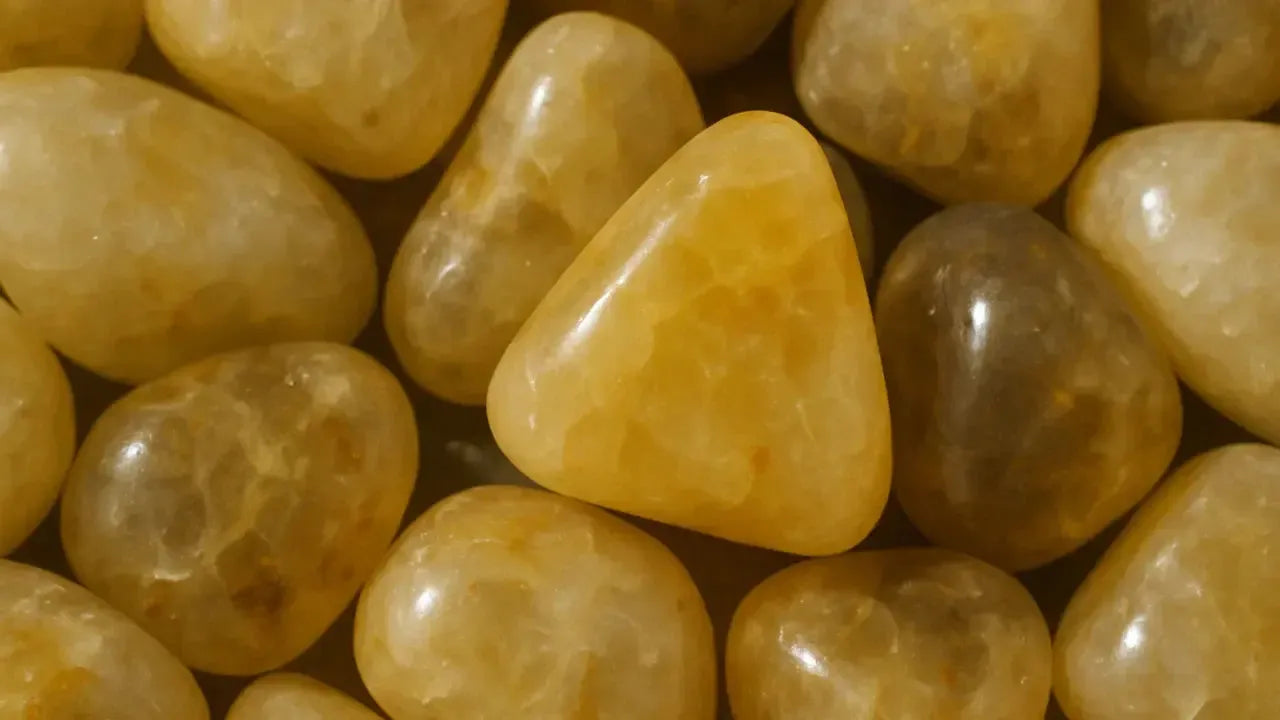

Leave a comment
This site is protected by hCaptcha and the hCaptcha Privacy Policy and Terms of Service apply.