
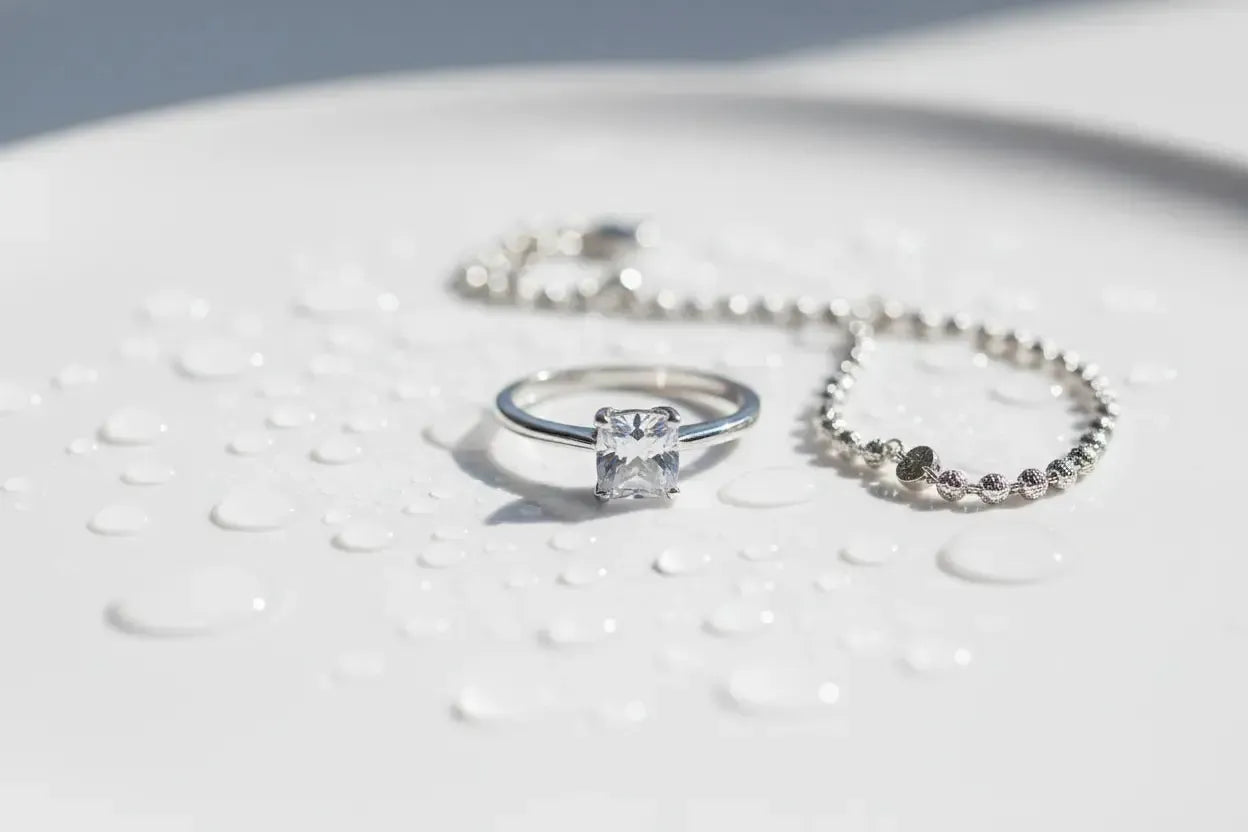
Sterling Silver and Water: Can You Shower with Your Jewelry?
Can you shower with your 925 sterling silver jewelry? Swim? Work out? Here are the clear answers and rules to follow to preserve your jewelry.
For complete care of your 925 sterling silver jewelry, consult our 925 Sterling Silver Care Guide. And to understand why solid 925 sterling silver is superior to plated: 925 Sterling Silver vs Gold Plated vs Steel.
Quick Answer
- ✅ Occasional clear water: No problem
- ⚠️ Daily shower: Not recommended long-term
- ❌ Pool (chlorine): Absolutely avoid
- ❌ Sea (salt): Absolutely avoid
- ❌ Jacuzzi: Absolutely avoid
- ⚠️ Sport (perspiration): Remove if possible
Summary Table by Activity
| Activity | Risk | Advice |
|---|---|---|
| Washing hands | Low | ✅ Acceptable, dry immediately |
| Shower (water + soap) | Medium | ⚠️ Not recommended daily |
| Bath | Medium-high | ⚠️ Preferably remove |
| Pool | Very high | ❌ Must remove |
| Sea | Very high | ❌ Must remove |
| Jacuzzi | Very high | ❌ Must remove |
| Light sport | Low-medium | ⚠️ Rinse afterwards |
| Intensive sport | High | ❌ Remove beforehand |
| Doing dishes | Medium | ⚠️ Remove (harsh detergent) |
| Gardening | Medium | ⚠️ Remove (dirt, humidity) |
Why Water Accelerates Tarnishing
925 sterling silver contains 7.5% copper. This copper reacts with:
- Humidity: Accelerates oxidation
- Chlorine (pool, tap water): Aggressive chemical reaction that tarnishes and can damage the metal
- Salt (sea, perspiration): Accelerated corrosion
- Chemicals (soap, shampoo, shower gel): Degrade the surface
Tarnishing is reversible with proper cleaning. But repeated exposure can create deeper damage to certain finishes.
Showering: What Actually Happens
An occasional shower
An occasional shower with 925 sterling silver jewelry does not damage it. Tap water alone is relatively neutral. The problem comes from the products used (soap, shampoo, shower gel) and repetition.
Daily shower
In the long term, daily showering:
- Accelerates tarnishing
- Dulls polished finishes
- Can affect porous stones (turquoise, malachite, carnelian)
- Weakens settings due to thermal expansion/contraction
Solid 925 Sterling Silver vs Plated: The Difference with Water
This is where the difference between solid 925 sterling silver and plated jewelry becomes crucial:
- Solid 925 sterling silver: If the jewelry tarnishes in contact with water, a simple cleaning restores its shine. The precious metal is present throughout — it doesn't wear out, it tarnishes. And tarnishing is always reversible.
- Silver plated or gold plated jewelry: Water and humidity accelerate the wear of the coating. Once the plating layer is worn, the base metal appears (brass, copper, steel) and cannot be restored without professional re-plating.
This is one of the fundamental reasons to choose solid 925 sterling silver. Discover the full comparison: 925 Sterling Silver vs Gold Plated vs Steel.
Special Cases: Natural Stones
Natural stones behave very differently with water:
Stones to absolutely avoid with water
- Turquoise: Very porous, absorbs water and chemicals, changes color
- Malachite: Porous, sensitive to acids (soap)
- Carnelian: Porous, avoid prolonged immersion
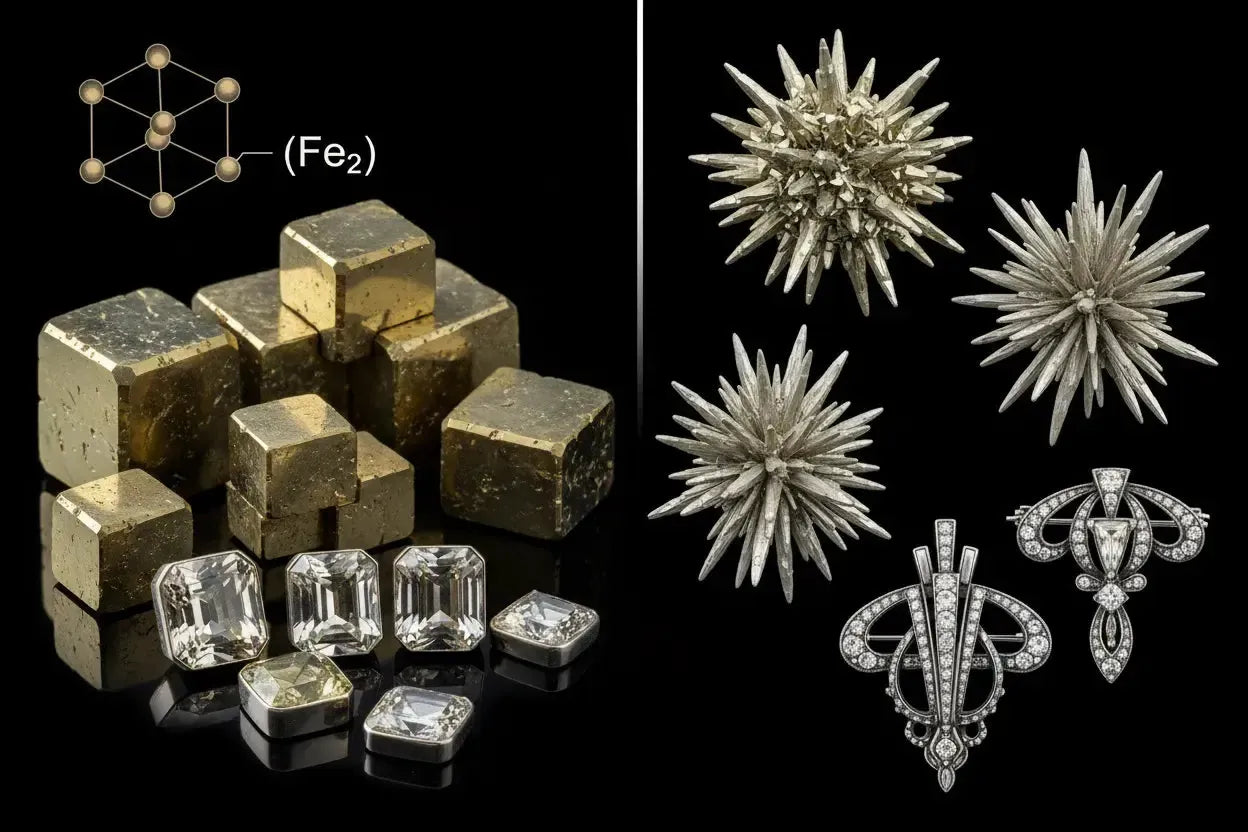
- Marcasite: Very sensitive to humidity — see our marcasite care guide
- Amber: Organic, sensitive to chemicals
- Lapis Lazuli: Porous, avoid immersion and acidic products
- Moonstone: Sensitive to thermal shocks and chemicals
Stones that tolerate water better
- Black Onyx: Relatively resistant, but still avoid
- Tiger's Eye: Tolerates clear water, not chemicals
- Quartz: Quite resistant, but avoid ultrasonic cleaners
To discover the characteristics of each stone: Complete Guide to Natural Stones 2026.
Pool and Sea: Why It's Dangerous
The pool
Chlorine used to disinfect pools is a powerful oxidant. It reacts violently with the silver and copper in the 925 alloy, causing:
- Rapid and deep blackening
- Attack on the metal surface
- Accelerated degradation of porous stones
The sea
Salt water is corrosive to silver. Salt + marine iodine + sun = aggressive combination. Always remove your jewelry before swimming in the sea.
Sport and Perspiration
Perspiration contains salt and organic acids that accelerate tarnishing. For intensive sport, remove your jewelry. For light activity, rinse with clear water afterwards and dry immediately.
If Your Jewelry Has Gotten Wet
- Dry immediately with a soft cloth
- Never store wet jewelry
- If tarnished: apply the baking soda method or silver cloth — see our complete care guide
The Golden Rule
Last on, first off. Get dressed, then put on your jewelry. Remove your jewelry before getting undressed, showering, swimming, or working out.
FAQ — Frequently Asked Questions
My 925 sterling silver jewelry turned black after the pool. Is it damaged?
Not necessarily. The blackening is often superficial tarnishing due to chlorine. Clean with the baking soda method or a silver cloth. If the blackening persists deeply, consult a jeweler.
Can I wash my hands with my rings on?
Yes, occasionally. Tap water alone is not very aggressive. But soap accelerates tarnishing in the long run. Dry thoroughly after each wash.
My jewelry has a stone. Is it riskier?
Yes, depending on the stone. Porous stones (turquoise, malachite, carnelian) absorb water and chemicals. They can change color or degrade. Hard stones (onyx, quartz) are more tolerant.
Can I wear my 925 sterling silver bracelet to the beach?
Not recommended. Sand + salt + sun = aggressive combination for silver and stones. Remove your jewelry before going to the beach.
Does 925 sterling silver rust?
No. Silver does not rust (rust is specific to iron). It tarnishes (superficial oxidation), which is very different and always reversible.
How long before water truly damages my jewelry?
A single exposure generally does not cause permanent damage. It is repetition that wears down finishes and weakens settings. Jewelry that is showered with daily for years will see its surface tarnish faster and its stones potentially degrade.
Additional Guides
- 925 Sterling Silver Care Guide — Tips and Advice
- Why Choose 925 Sterling Silver Jewelry?
- 925 Sterling Silver vs Gold Plated vs Steel
- Marcasite and 925 Sterling Silver Care Guide
- Colloidal Silver vs 925 Sterling Silver Jewelry
- Complete Guide to Natural Stones 2026
Each Vindicta jewel is certified solid 925 sterling silver, verifiable on our authenticity page.
Discover our complete collection of 925 sterling silver jewelry.
✦ Vindicta — Argent 925 Massif
La pièce qui fait la différence
Certifié argent 925 · Livraison offerte dès 69€ · 10 ans d'excellence
Bijoux Pierres Naturelles →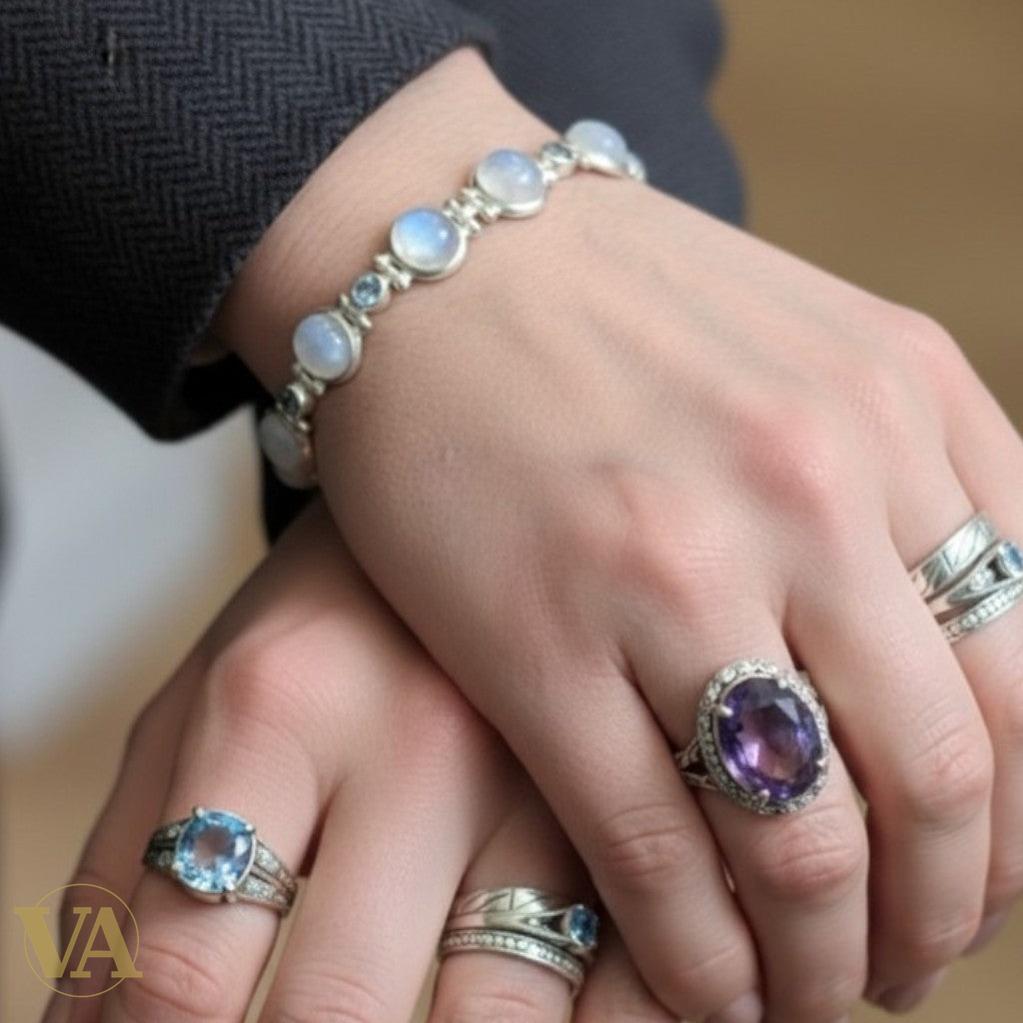

Leave a comment
This site is protected by hCaptcha and the hCaptcha Privacy Policy and Terms of Service apply.