
Ottoman Jewelry: Legacy of Sultans and Imperial Splendor
Introduction: The Ottoman Empire, Golden Age of Oriental Jewelry
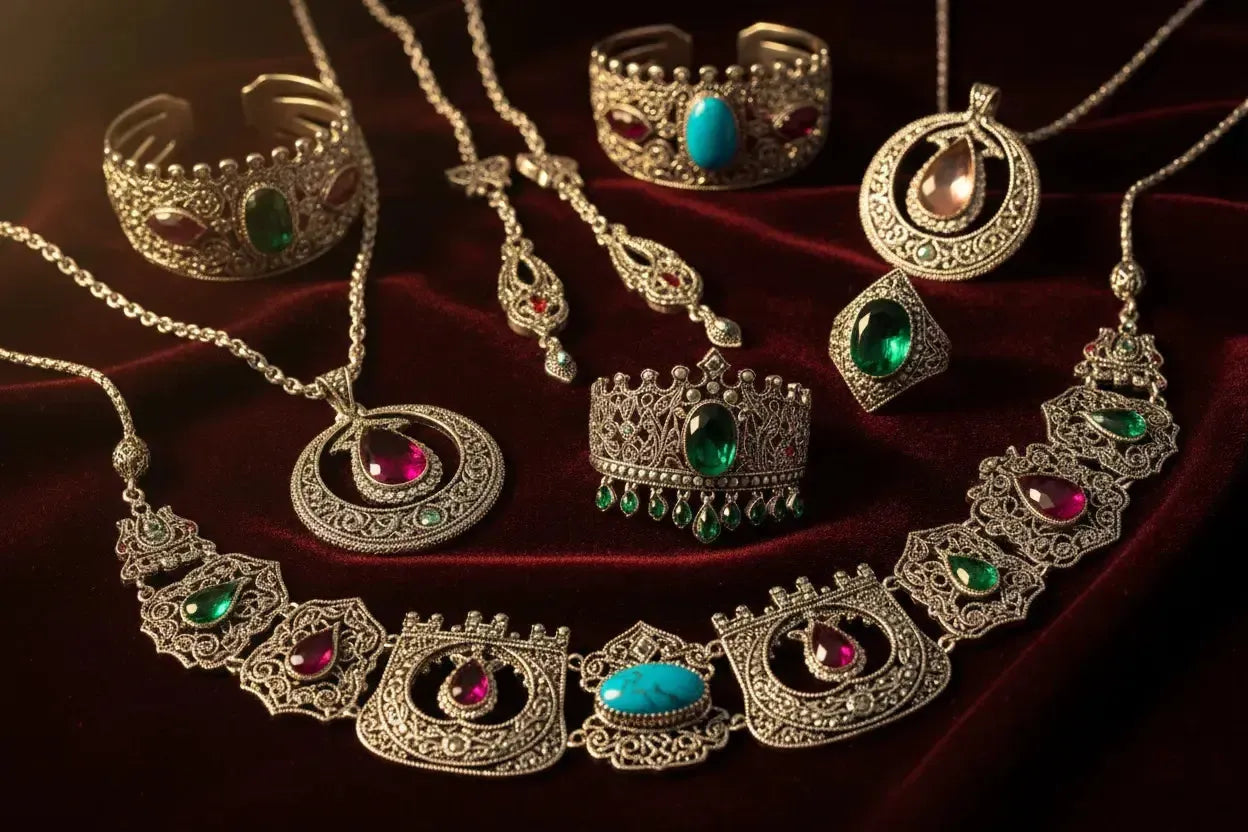
The Ottoman Empire (1299-1922) marked the history of oriental jewelry with its imperial splendor and artistic refinement. The Ottoman sultans, ruling from Istanbul (Constantinople), developed a unique style: a blend of Persian, Arab, Byzantine, and European traditions. Ottoman jewelry is characterized by its delicate engravings, opulent precious stones, and floral motifs (tulips, carnations, roses). Crafted in 925 sterling silver, these jewels embody the legacy of the sultans and the power of an empire that dominated three continents for six centuries.
This guide explores the history of Ottoman jewelry, its aesthetic codes, its symbolism, and how to wear this imperial heritage to assert royal elegance.
History of Ottoman Jewelry
Foundation of the Empire (1299-1453)
The first Ottoman sultans adopted Seljuk and Byzantine traditions: engravings, enamels, precious stones.
Golden Age: Suleiman the Magnificent (1520-1566)
Under Suleiman the Magnificent, Ottoman art reached its zenith. The workshops of Topkapi Palace produced sumptuous jewels: diamond-set aigrettes, emerald-ornamented daggers, turquoise rings.
17th-18th Century: European Influence
The sultans adopted European Baroque and Rococo elements while retaining Ottoman identity.
19th Century: Modernization
Ottoman jewelry incorporated modern European techniques while preserving traditional motifs.
Our Ottoman Style Jewelry
Men's Ottoman Style Rings
- Men's carnelian Ottoman style ring: Turkish heritage, imperial elegance
- Men's engraved oriental floral motif ring: Ottoman tulips
- Men's engraved oriental motif ring: Traditional engraving
- Men's rectangular black onyx ring with oriental motifs: Ottoman power
Ottoman Signet Rings
- Black onyx signet ring with oriental engravings: Sultan's seal
- Round geometric seal ring: Ottoman geometry
- Oval seal ring: Imperial classic
Women's Ottoman Style Rings
- Oriental style garnet and marcasite ring: Ottoman opulence
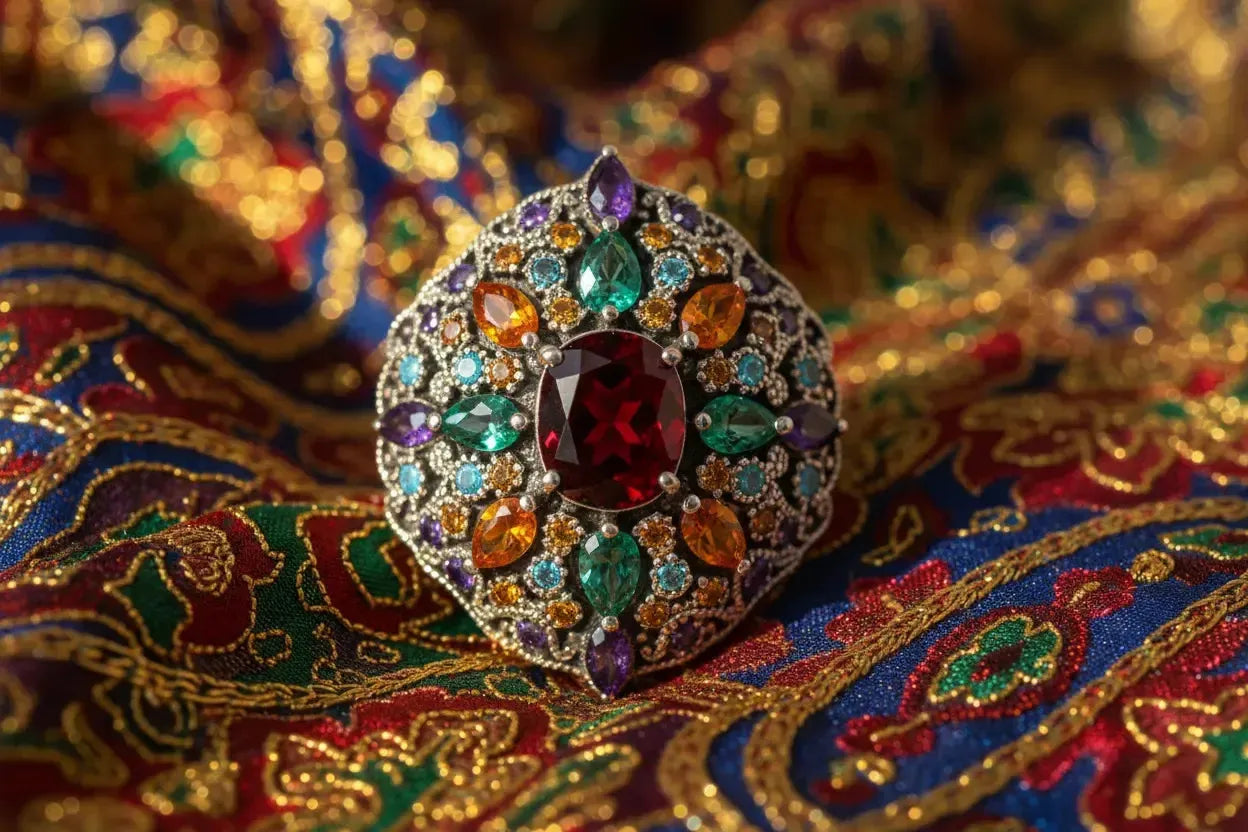
- Royal elegance multi-colored ring: Imperial splendor
- Arabesque amethyst ring: Ottoman motifs
Ottoman Style Bracelets
- Men's arabesque motif bracelet: Ottoman interlacings
Ottoman Aesthetic Codes
Floral Motifs: Tulips, Carnations, Roses
Tulips are the emblem of the Ottoman Empire. Sultans cultivated tulip gardens at Topkapi Palace. Ottoman jewelry incorporates delicate floral motifs.
Our Floral Pieces
- Engraved oriental floral motif ring: Ottoman tulips
- Openwork floral design ring: Floral lace
- Arabesque rose marcasite ring: Ottoman rose
Engravings and Carvings
Ottoman artisans mastered engraving: delicate carving of patterns into silver. Each piece is unique.
Our Engraved Pieces
- Engraved oriental motif ring: Ottoman craftsmanship
- Large engraved onyx ring: Imperial engraving
- Engraved onyx details ring: Ottoman finesse
Opulent Precious Stones
Sultans adored colorful stones: emeralds, rubies, sapphires, turquoises, garnets.
Our Precious Stone Pieces
- Oriental style garnet ring: Imperial red
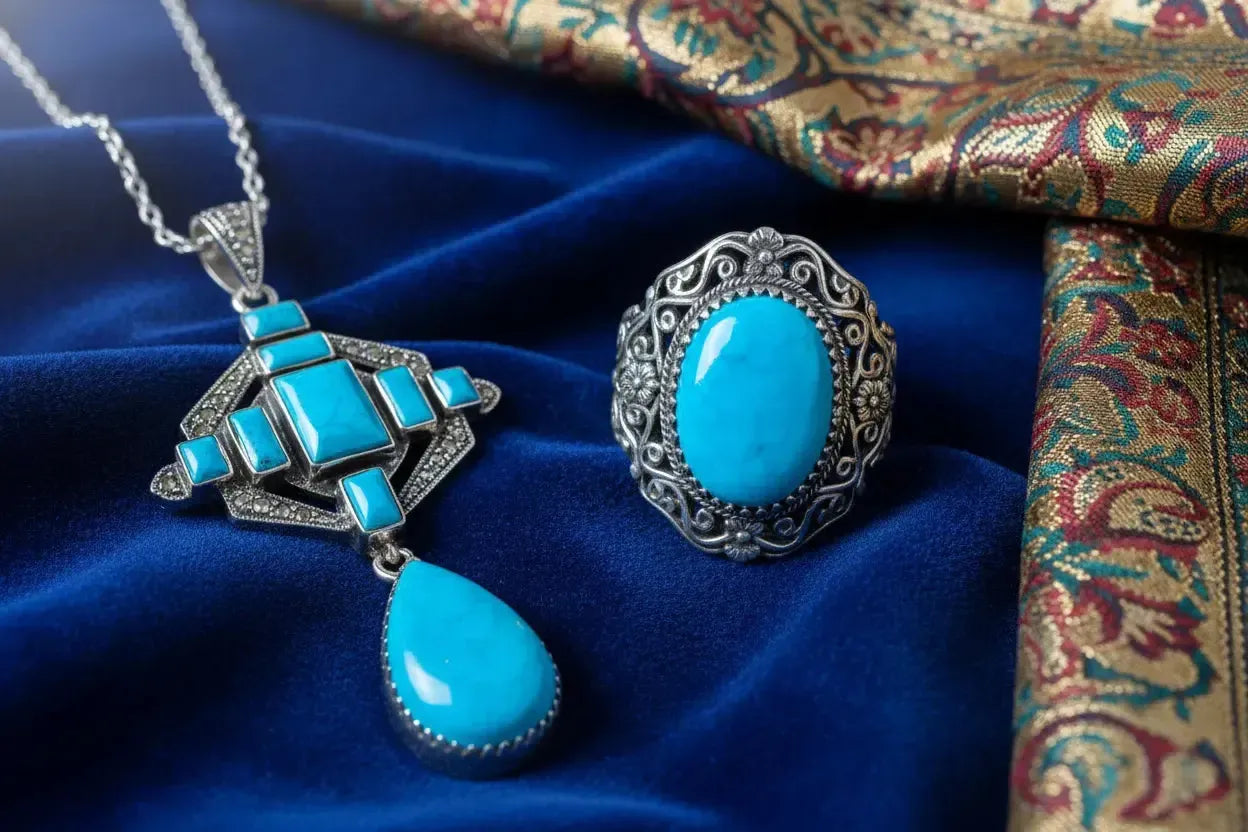
- Natural turquoise ring: Ottoman blue
- Royal multicolored ring: Ottoman opulence
Symbolism of Ottoman Jewelry
Power and Authority
Ottoman jewelry symbolizes imperial power, the sultan's authority, and the grandeur of the Empire.
Refinement and Culture
Wearing Ottoman jewelry evokes cultural refinement, a love of the arts, and sophistication.
Heritage and Tradition
Ottoman jewelry embodies ancestral heritage, fidelity to traditions, and respect for the past.
Treasures of Topkapi Palace
The Topkapi Dagger
Adorned with three enormous emeralds and diamonds, it is one of the most famous treasures of the Ottoman Empire.
The Sultan's Aigrette
A turban ornament set with diamonds, rubies, and emeralds, worn during official ceremonies.
The Imperial Rings
Topkapi Palace houses hundreds of Ottoman rings: turquoise, garnet, onyx, emerald.
How to Wear the Ottoman Style
Imperial Power Look
Objective: Assert authority and refinement
- Signet Ring: Onyx with oriental engravings
- Ring: Carnelian Ottoman style
- Outfit: Dark suit, white shirt
- Effect: Modern sultan
Women's Royal Elegance Look
Objective: Ottoman splendor
- Ring: Multi-colored red stone
- Ring: Arabesque amethyst
- Outfit: Evening gown, rich colors
- Effect: Sultana
Everyday Ottoman Look
- Ring: Engraved oriental motif
- Outfit: Casual chic
- Effect: Discreet Ottoman touch
Ottoman Jewelry and Other Oriental Styles
Ottoman + Persian
Fusion of the two great empires: Persian turquoise + Ottoman engravings.
- Natural turquoise ring: Persian-Ottoman fusion
Ottoman + Arab
Combination of Arab arabesque motifs and Ottoman floral designs.
- Arabesque amethyst ring: Arab-Ottoman fusion
Ottoman Influence in Art
Architecture
Ottoman mosques (Blue Mosque, Süleymaniye Mosque) inspire jewelry motifs: tulips, arabesques, geometry.
Miniatures
Ottoman miniatures depict sultans and sultanas wearing sumptuous jewels.
Textiles
Ottoman brocades (silk, gold, silver) influence jewelry patterns.
Conclusion: The Legacy of the Sultans
Ottoman jewelry embodies six centuries of imperial splendor, artistic refinement, and power. Wearing an oriental engraved signet ring means carrying the legacy of the sultans, the grandeur of an empire that reigned over three continents, the refinement of a civilization that marked history.
Whether you choose an Ottoman style carnelian ring, a royal elegance piece, or an arabesque motif bracelet, you assert an imperial elegance, a taste for history, and a connection to the eternal Orient.
Ottoman jewelry never goes out of style. Its refinement spans centuries, from Topkapi Palace to modern streets, never losing its splendor or symbolism. It is the legacy of those who reigned, created, and inspired. It is power embodied in silver.
Discover our complete collection of Ottoman style jewelry in solid 925 sterling silver and wear the legacy of the sultans.
✦ Vindicta — Argent 925 Massif
La pièce qui fait la différence
Certifié argent 925 · Livraison offerte dès 69€ · 10 ans d'excellence
Bijoux Orientaux Argent 925 →


%20marked%20the%20history%20of%20oriental%20jewelry%20with%20its%20imperial%20splendor%20and%20artistic%20refinement.%20The%20Ottoma...)