Article: The Filigree: when 925 silver becomes metallic lace
The Filigree: when 925 silver becomes metallic lace

What is filigree?
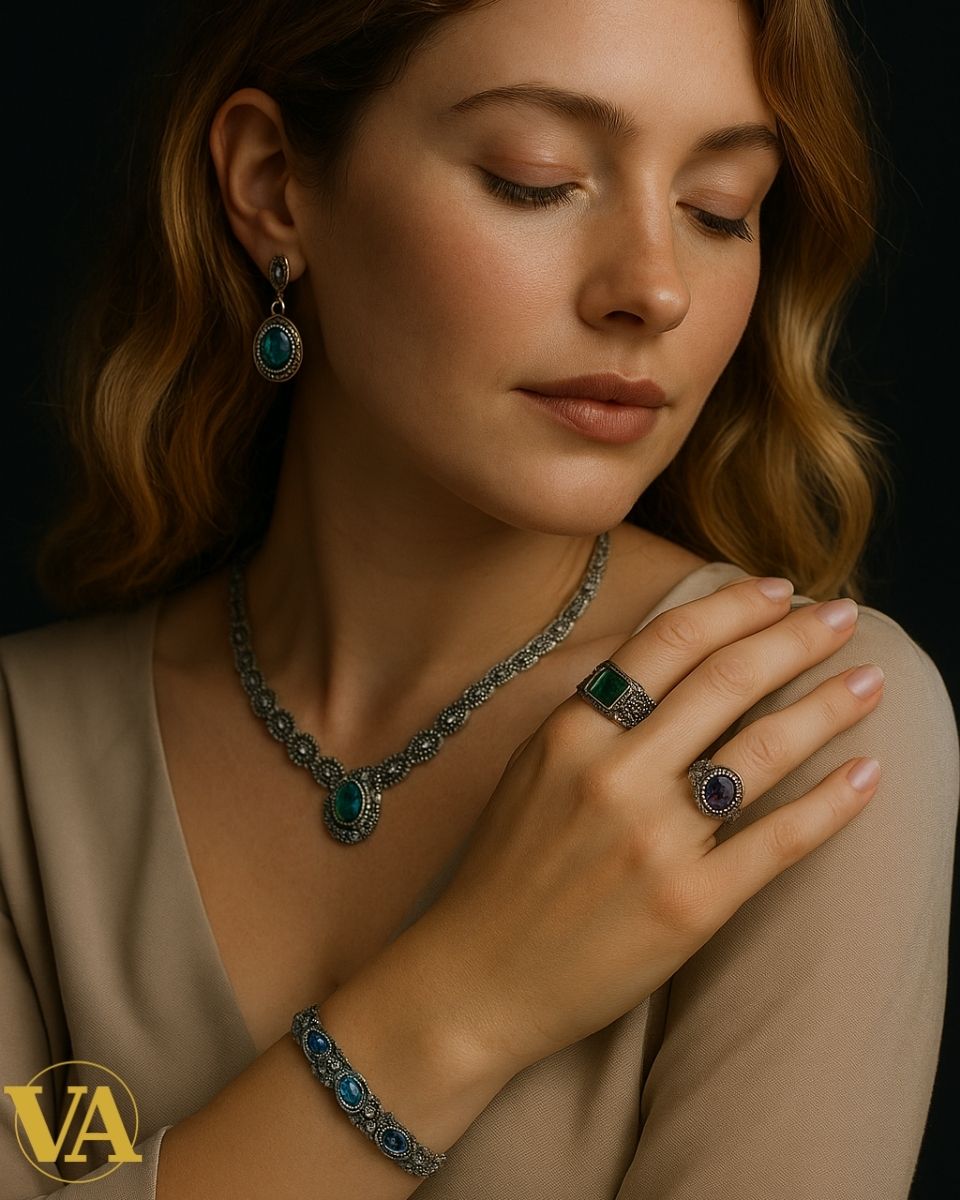
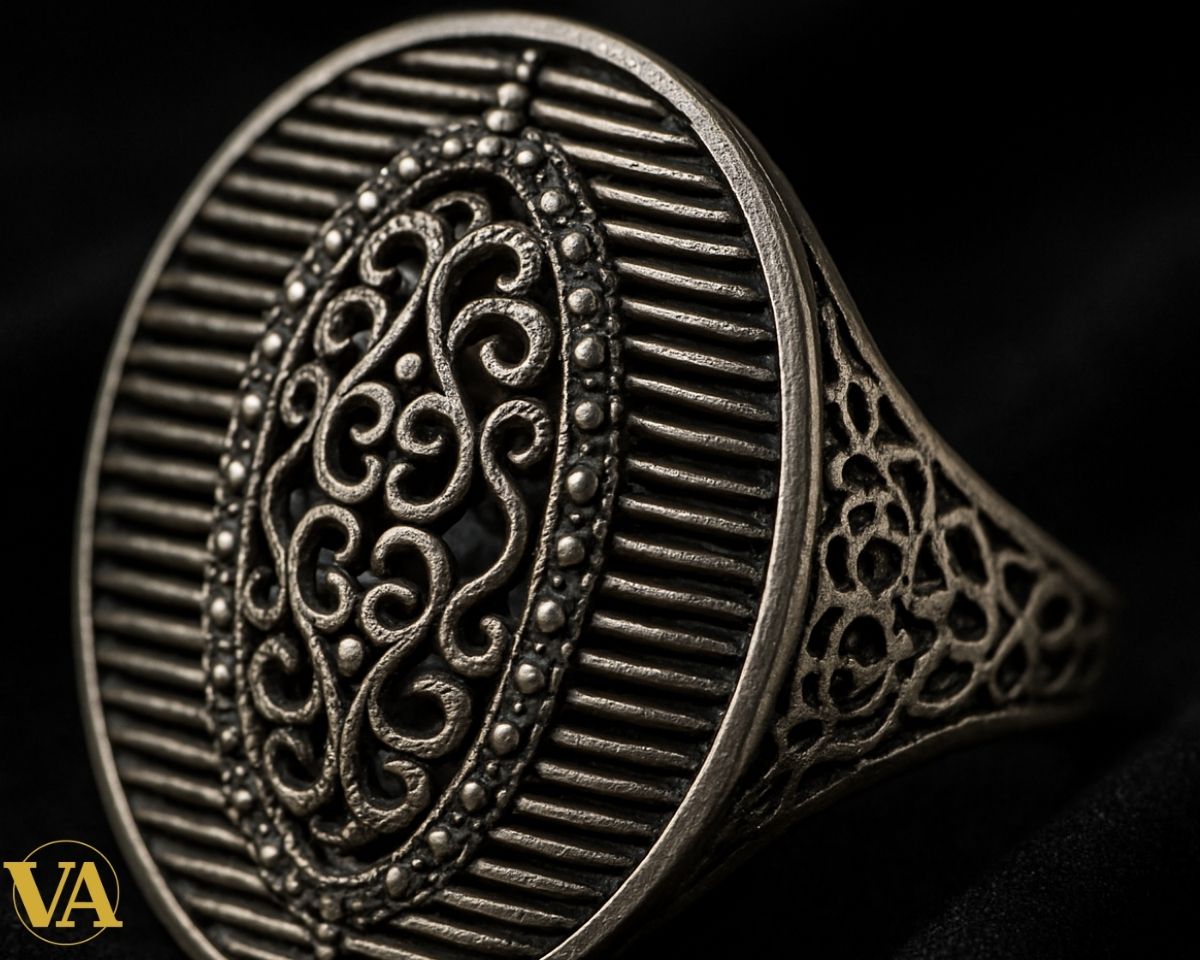
Observing a piece of 925 sterling silver adorned with filigree is like discovering lace woven in metal. Filigree involves twisting, bending, and soldering very fine silver threads to form embossed patterns—airy, regular, and remarkably precise.
At Vindicta, we value this technique because it embodies artisanal craftsmanship: each piece is the result of meticulous work, patience, and a dexterity that only the human hand can master. Choosing a filigree jewel means choosing detail, depth, and history.
The word "filigree" comes from the Latin filum (thread) and granum (grain)—a reference to the tiny silver beads that sometimes adorn the junctions between the threads. This technique requires years of apprenticeship and absolute mastery of fire, pressure, and geometry.
The origins of the motif: a heritage of goldsmiths around the world
Filigree is a universal technique that many civilizations have perfected over the centuries. Its history is that of humanity itself—a common thread connecting cultures and eras.
- Ancient Mediterranean Basin: traces in ancient Mesopotamia, then in Etruscan and Roman treasures—already a symbol of refinement.
- Medieval and Byzantine apogee: in the Middle East and Byzantium, the art reached extreme complexity: arabesques, stylized floral motifs, pieces sought after by royal courts.
- Ottoman tradition: Ottoman goldsmiths elevated filigree to the rank of imperial art. The jewels of sultans and dignitaries were adorned with filigree of incomparable fineness, often enriched with precious stones.
- European influence: dissemination and reinterpretation by Portuguese, Italian, and French goldsmiths; filigree became synonymous with detailed richness and sophisticated luxury.
- Andalusian tradition: in Al-Andalus, Arab and Jewish goldsmiths developed a unique filigree style, blending Islamic and European influences—a heritage that Vindicta perpetuates in its creations.
Mastering 925 sterling silver filigree
925 sterling silver (a robust alloy with 92.5% silver) is ideal: it preserves the fineness of the threads and magnifies the play of light and shadow created by the relief. Its malleability allows it to be stretched into extremely thin wires without weakening it, while its resistance guarantees the durability of the final jewel.
1) Preparing the wire
The artisan stretches the silver into threads thinner than a hair, which can be twisted or braided according to the desired result. This step requires controlled force and absolute regularity—an uneven wire would compromise the entire motif.
2) Composing the pattern
The threads are placed on a base to form volutes, petals, and geometric shapes. The balance between solid and empty spaces creates the lace effect. The artisan works with a magnifying glass, manipulating each thread with precision pliers. An average-sized piece of jewelry can require several hundred distinct manipulations.
3) Precision soldering
Each junction is soldered under a magnifying glass. This micro-precision guarantees the durability of the jewel and its status as an art object. The solder must be invisible to the naked eye—only an expert goldsmith can achieve this level of finish.
4) Finishing and patination
After soldering, the jewel is cleaned, polished, and sometimes controllably oxidized to accentuate the contrasts between the threads and the voids. This deliberate patination reveals the depth of the motif and gives it that sought-after vintage character.
Filigree through the ages: from Antiquity to today
The history of filigree is inextricably linked to the history of fine jewelry. Each era has brought its vision, its motifs, its interpretation of this millennial technique:
- Ancient Egypt: the pharaohs' goldsmiths already used techniques similar to filigree to create funeral jewels of extraordinary fineness.
- Roman Empire: filigree adorned the jewels of patricians and emperors—a symbol of status and refinement.
- Islamic Middle Ages: Arab goldsmiths perfected the technique, creating geometric patterns of remarkable mathematical complexity.
- European Renaissance: filigree became the prerogative of royal courts. Italian goldsmiths from Florence and Venice made it an art in its own right.
- Art Deco (1920-1940): filigree reinvented itself in modern geometric forms, often associated with marcasite for jewels of incomparable elegance.
- Today: filigree is experiencing a resurgence in contemporary artisanal jewelry, driven by creators who reject industrial standardization.
A style choice: wearing filigree today
- Taste for detail: a jewel appreciated up close, for its complexity rather than its size.
- Connection to history: wearing a craftsmanship passed down through generations of master goldsmiths.
- Value of time: each curve represents hours of manual work—the anti-fast-fashion.
- Uniqueness: no two filigree pieces are identical. The slight variations are the artisan's signature.
By choosing a piece of solid 925 sterling silver filigree jewelry from Vindicta, you are investing in a timeless piece where ancestral craftsmanship meets contemporary elegance.
Care of 925 sterling silver filigree jewelry
Filigree requires some specific precautions due to the fineness of its threads:
- Gentle cleaning: use a soft microfiber cloth. Avoid brushes that could snag the threads.
- No ultrasonics: ultrasonic cleaners can weaken solder joints—absolutely to be avoided.
- Preserved patina: the patina in the crevices enhances the relief—do not try to polish everything to a shine.
- Separate storage: store your filigree jewelry in an individual pouch to prevent the threads from snagging on other jewelry.
- Avoid shocks: although solid, filigree can deform under a strong impact.
Frequently asked questions about filigree
Is filigree fragile?
When properly soldered, 925 sterling silver filigree is durable. However, avoid shocks and store the piece separately to prevent the threads from snagging.
How do I care for filigree jewelry?
Use a soft cloth to polish. Avoid harsh cleaners: the patina in the crevices enhances the relief. For deep cleaning, opt for a professional.
Why do some pieces appear darker?
Controlled oxidation (patina) accentuates contrasts and reveals the fineness of the pattern: it is a sought-after aesthetic choice.
Is filigree suitable for daily wear?
Yes, with a few precautions. Avoid intense physical activities and repeated contact with rough surfaces. For daily wear, prefer solid filigree pieces rather than airy filigree.
What is the difference between filigree and granulation?
Filigree uses twisted and soldered silver threads. Granulation uses tiny silver beads soldered onto a surface. Both techniques are often combined in Ottoman and Andalusian jewelry.
To discover other artisanal techniques, consult our article on stone setting in 925 sterling silver.
✦ Vindicta — Argent 925 Massif
La pièce qui fait la différence
Certifié argent 925 · Livraison offerte dès 69€ · 10 ans d'excellence
Chevalières Homme Argent 925 →