
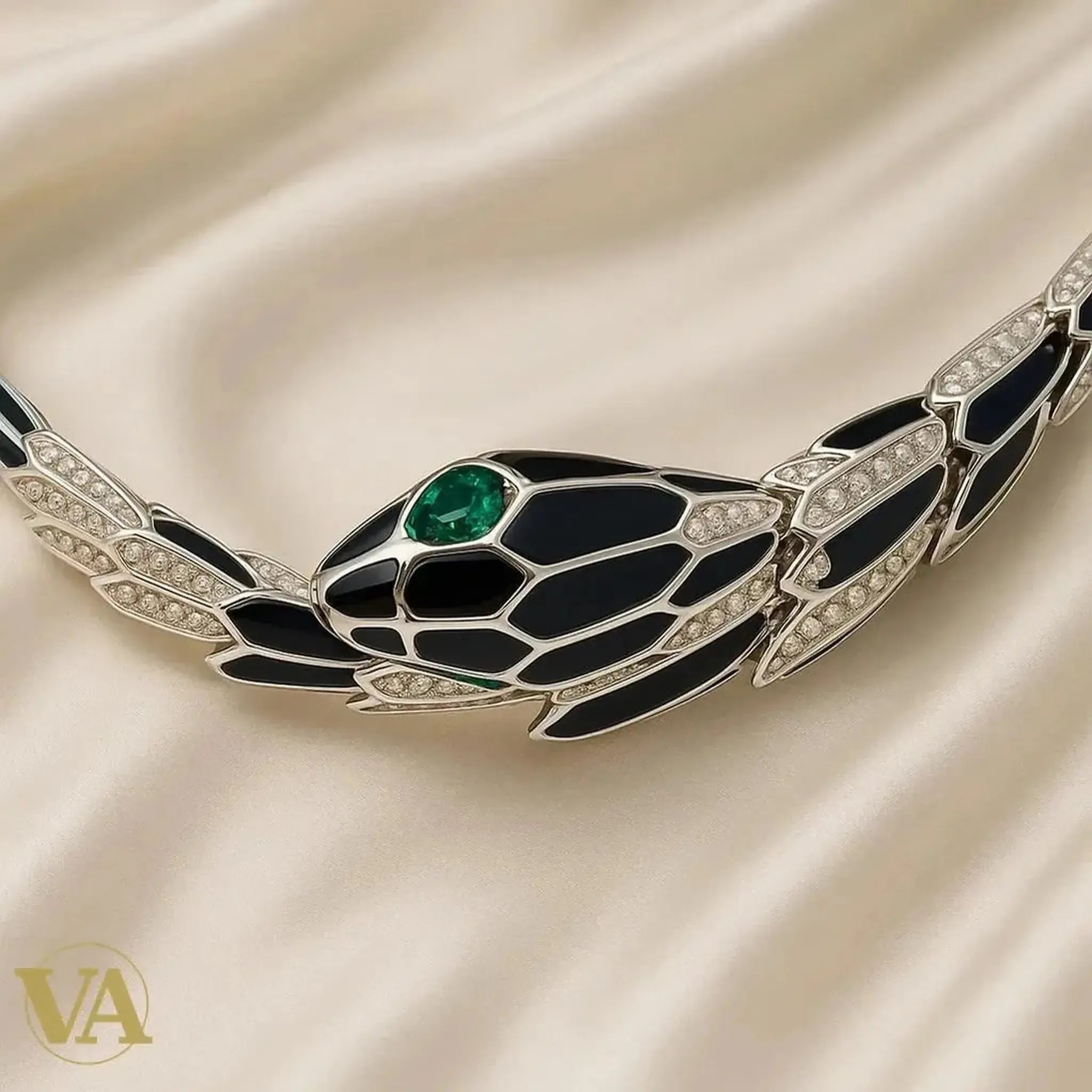
Zircon in 925 Sterling Silver Jewelry: Cubic, Natural, Understanding Everything
On Vindicta product pages, the word comes up again and again: "paved with zircons", "multi-row colored zircons", "white and multicolored zircons". Zircon is probably the most common stone in our collections after silver itself — and yet, it's also one of the most misunderstood. Here's what you really need to know.
Natural Zircon and Cubic Zirconia: Two Stones, One Name
There is frequent confusion around the word "zircon". Natural zircon is a fine mineral stone (zirconium silicate), mined notably in Southeast Asia, which has existed naturally for millions of years — it is even one of the oldest known minerals on Earth. Cubic zirconia (or zirconium oxide), on the other hand, is a synthetic stone created in laboratories in the 1970s, designed to reproduce the sparkle of a diamond at an affordable price.
In common 925 silver jewelry — including at Vindicta — the term "zircon" almost always refers to synthetic cubic zirconia. This is not a misleading imitation: it is a stone in its own right, recognized and widely used, which has its own qualities.
Why is cubic zirconia so widely used in jewelry?
Three reasons explain its omnipresence in paved rings, bracelets, and necklaces:
- A brilliance close to that of a diamond: its faceted cut and high refractive index produce a very bright sparkle, visually close to a precious stone.
- Solid hardness: around 8 to 8.5 on the Mohs scale, cubic zirconia resists daily scratches well — harder than turquoise or sultanite.
- Perfect regularity: unlike natural stones, each cubic zirconia is identical to the previous one, allowing for symmetrical pavings and homogeneous multi-rows, impossible to achieve with natural stones.
Cubic Zirconia vs. Diamond: The Real Differences
Visually similar, cubic zirconia differs from diamond on several technical points: it is heavier for the same volume, its light dispersion (the famous "fire" that produces colorful reflections) is more pronounced than that of a diamond, and its hardness is lower (8-8.5 compared to 10 for diamond, the hardest known material). For common jewelry use, these differences are not visible to the naked eye — they are only important to an expert equipped with measuring instruments.
Caring for Zircon-Set Jewelry
Cubic zirconia requires simple maintenance: regular cleaning with warm soapy water and a soft brush is enough to restore its original sparkle. Avoid aggressive chemicals (nail polish remover, chlorine) that can tarnish the silver setting around the stone, and dry the jewelry well after each cleaning to avoid limescale deposits that dull the shine.
Zircon in our collections
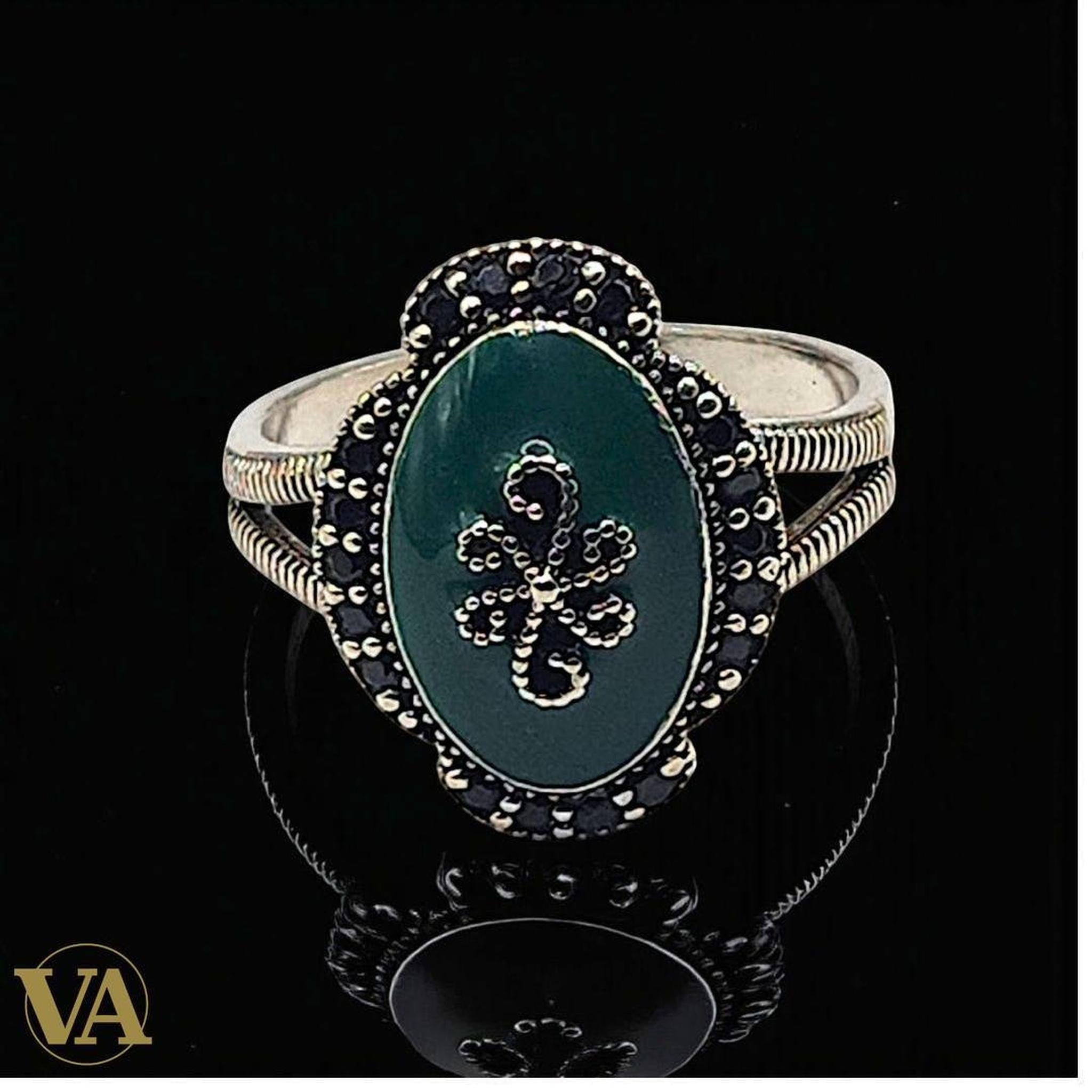
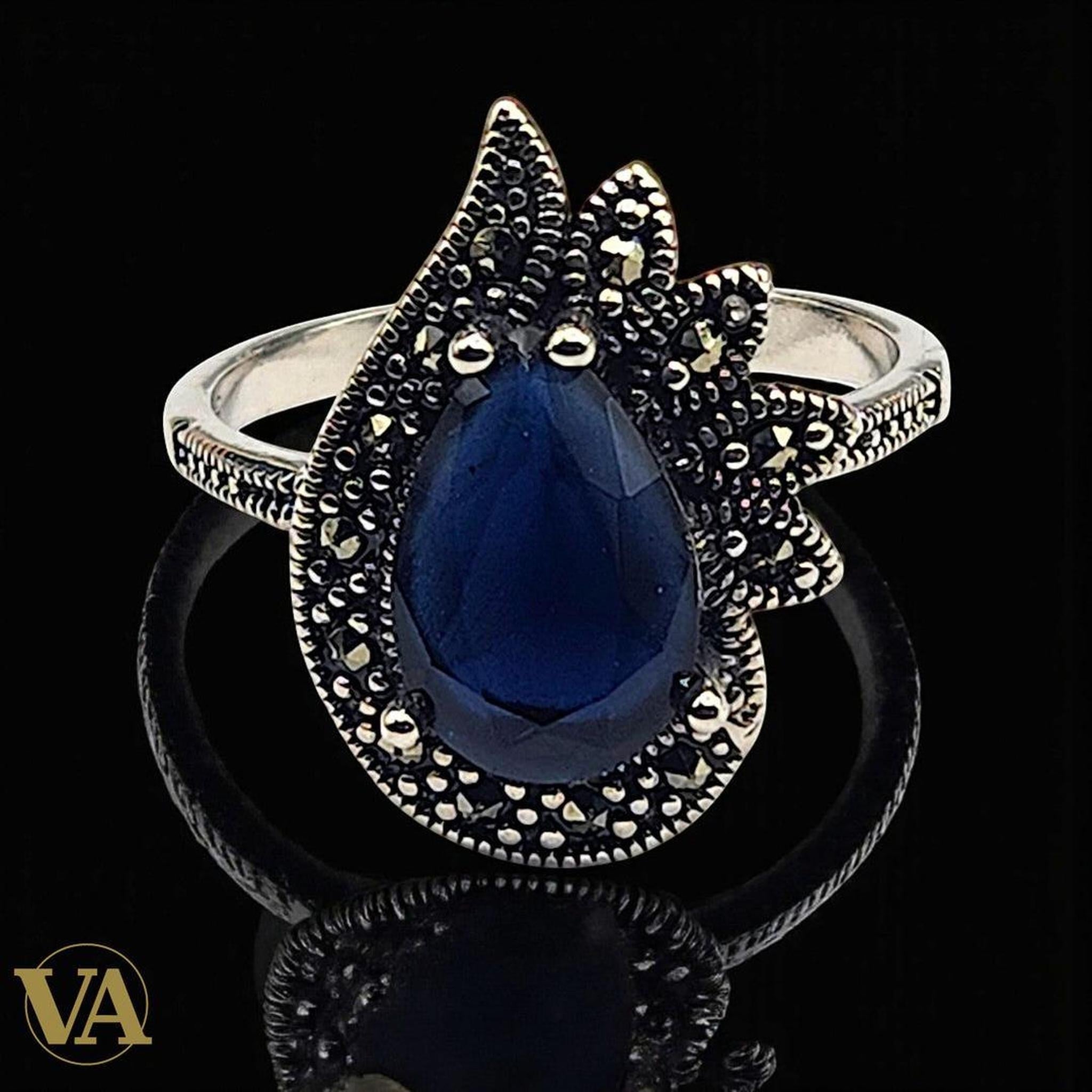
At Vindicta, zircon adorns both discreet pieces and more assertive designs: three-row pavings, openwork floral motifs, colorful multi-rows, or combinations with black onyx for a graphic contrast. Discover all our zircon-set pieces in our 925 Silver Rings collection, where many models play on this brilliance for a luminous and affordable result.
For a green with a more natural and less sparkly character, our article on green stones details alternatives such as aventurine or peridot.
How to recognize quality cubic zirconia
Not all cubic zircons are created equal. The quality of the cut makes a big difference to the final result: a precise cut, with well-aligned facets, maximizes the play of light and gives a diamond-like sparkle, whereas an approximate cut produces a duller, more glassy appearance. Transparency is another criterion: good cubic zirconia must be perfectly clear, without bubbles or inclusions visible to the naked eye — unlike a natural stone, where some inclusions are normal and do not detract from its value. Finally, the setting is as important as the stone itself: a solid, well-fitting 925 silver mounting enhances the brilliance of the zircon and prevents it from loosening over time.
Cubic Zirconia vs. Natural Zircon: Which to choose?
The choice mainly depends on what you are looking for. For everyday jewelry, at an affordable price and with maximum sparkle, cubic zirconia remains the most rational choice — which is why it is used in the vast majority of paved pieces in contemporary jewelry, both silver and gold. Natural zircon, rarer and more discreet in its sparkle, is aimed more at lovers of authentic fine stones, in a logic of collection rather than everyday use. Both have their place, provided you know clearly which one you are buying — which is precisely the purpose of this article.
Zircon and lithotherapy
Natural zircon — the fine stone, not its synthetic version — is traditionally associated in lithotherapy with clarity of mind and grounding. This symbolism does not apply to synthetic cubic zirconia, whose interest remains primarily aesthetic: to offer a diamond-like sparkle at an affordable price, without claiming particular energetic properties.
In summary
Cubic zirconia is neither a fake diamond nor a cheap stone: it is a synthetic stone in its own right, chosen for its brilliance, regularity, and resistance. Understanding the difference with natural zircon allows you to buy with full transparency, without confusion about what you are actually wearing.
✦ Vindicta — Solid 925 silver
The piece that makes the difference
Certified 925 silver · Free shipping from €69 · 10 years of excellence
Natural Stone Jewellery →



Leave a comment
This site is protected by hCaptcha and the hCaptcha Privacy Policy and Terms of Service apply.